From pioneering accessible transportation services to expanding its presence across airports, healthcare and tourism, Sartaj Lamba is building a mobility ecosystem designed around safety, dignity and independence.

For Mrs. Sartaj Lamba, Founder & CEO of Buddy Mobility Care (Besure Buddy Private Limited), mobility is much more than transportation. It is about enabling people to participate in everyday life with safety, confidence and dignity. This philosophy is increasingly translating into tangible achievements as Buddy Mobility Care expands its presence and builds partnerships across airports, healthcare, tourism, corporates and the wider transport ecosystem.
A significant recent milestone for the company has been its appointment as the Official Mobility Partner for International Purple Fest Goa, alongside the launch of wheelchair-accessible mobility services at Hyderabad Airport. These initiatives have helped demonstrate how specialised transportation can become an integral part of mainstream passenger mobility rather than remaining a niche service.
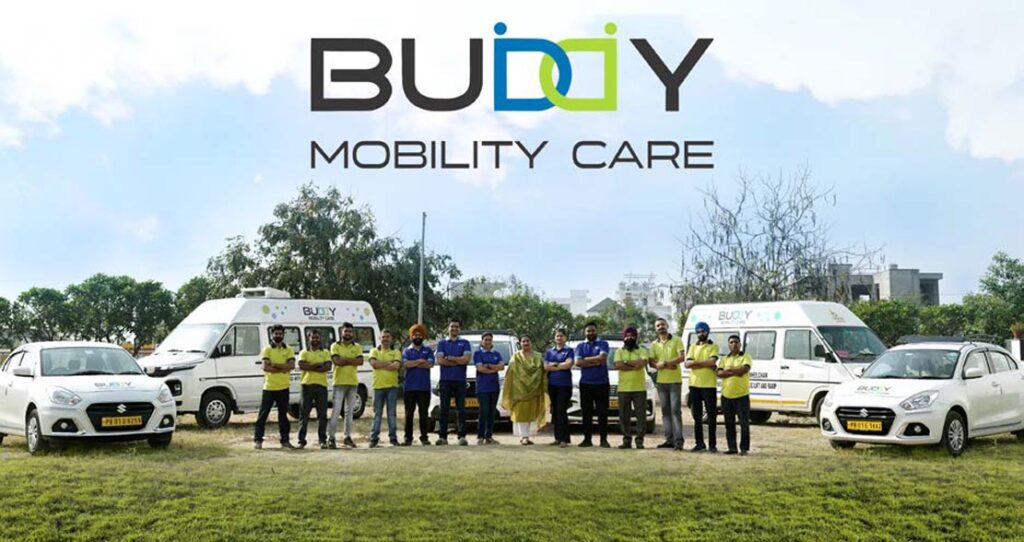
The company is now building a specialised mobility network that combines wheelchair-accessible vehicles with premium sedans, SUVs and multi-purpose vehicles. Its operating model brings together company-managed vehicles and carefully selected fleet partners, allowing Buddy Mobility Care to expand its reach while maintaining focus on service quality, passenger safety and accessibility.
“Mobility should never be a barrier to living with dignity. Our objective is to create an ecosystem where senior citizens, persons with disabilities and passengers requiring assistance can travel safely, confidently and independently,” she says.
From an unmet need to a specialised mobility ecosystem
Buddy Mobility Care was founded after Lamba identified a significant gap in India’s transportation landscape. While emergency medical transportation is well established, everyday mobility for senior citizens, persons with disabilities and non-emergency medical travellers has traditionally received far less attention. Many people may not require an ambulance, but conventional taxis are often not equipped to meet their specific needs.
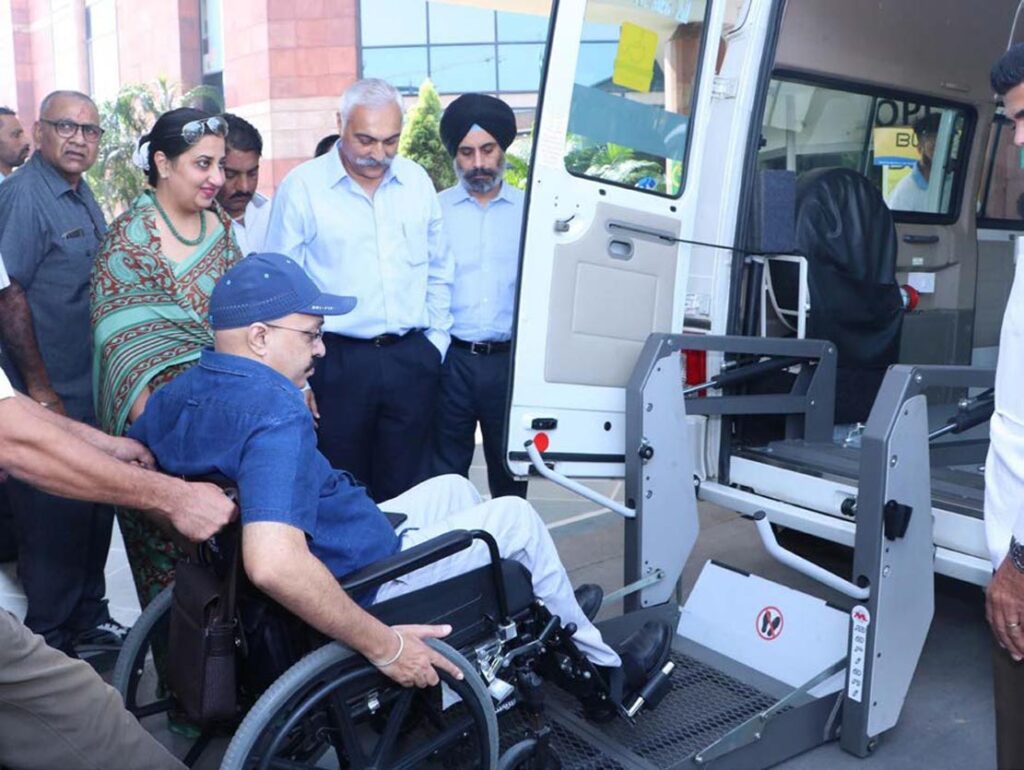
Creating a new category of mobility was not easy. The company had to create awareness, develop wheelchair-accessible vehicles, train drivers and caregivers, and demonstrate to institutions why assisted mobility should be treated as an essential service. Gradually, increasing recognition from airports, hospitals, government organisations and corporates helped validate the concept.
Today, Buddy Mobility Care serves a diverse customer base that includes hospitals, airports, corporates, hotels, government organisations, rehabilitation centres, senior citizens, persons with disabilities and families requiring assisted mobility. Its services cover non-emergency medical transportation, airport transfers, corporate mobility, tourism and event-based transportation.
Where service goes beyond the vehicle
According to Lamba, the company’s differentiation lies in treating mobility as an end-to-end experience rather than simply providing an accessible vehicle. Its vehicles can feature specialised ramps or hydraulic lifts, wheelchair restraint systems and passenger-safety provisions, supported by preventive maintenance and regular inspections.
The human element is equally important. Drivers and mobility personnel need to understand how to assist senior citizens and persons with disabilities with patience and professionalism. For a passenger who may already feel vulnerable while travelling, the quality of assistance can be just as important as the technical specification of the vehicle.
Buddy Mobility Care therefore works with institutional customers to understand their specific requirements and develop customised mobility solutions. A hospital may need a different operating model from an airport, while corporate transportation, tourism and event mobility can demand entirely different schedules and passenger-support arrangements. “We are not merely a transportation company; we are an assisted mobility organisation. Every part of our service is designed around accessibility, dignity, safety and passenger care,” she informs.
The company’s work at Hyderabad Airport is an example of this broader approach. Wheelchair-accessible vehicles can enable passengers to travel without having to transfer out of their wheelchairs, while trained personnel provide assistance during the journey. Such services can be particularly valuable for passengers travelling for medical appointments, family occasions, business or leisure.
Expanding the network while strengthening the industry
Buddy Mobility Care currently operates across Chandigarh, Delhi NCR, Hyderabad and Goa, supported by a growing partner network. The company’s objective is not simply to add vehicles or cities, but to create a dependable mobility ecosystem connecting specialised transportation with healthcare, aviation, hospitality, tourism and corporate requirements.
The approach comes at a time when customer expectations across commercial mobility are changing rapidly. Reliability and price remain important, but customers increasingly expect digital convenience, transparency, trained personnel, safety and consistent service. For passengers requiring assisted mobility, these expectations become even more significant.
Lamba’s contribution to the transport industry also extends beyond her company. She became the first woman member of the Bus & Car Operators Confederation of India (BOCI) and subsequently established and leads BOCI Nari, the women’s wing of BOCI. The initiative aims to bring women transport operators and entrepreneurs together while encouraging greater participation and leadership by women in commercial mobility.
“We need more women to see transport and mobility as a space where they can build businesses, lead organisations and create change. Participation is the first step towards transforming the industry,” she emphasises.
Building towards 2030
FY2025-26 was an important period for Buddy Mobility Care, marked by stronger institutional relationships and milestones such as its Purple Fest Goa partnership and wheelchair-accessible airport mobility initiative in Hyderabad. Looking towards FY2026-27, the company is focusing on responsible expansion.
Key priorities include increasing its accessible fleet, strengthening its technology platform, deepening partnerships with hospitals, airports, hotels and government institutions, and entering additional metropolitan markets. The company also intends to explore cleaner mobility solutions as electric and other alternative technologies become increasingly practical for specialised passenger transportation.
Technology will play an important role in this evolution. Digital booking, real-time tracking, intelligent fleet allocation, operational analytics and customer-support systems can help improve utilisation and service reliability. However, Lamba believes technology must complement rather than replace the human element of assisted mobility.
Looking towards 2030, she expects commercial transportation to become increasingly intelligent, connected, sustainable and inclusive. Electric and alternative-fuel vehicles, connected platforms, AI-enabled fleet management, predictive maintenance and telematics are likely to become increasingly mainstream.
At the same time, demographic changes, expanding healthcare infrastructure and greater awareness of accessibility are expected to create significant demand for specialised mobility. Accessibility, according to Lamba, will increasingly move from being viewed primarily as a social responsibility to becoming an essential part of transportation planning.
“By 2030, I want accessibility to become a standard expectation across India’s transportation landscape, not a specialised service available only in a few cities. That is the transformation we are working towards,” she concludes.
For Buddy Mobility Care, the long-term ambition is consequently not to become the company with the biggest fleet, but one of India’s most trusted assisted mobility platforms. The focus is on bringing together specialised vehicles, trained people, technology and institutional partnerships into one dependable ecosystem.
Lamba’s vision ultimately extends beyond transportation. By making mobility more accessible, the company aims to help people access healthcare, travel through airports, participate in tourism, reach workplaces and remain socially connected. If that vision takes shape, Buddy Mobility Care will not merely have built a mobility business; it will have helped make freedom of movement a more realistic possibility for millions of Indians.