Daimler Truck’s biggest challenge over the next few years isn’t technology, cost, or competition, it’s culture, according to Ms. Karin Rådström, President & CEO, Daimler Truck Holding AG.
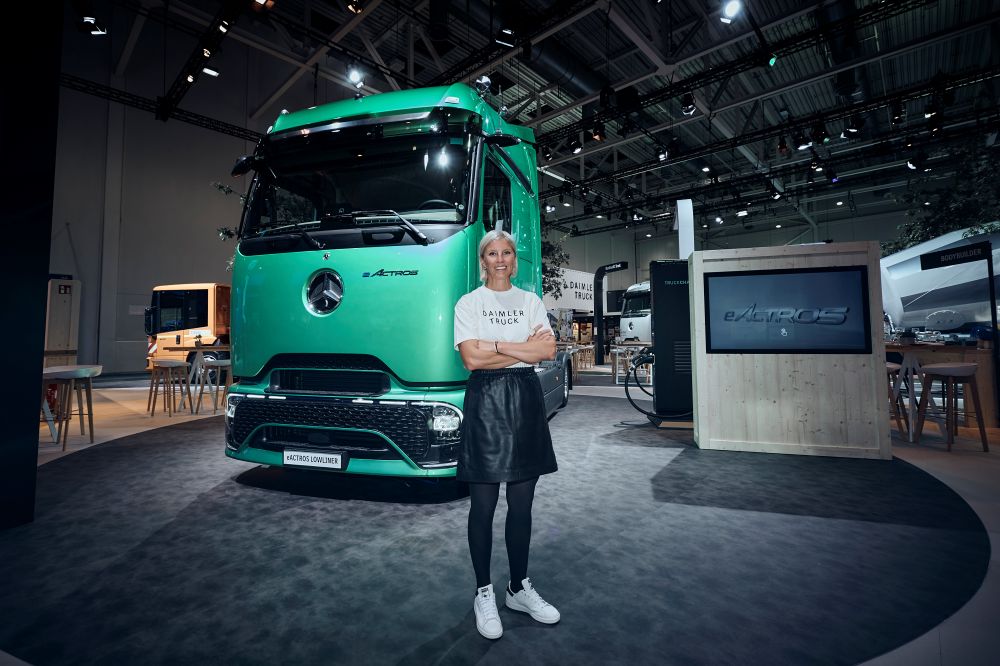
While the company has made strong progress across four of its five strategic pillars, she said the fifth, and perhaps most important, is culture—an area that demands constant focus to ensure it enables delivery across every other pillar.
The reflection comes in a landmark year for Daimler Truck, marking 130 years since Gottlieb Daimler invented the truck, a product that has shaped the world and continues to serve as the backbone of the global economy and society. That history, Ms. Rådström said, defines the company’s direction: always moving forward.
“Our ambition is to build the best truck and bus company in the world. We’re building the entire autonomous trucking system from the truck platform and vehicle architecture to the hardware integration and autonomous driving software. In autonomous driving, subsidiary Torc is targeting a major “driver-out” milestone on US public roads before the end of 2026, paving the way for commercial freight trials in 2027 and scaling by 2028,” Ms. Karin Rådström, President & CEO, Daimler Truck Holding AG, has said.
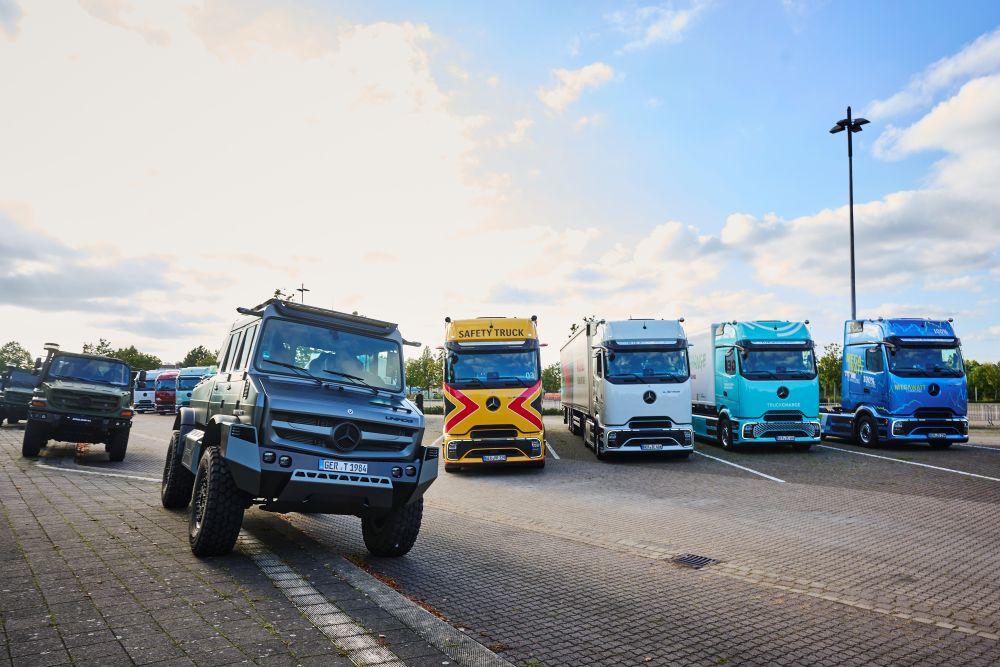
The anniversary celebrations also brought a host of announcements, including the new eActros Lowliner, new Active Cross Traffic Assist and Active Sideguard Assist 3 systems, and a streamlined Fleetboard digital platform.
With an aim to position the company for stronger results going forward, the OEM has redefined its strategy since last year and is implementing it consistently, with five pillars. Each pillar aimed at building a faster, more focused company, she elaborated at the last Annual General Meeting.
Unlocking Full Potential
The first pillar is unlocking full potential through growth, scale, and efficiency. Defence is a key example, viewed both as a societal responsibility and a genuine business opportunity, with a target of €1 billion in revenue by 2028. Asked about this target in the current geo-political and tariff scenario, Ms. Rådström told this publication that most of that growth is expected to come from tenders, an area where the company has already secured several major wins recently. Given the sustained global need for defence capability, she expressed confidence in hitting the target, even acknowledging the dynamic nature of today’s geopolitical landscape, noting that current trends suggest continued strong global defence demand for years to come.
Another example under this pillar is the spin-off of Mitsubishi Fuso into the new Asian company ARCHION, expected to bring cash inflows of €1.5-2.0 billion, along with future dividends as a minority shareholder.
Customer-Centric Solutions Powerhouse
The second pillar is becoming a customer-centric solutions powerhouse. This includes a new, state-of-the-art Global Parts Center in Saxony-Anhalt, supplying dealers across more than 170 countries with around 300,000 spare parts, alongside plans to expand captive retail locations in Europe by over 60% between 2024 and 2030, building what the company aims to be the industry’s best service network.
Transforming at “The Speed of Right”
The third pillar is transforming at “the speed of right,” recognising that the pace of emission-free transport differs across regions, slower in the US, more ambitious in Europe. On market leadership, Daimler Truck remains the clear heavy-duty leader in North America with efficient diesel trucks, while in Europe it leads in both diesel and battery-electric drivetrains, holding 35% market share in medium and heavy battery-electric trucks last year, double that of diesel.
On hydrogen, the company’s cellcentric joint venture with Volvo Group is gaining momentum, further reinforced by Toyota’s move to become an equal shareholder. “The timeline for fuel cell trucks to reach commercial scale is expected around 2030-31, not just based on cellcentric’s own progress, but because building out hydrogen refuelling infrastructure will ultimately determine when series production makes sense for trucks, and by extension, when the fuel cells themselves are actually needed,” she explained.
On autonomous driving, the company is investing in self-driving capability for long-haul freight in North America through its subsidiary, Torc Robotics, combined with its Freightliner Cascadia platform. Alongside this, Daimler is also building Coretura, a joint venture with Volvo Group, to create a common software operating system for trucks and buses. Though rivals forming partnerships, Ms. Rådström said the shared software system itself won’t be where differentiation happens. Instead, the real point of distinction will be the functional layer built on top of that base system, the specific features and capabilities each OEM chooses to develop independently.
A Leaner, More Efficient Operating Model
The fourth pillar focuses on building a lean, cost-efficient operating model. Its Cost Down Europe programme aims to cut annual recurring costs by more than €1 billion by 2030, having already saved over €100 million in 2025, ahead of plan, with a target of at least €250 million by year-end. A new, more efficient and resilient assembly plant is also being built in the Czech Republic, with construction starting next year.
Culture as the Ultimate Differentiator
The fifth and perhaps most important pillar is culture. Since strategies only succeed through consistent execution, not slides, the company is building a performance-oriented culture rooted in clarity of goals and accountability, ensuring decisions are made by those with the right expertise, rather than by organisational hierarchy alone.
Asked which of the company’s five strategic pillars carries the greatest execution risk over the next two to three years, Ms. Rådström pointed back to this same pillar. While progress across the other four has been strong, she said, “how well they collaborate ultimately determines whether a company ends up average, good, or truly great. It’s not a source of active worry, but rather an area requiring constant focus to ensure the right culture enables delivery across every other pillar.”