With fleet operators increasingly focusing on safety, efficiency and lifecycle costs, Vishay Precision Group, Inc. (VPG) and its exclusive Indian partner, Shri Narayani Associates (SNA), believe the country’s commercial vehicle industry is approaching an important inflection point for intelligent payload management.

As India’s commercial vehicle industry steadily transitions towards safer, smarter and more connected mobility, onboard weighing is emerging as a technology whose time may finally have arrived. While the concept has been successfully deployed across developed markets for decades, adoption in India has remained limited due to the absence of stringent legislation and the industry’s long-standing focus on acquisition costs. However, increasing emphasis on road safety, infrastructure protection, fleet efficiency and lifecycle cost optimisation is steadily changing that equation. Recognising this opportunity, UK-headquartered VPG Onboard Weighing Systems, in partnership with its exclusive Indian representative, SNA, is looking to establish intelligent payload management as an integral part of the country’s evolving commercial vehicle ecosystem.
Speaking to MOTORINDIA, Mr. Richard Oxland, Export & Aircraft Scales Manager, VPG Onboard Weighing and Mr. T. Sridhar, CEO, SNA, shared their perspectives on the technology’s global evolution, its growing relevance for India and the roadmap for accelerating its adoption.
Nearly Four Decades of Innovation
VPG is among the world’s leading specialists in onboard weighing systems, with nearly 40 years of experience in payload optimisation across a wide range of commercial vehicle applications. Its onboard weighing business is headquartered in Bradford, UK, while the broader organisation operates manufacturing facilities in 11 countries and employs over 2,500 people worldwide. Today, more than 50,000 VPG onboard weighing systems are in operation across Europe, Australia, North America, South America, the Middle East and Asia, supporting applications ranging from municipal waste collection and forestry to mining, construction and bulk haulage.
“We’ve been the leader in onboard weighing systems for nearly 40 years and have provided solutions across virtually every commercial vehicle application,” Richard said. “Our strongest markets outside the UK are Australia, the US and the Middle East, but we’re now looking at expanding significantly into markets like India.”
According to Richard, onboard weighing has evolved far beyond its traditional role of preventing overloading. Increasingly, it is being viewed as a strategic fleet management tool that enables operators to optimise payloads, reduce maintenance costs, improve fuel efficiency and enhance overall vehicle utilisation.

Technology that Delivers Lasting Value
Richard explained that onboard weighing systems generally fall into two categories. While load cell-based systems provide highly accurate weight measurement, they are typically integrated during vehicle manufacturing, making retrofit applications difficult and expensive. Overload monitoring systems, by comparison, are mounted on suspension components or axle housings, making them easier to install on existing vehicles—an important advantage for markets such as India.
Where VPG believes it stands apart is in its sensor technology. Unlike conventional mechanical systems that rely on moving components, VPG’s enclosed sensors eliminate wear, corrosion and calibration drift.
“Most competitors still rely on mechanical systems with moving parts,” Richard explained. “Our sensors are completely enclosed with no external moving components. That means no physical wear, no corrosion and virtually no possibility of the system drifting out of calibration.”
This translates into what the company describes as a “fit-and-forget” solution. Once installed and calibrated, the system requires minimal maintenance, helping fleet operators lower the total cost of ownership while protecting critical components such as tyres, suspension, steering and axles.
“If you’re operating the vehicle efficiently, you’re also optimising fuel consumption,” Richard noted. “And if you’re optimising fuel consumption, you’re reducing your carbon footprint as well.”
Global Experience Shaping Future Markets
Drawing on VPG’s experience across multiple continents, Richard observed that while the technology remains the same, the reasons for adoption vary considerably from one region to another.
“The biggest driver globally is legislation,” he said. In the UK, stringent axle-load enforcement and penalties of up to £5,000 per overloaded axle have made onboard weighing an important compliance tool. Australia’s Chain of Responsibility legislation similarly places accountability for vehicle safety across the transport chain. Elsewhere, the drivers are more operational. Forestry operators in Brazil and New Zealand use onboard weighing to maximise payloads before trucks leave remote loading sites, while municipalities in the UAE rely on the technology to protect road infrastructure and improve waste management.
“In some countries it’s legislation, in others it’s operational efficiency or infrastructure protection,” Richard explained. “The technology is the same, but the business case changes from market to market.”
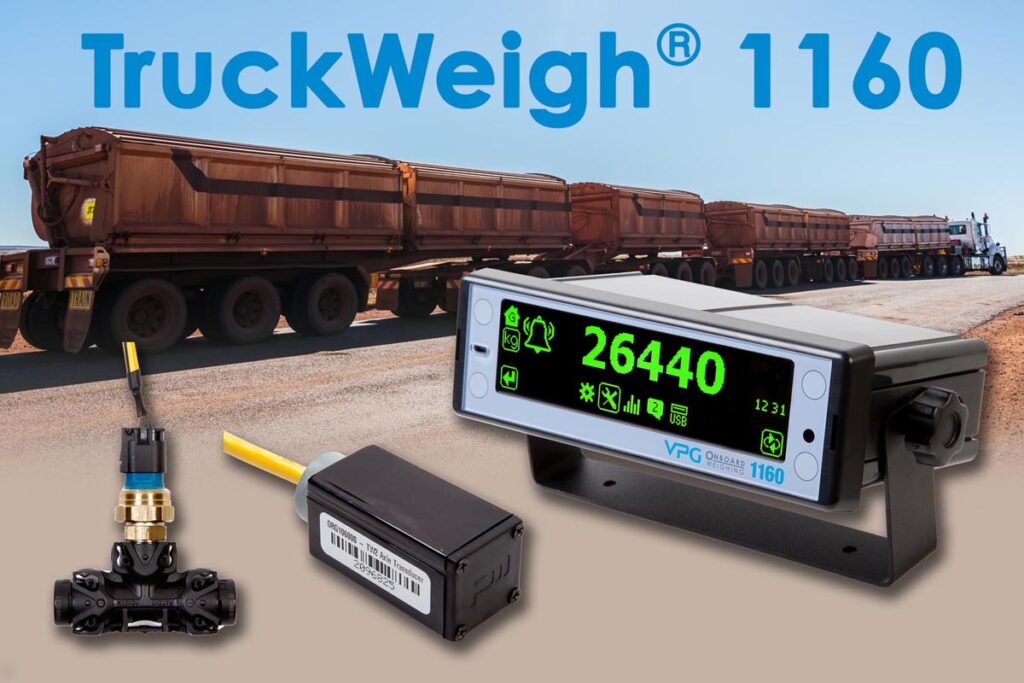
India Approaches an Inflection Point
VPG supplied its first systems into India around six to seven years ago, primarily for mining applications where expensive equipment and demanding operating conditions make payload optimisation commercially attractive. Today, however, Richard believes India is approaching an important turning point.
Discussions around weigh-in-motion systems, tighter enforcement of overloading regulations and vehicle monitoring at toll plazas are gathering pace. More importantly, fleet operators are gradually shifting their attention from purchase price to lifecycle operating costs.
“We’re seeing discussions with several Indian OEMs, trailer manufacturers and government agencies,” Richard revealed. “The government’s increasing focus on vehicle weight monitoring could make a significant difference to the market.”
He believes that as commercial vehicles become more technologically advanced and more expensive, protecting those assets will become increasingly important.
Another emerging opportunity lies in electric commercial vehicles. Payload has a significant impact on battery range, making accurate weight information an important input for route planning and fleet management.
“A vehicle that appears capable of travelling 250 miles may only achieve 150 miles once fully loaded,” Richard pointed out. “Accurate payload data therefore becomes critical.”
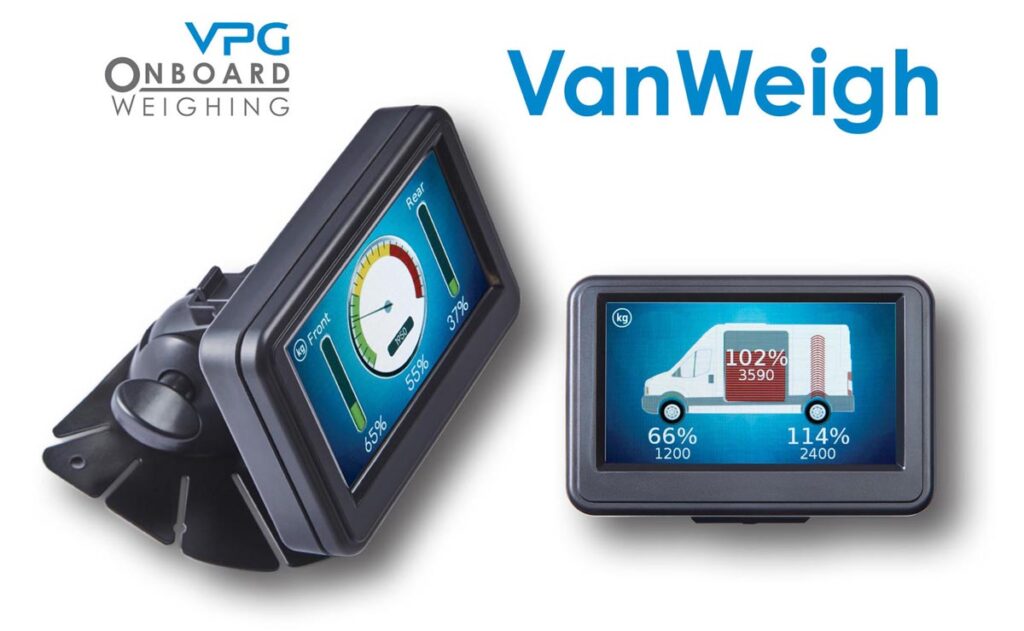
A Partnership Built on Expertise
Supporting VPG’s India strategy is Chennai-based SNA, part of a family business with over five decades of expertise in industrial weighing technologies. The company has introduced several international weighing solutions to Indian industry and has executed around 400-500 industrial weighing installations across sectors including steel, foundry, material handling and manufacturing.
“Our core competency has always been weighing technology,” said T. Sridhar, CEO, SNA. “Introducing globally proven weighing solutions into India has been our strength for over 50 years. Onboard weighing is simply the next logical step.”
Sridhar emphasised that the company evaluates every technology carefully before entering into an exclusive partnership. “We don’t simply accept every agency,” he said. “Our customers trust us because we represent technologies that genuinely add value. VPG’s global experience, proven installations and continuous product development gave us the confidence to build a long-term partnership.”
Building the Ecosystem
Rather than viewing onboard weighing as a standalone product, SNA sees it becoming an important element within the connected commercial vehicle ecosystem. Payload data can complement telematics, improve fleet utilisation, support predictive maintenance and contribute to future software-defined vehicle architectures.
“As commercial vehicles become more digital, payload information becomes another valuable data source,” Sridhar explained. “It can complement telematics, improve fleet management and ultimately help operators run their vehicles more efficiently.”
The technology has already attracted interest from several leading commercial vehicle manufacturers, global Tier 1 suppliers and mobility technology companies. While confidentiality agreements prevent disclosure of names, Sridhar confirmed that multiple evaluations and discussions are currently underway. The company is also engaging with government agencies and research organisations to share international best practices as India develops future vehicle weight regulations.
“When leading organisations dedicate time and technical resources to evaluate a solution, it clearly indicates they recognise its long-term potential,” he said.
Looking ahead
Both Richard and Sridhar believe mining will remain the initial growth segment for onboard weighing in India before adoption expands into mainstream on-road commercial vehicles. Higher-value assets, demanding operating conditions and measurable maintenance savings make mining an ideal starting point.
“Our objective is not merely to sell a product,” Sridhar said. “We want to contribute to safer mobility, better fleet utilisation and lower operating costs for the industry.”
Richard believes that widespread adoption will ultimately depend on demonstrating value rather than simply promoting compliance. “Everything comes down to perceived value,” he concluded. “Once operators understand that onboard weighing isn’t simply an additional cost but an investment that protects vehicles, improves efficiency and lowers operating costs, adoption will naturally accelerate.”
For VPG and SNA, that journey may still be in its early stages. Yet, with connected vehicles, electrification, stricter safety expectations and lifecycle cost optimisation reshaping India’s commercial vehicle landscape, intelligent onboard weighing appears well positioned to become one of the next significant advances in fleet technology.