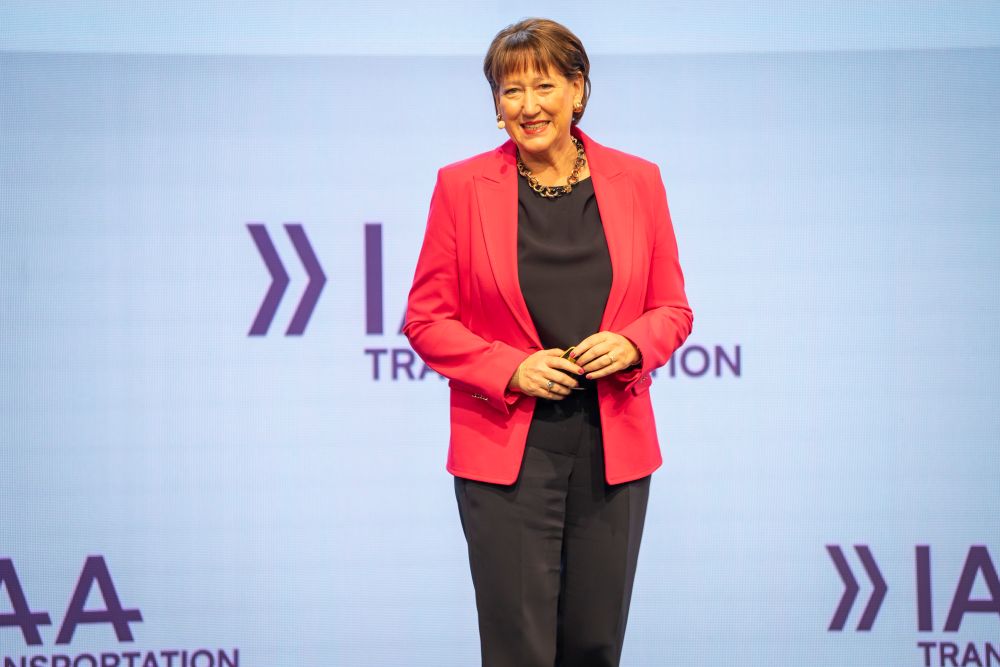
Opening the IAA Transportation Media Summit 2026 on June 9, Hildegard Müller, President of the VDA, said the commercial vehicle industry has entered a decisive phase of transformation, but cautioned that growing regulatory complexity and bureaucracy are making long-term investment decisions increasingly challenging.
She stressed that maintaining Europe’s competitiveness must remain the industry’s top priority, arguing that only financially strong and competitive companies can continue investing in innovation, safeguard employment and accelerate the transition towards cleaner, smarter transport solutions.
“Competitiveness must remain at the centre of the transformation because only competitive companies can invest in new technologies, secure jobs and successfully drive the transition,” Müller said.
Infrastructure Remains the Missing Link
A key focus of her address was the urgent need to accelerate the rollout of charging and hydrogen infrastructure across Europe. While acknowledging that progress is being made, Müller noted that development remains uneven, creating uncertainty for fleet operators and slowing the adoption of zero-emission technologies.
Using Italy as an example, she highlighted the limited availability of public charging stations suitable for heavy-duty commercial vehicles and pointed to the significant gap between announced infrastructure projects and actual deployment.
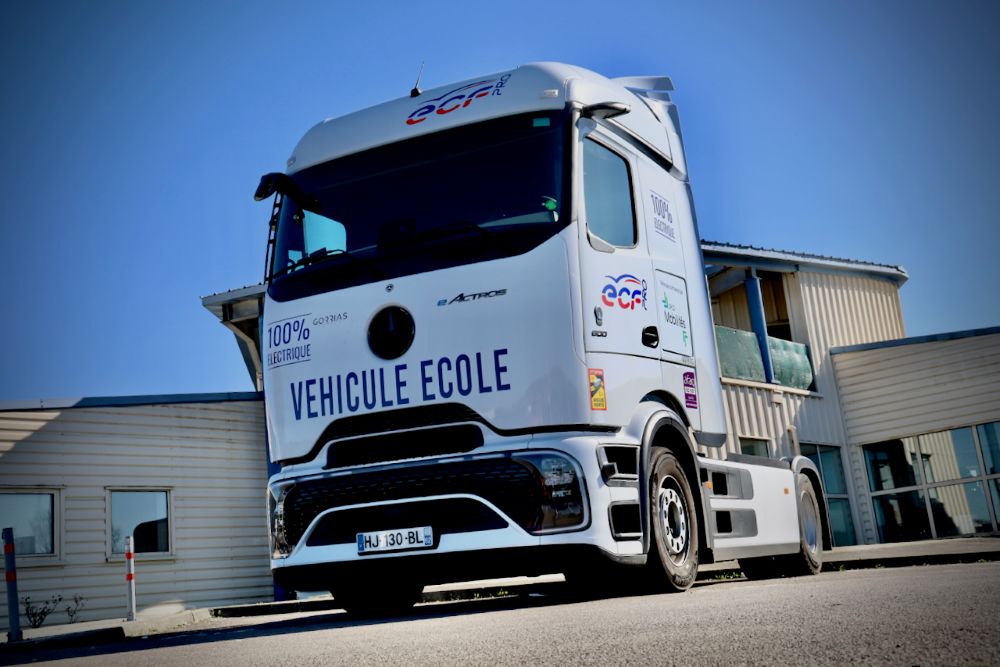
“The progress is visible, but the infrastructure ecosystem is not developing at the pace required for the industry’s transition,” she observed. Müller added that the evolving transport landscape is also creating uncertainty for logistics operators, as established business models are being reshaped and investment decisions increasingly depend on clear visibility into operating costs and infrastructure availability.
Europe Must Build on Its Strengths
Despite the challenges, Müller expressed confidence in the European commercial vehicle industry’s ability to lead the global transition. She noted that manufacturers continue to set benchmarks in vehicle safety, driving dynamics, electrification and digital logistics, while emerging technologies such as software, digitalization and artificial intelligence are unlocking new opportunities to improve transport efficiency and productivity.
“Europe’s commercial vehicle industry has the technological capability to lead the future of transport. Now, the framework conditions must enable that innovation to succeed,” she concluded.