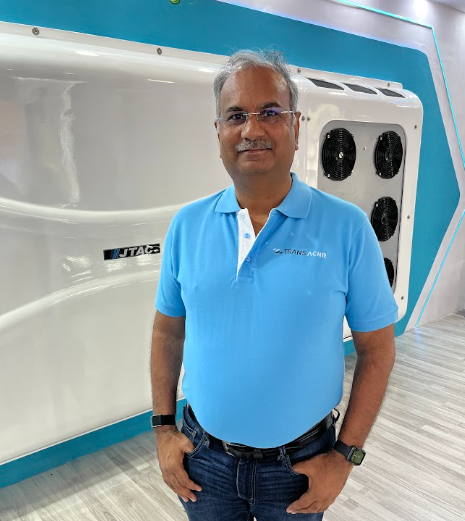
Trans ACNR, the Delhi-headquartered transport air-conditioning specialist behind the JTAC bus air-conditioning brand, showcased several new solutions at Prawaas 5.0 while outlining an ambitious roadmap that spans a near-tripling of production capacity, a wider global footprint and a move into new application segments such as battery energy storage systems (BESS) and data centre cooling. To get there, the company is expanding its mother plant at Ghiloth in Rajasthan and building two more: one at Shoolagiri, near Bengaluru, due to open by December 2026, and a second at Ras Al Khaimah in the UAE, due in early 2027.
Speaking to MOTORINDIA, Mr. Shatrughan Kumar, Founder & Managing Director, Trans ACNR, said the growing scale and quality of industry exhibitions reflect the rapid evolution of India’s bus and commercial vehicle ecosystem.
“Every season, Prawaas is becoming bigger and better. As exhibitions in India evolve, companies are learning from global events and bringing those best practices here. The quality of exhibitors and discussions has improved significantly,” he observed.
Engagement through the three days was strong, he said, with operators increasingly looking beyond upfront price towards long-term operational value.
Customer priorities evolve
According to Shatrughan, fleet operators today are far more focused on total cost of ownership than on initial acquisition cost alone.
“Customers are now willing to invest more if they get longer component life, higher reliability and hassle-free operation. Earlier, discussions revolved mainly around price. Today, they are talking about lifecycle costs, durability and service support,” he explained.
Another significant trend is the increasing adoption of Annual Maintenance Contracts (AMCs), even among private fleet operators.
“Fleet owners want predictable operating costs. They understand that even a single trip lost due to a breakdown can wipe out whatever they may have saved by avoiding an AMC. That mindset has changed considerably,” he noted.
This shift, Shatrughan believes, plays to JTAC’s strengths. The company has built an extensive service infrastructure comprising over 100 touchpoints across India, including 36 full-fledged workshops capable of handling large volumes of buses simultaneously.
The company is also digitising its entire service ecosystem by tracking every installed product, maintaining complete service histories and leveraging telematics for predictive maintenance.
“We are bringing all our service operations onto a digital platform. With telematics and data analytics, we are moving towards predictive maintenance, allowing customers to address potential issues before failures occur,” he said.
Product innovation and manufacturing expansion
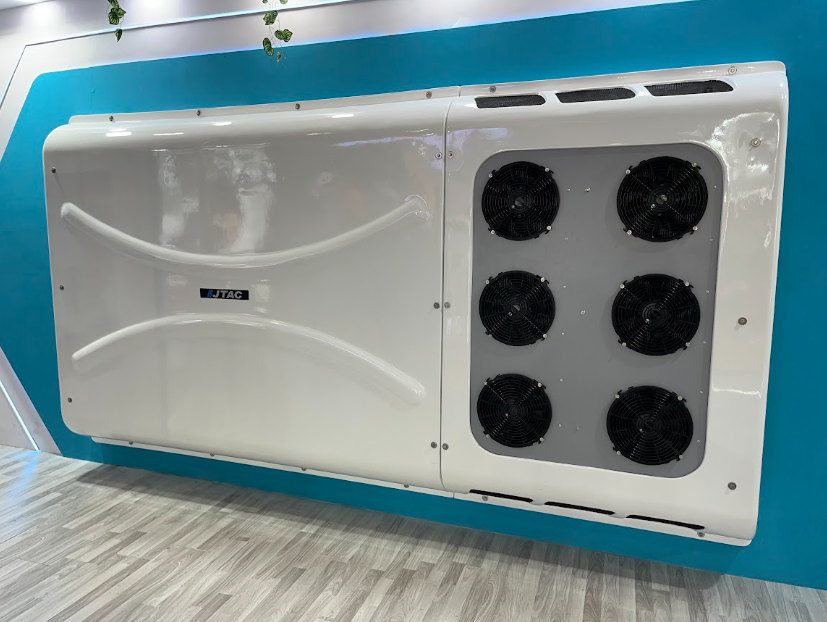
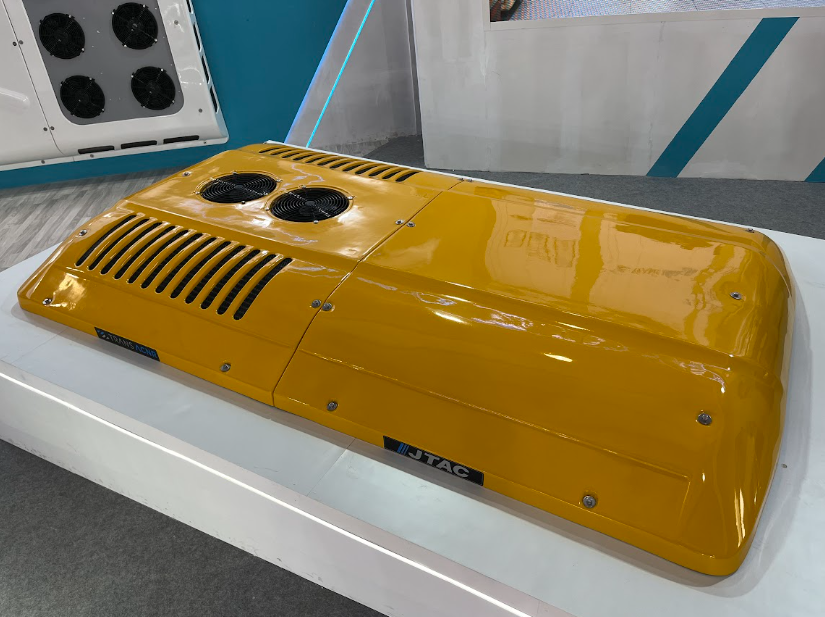
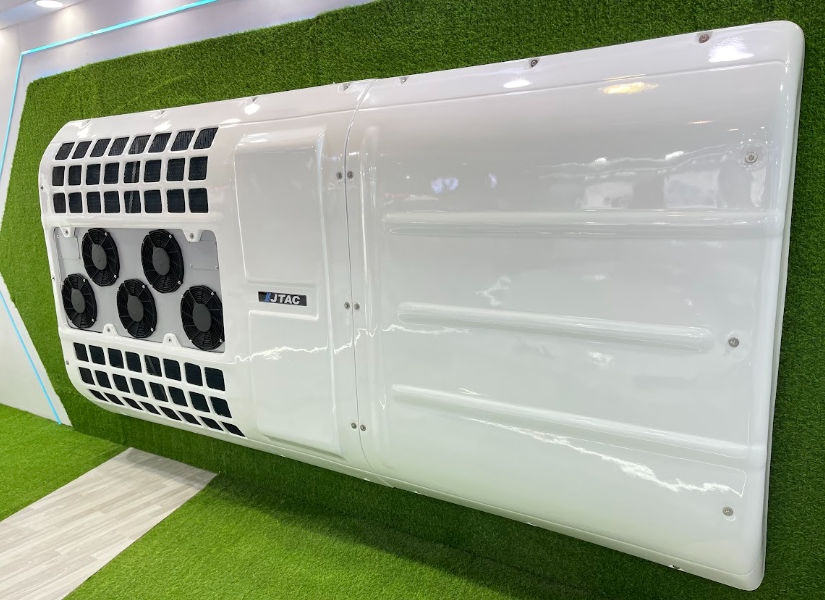
At Prawaas 5.0, JTAC introduced new air-conditioning solutions for 15-metre buses, including seating and sleeper configurations. The sleeper version features a dual-evaporator system designed to improve air distribution across the longer vehicle while significantly reducing cabin noise.
The company also showcased a DC-powered truck cabin air-conditioner, which Shatrughan expects to become an important growth driver.
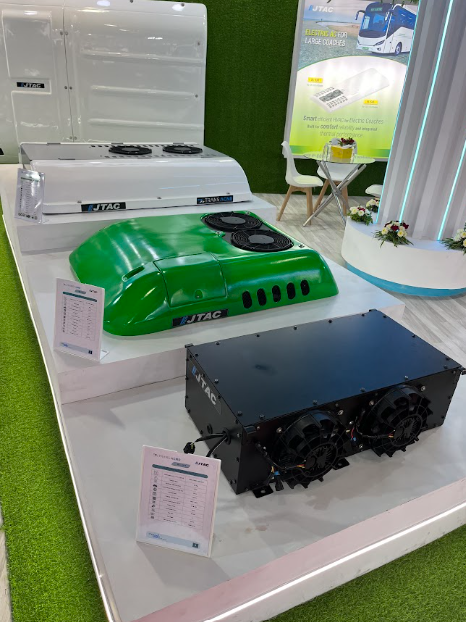
“We see tremendous retrofit opportunities in India, while Gulf countries are showing particularly strong interest. In extremely hot climates, customers often require additional cooling because the factory-fitted cabin AC gradually loses effectiveness over time,” he explained.
To support future growth, JTAC is expanding its mother plant at Ghiloth in Rajasthan and building two new facilities: one at Shoolagiri, near Bengaluru, coming on stream by December 2026 and a second at Ras Al Khaimah in the UAE in early 2027. Together, the three sites will take output to nearly three times current levels. Part of that gain will come from within existing operations, with the company investing in higher levels of automation and digitisation on the assembly and testing lines to raise throughput and build consistency without a proportionate increase in floor space or manpower.
“Together, these two plants will enable us to produce nearly three times our current capacity,” Shatrughan said.
Alongside the capacity expansion, the company is working to a longer-term plan to upgrade its design, testing and R&D facilities, with the aim of taking on more development work in-house as it moves into new applications.
Alongside domestic expansion, exports remain a major focus. The company is strengthening its presence across emerging international markets, including Egypt and the Philippines, while building out its Middle East base, where the Ras Al Khaimah plant will be supported by a newly opened marketing office in Dubai.
“Dubai will serve as our hub for international business, enabling us to cater not only to the Gulf but also to markets across Southeast Asia,” he said.
Investing in people and new opportunities
Beyond products and manufacturing, JTAC continues to invest in skill development. Its in-house training academy, now into its fifth batch, turns out around 70 trained technicians a year.
“That academy has always been very close to my heart. Developing skilled technicians is essential for the industry’s long-term growth,” Shatrughan shared.
The company has also launched an internal “Work with Dignity” initiative aimed at reinforcing the professionalism and importance of technicians across its organisation.
Looking ahead, JTAC is diversifying into new thermal management applications. Dedicated teams are working on solutions for BESS and data centre cooling, leveraging the company’s expertise in high-capacity cooling systems. Initial customer enquiries and requests for quotation (RFQs) have already been received, particularly from the Middle East.
“We already have the engineering, manufacturing, distribution and service capabilities in place. The application changes, but our core competencies remain the same,” Shatrughan noted.
JTAC has also entered railway air-conditioning, supplying systems that are now in service on the Indian Railways network.
With the Ghiloth mother plant being expanded, new factories rising at Shoolagiri and Ras Al Khaimah and teams chasing BESS and data centre work, Trans ACNR is betting that the same cooling engineering can carry the JTAC brand well beyond the bus roof.