Two proud legacies from different parts of the world, with distinctive brands, complementary strengths and an international reach, now share one ambition – to power industries, build infrastructure and connect trade without boundaries.
Control of Iveco Group has officially passed to Tata Motors. It changed hands on October 30, four days after Tata Motors’ tender offer closed on October 26. Calling it “a historic day” and “a starting point,” Mr. Olof Persson, Chief Executive Officer, Iveco Group, the task ahead is to turn potential into real progress for the two businesses and their customers.
The two companies announced their agreement in July last year, to create a commercial vehicle group with the product range and industrial strength to be a global champion. Tata Motors launched its tender offer in September this year.
Costly Race
The commercial-vehicle industry is entering a period in which OEMs must invest heavily in battery-electric and hydrogen vehicles, advanced diesel and alternative-fuel powertrains, vehicle software, connectivity and telematics, autonomous driving and driver-assistance systems, besides new manufacturing technologies and emissions rules. These investments are very high, and the returns are uncertain. For an independent maker such as Iveco, a larger parent – Tata Motors — with complementary engineering, purchasing and manufacturing skills offers a way to share the investment and spread development costs across a bigger business.
Scale Gap
Iveco has a substantial presence in Europe and operations in South America, Africa and other markets, but it did not have the global scale of some of its largest rivals. By becoming part of Tata Motors, Iveco gets three advantages: a strong position in the Indian commercial-vehicle market, manufacturing and sourcing skills in cost-competitive markets, and access to a wider international distribution and customer network.
Iveco also has some history in India. It was associated with Ashok Leyland for nearly 20 years, through a joint ownership arrangement with the Hinduja Group that began in 1987 and ended in July 2006. The brand may not be top of mind today, but it could still have some recall in the Indian market.
The two companies’ regions and products also complemented each other. At the time of the announcement, the combination was projected to create a business selling more than 590,000 units a year, with combined revenue of about €22 billion.
Defence Split
Iveco also had two very different businesses under one roof: commercial vehicles, buses and powertrains on one side, and defence and specialised military vehicles on the other. Its management believed the two faced different market forces, rules, customers and investment needs. Iveco’s February 2026 shareholder circular explained that investors tend to prefer focused businesses, or “pure plays,” and that the conglomerate structure could leave some businesses undervalued. It also noted that the commercial-vehicle and defence businesses had limited operational synergies. The transaction with Tata Motors, thus offered Iveco a strategic route to scale, technology investment and long-term competitiveness at a time when the industry is going through a major transformation.
Gain for Tata Motors
Tata Motors stands to gain considerably from the acquisition, but the biggest benefit is not simply an increase in vehicle sales. It is the opportunity to transform itself from a predominantly India-led commercial-vehicle manufacturer into a global commercial mobility company with a strong presence in Europe, Latin America and other international markets.
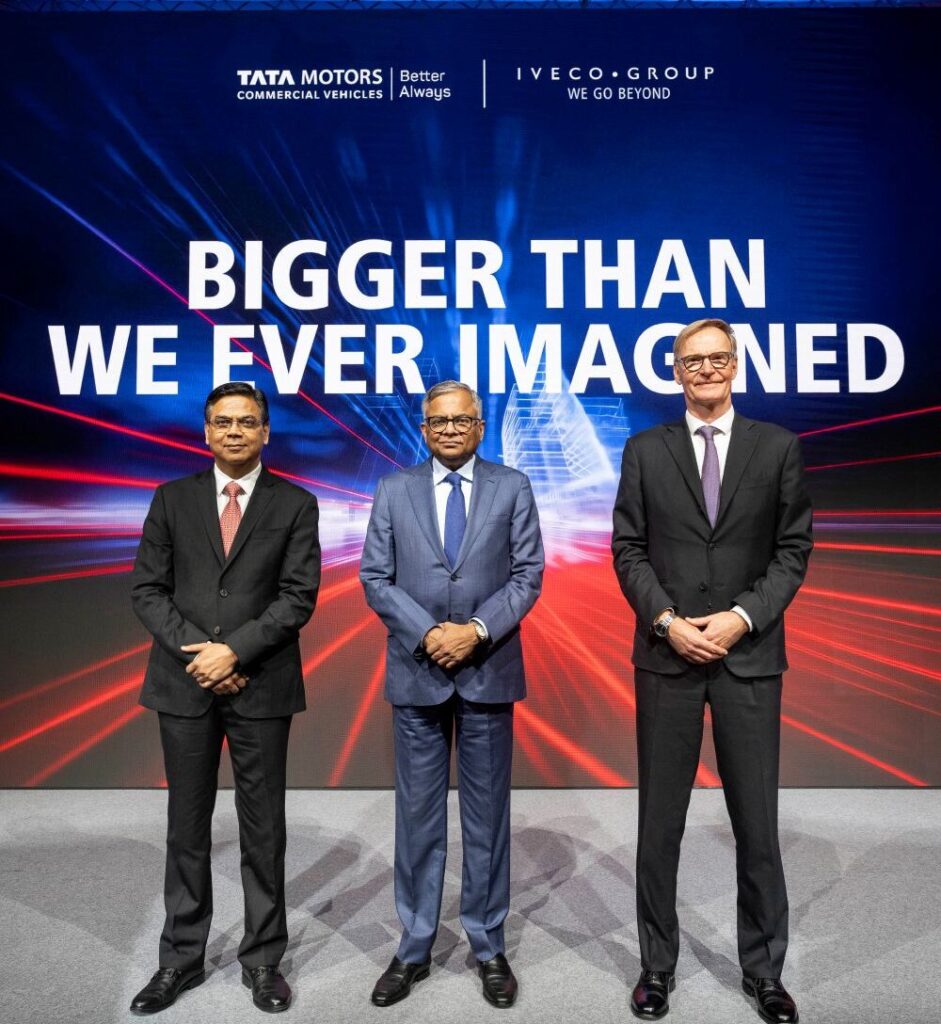
The deal became “bigger than we ever imagined”, which was the slogan on the event’s backdrop, and Mr. Persson also reiterated it at the press conference.
According to Mr. N Chandrasekaran, Chairman, Tata Sons and Tata Motors, both companies together will make every journey smarter, safer and greener, and bring mobility closer to customers. The two should not be seen as a case of consolidation. “This is about the future,” he said. Commercial vehicles are the backbone of every economy. Trucks move goods and buses move people, and they make roads, buildings and growth possible.
The combined group is already the fourth largest in the world, he said. Rank is not the goal, but it brings scale, and scale matters as much as technology. It allows the right investments in future products and opens up chances for employees, dealers and suppliers. Above all, it helps design products that customers will want.
Big Changes
The industry is about to change greatly, he said, and the two companies will face the changes together, rethinking not only future products but also the platforms they are built on, with a firm commitment to research and development. He expects the numbers to improve once the leaders of both companies “put their heads together” to plan a better future.
Right Partner
“Our world at Tata Motors has just become much bigger,” said Mr. Girish Wagh, Managing Director and CEO of Tata Motors. The company had built a stronger business in India, with a sharper portfolio, better capabilities and clear market leadership. That strength was meant to be a springboard for the next stage of growth, and that meant finding a partner with complementary strengths. “In Iveco Group, we have found that partner,” he said.
Big Canvas
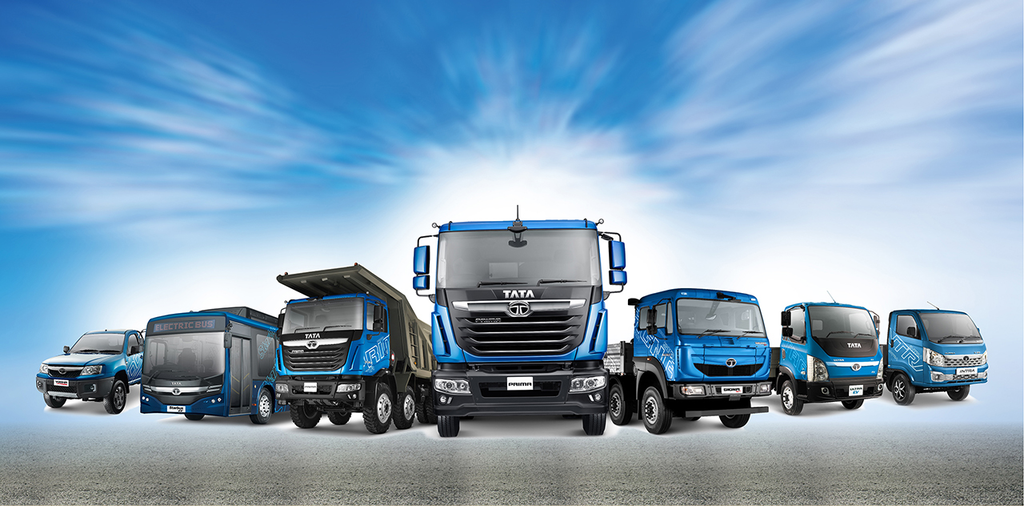
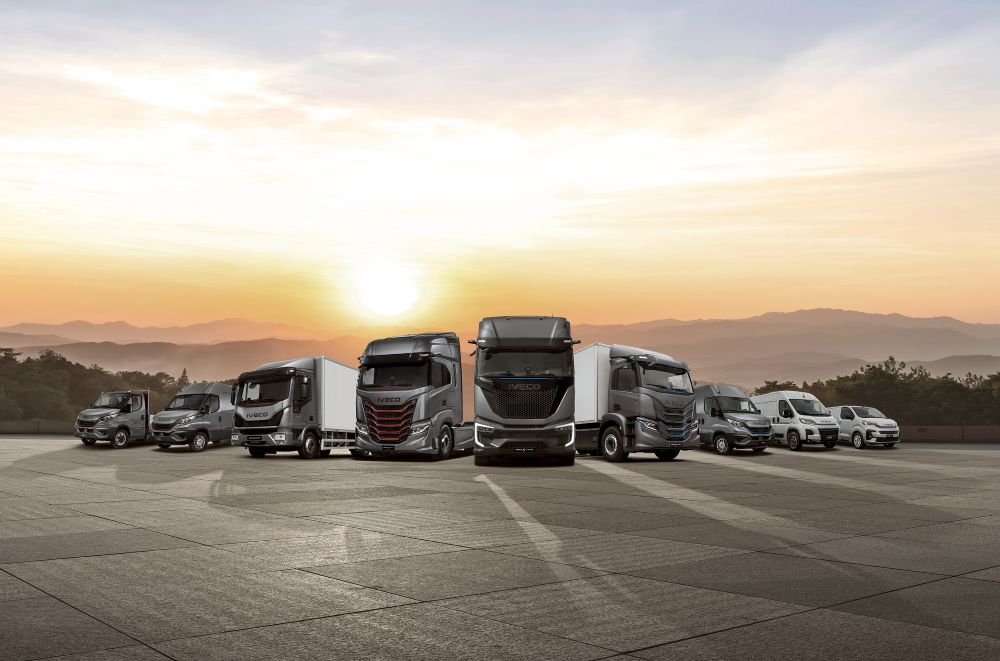
Picture a long highway at sunset. A blue Tata Motors truck rolls along, with a bus on one side, an Iveco truck on the other and a van close behind. The picture, put out by the two companies, as part of the presentation, sums up the idea behind their coming together – to become a stronger global force in commercial mobility. The message is that Tata Motors will bring its home strength in India and its growing reach abroad, while Iveco will bring established products and a known name in many markets.
According to the companies, the two together operate in more than 130 countries and have combined revenue of more than €21 billion (over ₹2,28,000 crore). They have 27 manufacturing sites, 25 R&D and engineering centres and more than 9,300 sales and service centres. More than 73,000 people work for them across six continents.
The maps fit together, Mr. Wagh explained, adding that Tata Motors leads in India and is growing in Asia, the Middle East and Africa. Iveco is well established in Europe and Latin America, and its sister company FPT brings powertrain skills that reach well beyond commercial vehicles. In many of the 130-plus countries, he said, one of the two is “only just getting started.” Mr. Persson said this makes the group “bigger and brighter right from day one.”
Four Ideas
The companies have set out four ideas to guide the journey. Customer First combines global strengths with a deep understanding of local needs. Proudly Distinct keeps the strength of each company’s brands, identity and industrial foundations. Seamless Continuity means customers, dealers, suppliers and partners see no break in service from day one. Possibilities Multiplied aims to open up new chances in technology, market access and scale, with know-how flowing both ways.
Mr. Persson said customers still need trucks on the road, buses delivered and spare parts supplied, and quality remains the number one priority. “That is exactly the attitude we need as we move forward,” he said.
Shared Plans
Mr. Persson named several areas where the two will work together. In trucks, two leaders whose market presence, dealer networks and plants fit each other well will have room to grow. In buses, there is a chance to build a common next-generation platform strategy. The two will also share design principles, vehicle architectures and a common approach to components, which should bring more competitive products to market faster. Closer coordination in engineering and factories, from developing platforms to adapting production and managing vehicle systems, should speed up innovation and shorten the time to market. Joining two large industrial businesses, he cautioned, takes discipline, careful planning and mutual respect, which he said he has already seen in both.
Every Need
Mr. Wagh painted a picture of what the group can now serve. Its range runs from pickups of under one tonne to 55-tonne long-haul trucks, and from 10-seater vans to 51-seater coaches. Its engines, gensets and e-axles power farms, construction sites, mines and ships. “A pickup in Pune, a bus in Bogota, a long hauler on the Autobahn, a yacht in the Mediterranean. One enterprise with the capabilities to power them all,” he highlighted.
The group also plans to stay with customers through a vehicle’s whole life, with connected fleet solutions and captive financing, from the first kilometre to resale and recycling. “Very few players have this breadth,” he said.
Many Roads
On technology, Tata Motors spans advanced diesel, natural gas and biogas today, and battery, electric and hydrogen technologies for the transition ahead. There is no single route to cleaner transport, Mr. Wagh said. “What a fleet in Frankfurt needs may be very different from what a fleet in Mumbai needs.” The two companies also plan to combine their software, connectivity and engineering skills to move faster towards connected, smarter vehicles, with customers the biggest gainers.
Learning Both Ways
Iveco brings deep engineering, strong brands and technologies, loyal customers and an established industrial base, Mr. Wagh said. Tata Motors brings frugal engineering, quick product development, cost competitiveness and long experience in India and other emerging markets. The goal is not to make one company like the other. “The best combinations do more than add, they multiply,” he said, adding that “now it is up to us to turn possibility into performance and ambition into lasting impact.”