Safexpress Pvt. Ltd. is entering its next phase of logistics evolution by bringing together technology, network scale, fleet efficiency and customer visibility. While GPS and digital tracking have been part of its operations for decades, the company is now expanding its focus towards artificial intelligence, automation and data-led processes to improve customer service as well as internal efficiency.
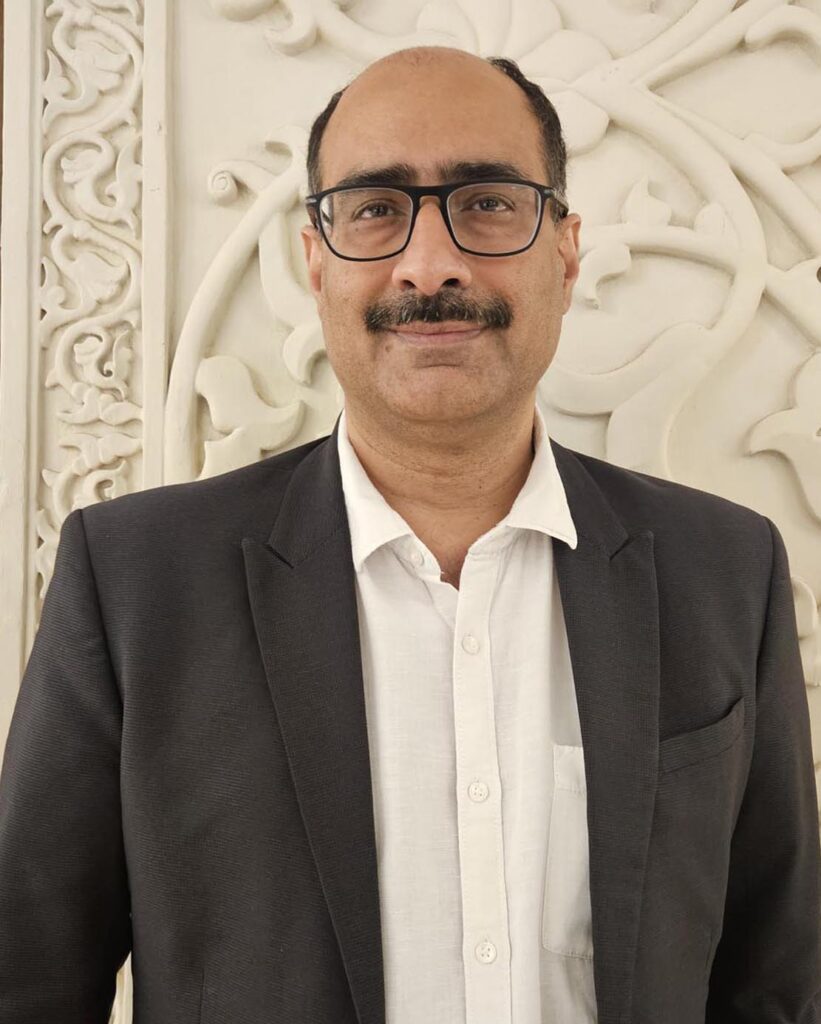
Speaking about this journey, Mr. Anil Syal, President, Safexpress Pvt. Ltd., said the company’s technology adoption began long before many of today’s digital tools became mainstream. Safexpress has been working with GPS-based vehicle tracking for around 25 to 27 years, with the technology and customer expectations evolving significantly over this period.
“Twenty-five years ago, the customer wanted us to tell them where their goods were. Today, with the transparency layers we have added, the customer already knows where the goods are. The expectation has completely changed,” he said, highlighting the shift of visibility from a value-added service to a basic expectation in logistics.
For B2B customers in particular, visibility becomes critical because goods handed over to a logistics provider are often already committed to another stage of the supply chain. Safexpress is therefore using GPS, geospatial technologies and digital platforms to provide customers with information about their consignments throughout their journey.
From visibility to intelligent operations
Anil explained that the relationship between logistics providers and customers has changed fundamentally. Earlier, the logistics company had to proactively provide shipment information. Today, customers can track their goods themselves and expect immediate explanations when there is a delay.
“We provide 100% visibility. Because now the customer can track the goods in real time, the questions have changed from “where are my goods?” to “the goods should have been here today, but it is showing that they are still 500 kms away, what’s the snag and how are you going to solve it?” In such a situation, you can appreciate, there is no room for hiding behind excuses, there is scope for solutions only,” he emphasised.
This changing expectation has also influenced Safexpress’ technology investments. The company’s approach is to identify technologies that solve genuine customer requirements and then scale them as adoption grows. Large customers can access dedicated portals with deeper and incisive analytics, while smaller or one-time users can use similar digital interaction through the company’s website.
The next stage is artificial intelligence. Safexpress is using generative AI for customer interaction while also exploring agentic AI for internal processes. Its internal initiative, SIA, or Safexpress Intelligence Agent, is currently operational to help employees access information, data and analysis, and respond to customer requirements more efficiently.
“The real game changer will be when we are able to deploy AI meaningfully into our operational side. That is where we will see whether it can create a material change,” Mr. Syal revealed.
AI moves into the back office
One of the early applications is invoice verification. Safexpress handles invoicing for more than 15,000 credit customers, many of whom have individual requirements regarding invoice formats, supporting information and documentation. Although invoices are system-generated, manual checks were previously required before they were sent to customers.
The company has started using agentic AI to support this process, reducing the amount of manual checking while improving speed and consistency. “We have pushed that into our agentic AI system. The manual checking mechanism has now been reduced to a fraction of what it was a year ago,” he said, adding that the objective is not simply faster processing but also reducing the possibility of errors.
Anil stressed that AI is only one component of a much broader technology strategy. Material-handling equipment, conveyors, forklifts, robotics and autonomous mobile robots (AMR) address different operational requirements and should not be treated as interchangeable technologies.
“AI, robotics and material-handling equipment are different elements. They may all be technology-related, but each addresses a different efficiency opportunity,” he explained.
Safexpress already has advanced material-handling infrastructure across its hubs, while further automation remains an area the company is exploring. The larger opportunity, according to Anil, lies in applying technology across the operational cost structure, where efficiency improvements can have a significant cumulative impact.
Network scale remains a core advantage
Technology is supported by the physical network Safexpress has built across India. Unlike a conventional point-to-point transportation operator, the company operates an integrated network comprising offices, gateways, logistics hubs, warehouses and vehicles.
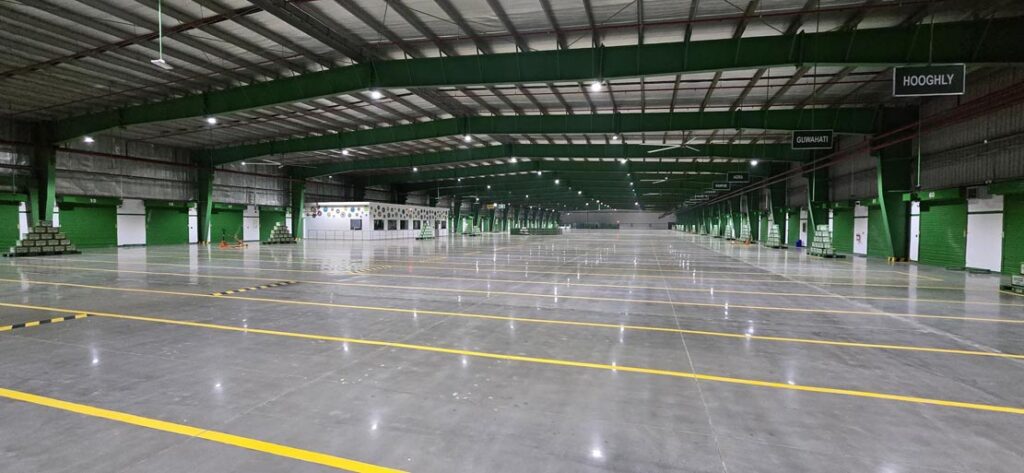
Safexpress has around 2,750 offices, 853 gateways and 105 large logistics hubs, supported by more than 15,000 vehicles. Its infrastructure also includes more than 21.5 million sq. ft. of warehousing space.
“We have created a pan-India network where a customer can simply give us 40 kilos and ask us to deliver it anywhere in the country. That flexibility comes from the network and the scale behind it,” Mr. Syal said.
The mesh-styled network allows Safexpress to consolidate shipments and optimise vehicle movements across multiple and deeper routes. This network density, combined with infrastructure and technology, is intended to provide customers with consistent service across geographies.
Anil identified three interconnected strengths; the network, the infrastructure supporting it and the Safexpress’ approach to service delivery. “Our edge comes from three things; the network, the infrastructure that powers the network, and the attitude of the organisation towards service delivery,” he emphasised.
Younger fleet supports higher utilisation
Fleet efficiency is another important part of the company’s operating model. Safexpress operates vehicles ranging from around 800 kg payload capacity to vehicles capable of carrying up to 18 tonnes. Vehicle deployment is determined by the requirements and utilisation of individual routes and sectors.
The company also follows a relatively short replacement cycle. According to Anil, vehicles are generally churned within three to four years, while the average age of the overall fleet is between 18 to 24 months. “Our vehicles operate at very high intensity. Because we churn the assets faster, we are able to maintain a younger fleet, reduce downtime and improve operating efficiency,” he said.
The younger fleet also provides a platform for adopting alternative powertrains. Safexpress has been working with alternative fuels for more than a decade, primarily CNG, particularly for intra-city applications and, to a smaller extent, LNG, being tried in inter-city operations.
Electric vehicles are now gaining momentum, especially in first-mile and last-mile operations where distances are shorter and more predictable. Long-haul applications continue to face challenges around range, charging infrastructure and turnaround time. “In the first-mile and last-mile, the range requirement is smaller and more predictable. That is where we have started deploying EVs more aggressively,” Anil said.
With a short-term target of 1,000 EVs, Safexpress has added around 200 EVs in the last few months and expects deployment to increase substantially over the coming year. “We have not yet set a specific target for our line-haul as yet, but once that happens the targets will get revised substantially,” Anil explained.
For Safexpress, the immediate focus is therefore on combining proven technologies with emerging ones; improving visibility, using AI to simplify processes, strengthening automation, maintaining a young and highly utilised fleet, and deploying alternative fuels and EVs where they fit operational requirements. “The core of our focus in the short-to-medium term is operational efficiency,” he revealed.
According to Mr. Syal, “the longer-term possibilities which no longer seem like moonshot ideas could include autonomous commercial vehicles on our National Highways”. This would dramatically change safety on roads, would solve problems of driver shortage and would increase asset utilization. In effect it would improve turnaround times and operating efficiency and reduce cost of logistics. For now, however, Safexpress is concentrating on strengthening the elements within its control and building a logistics network that can respond to increasingly demanding customer expectations.