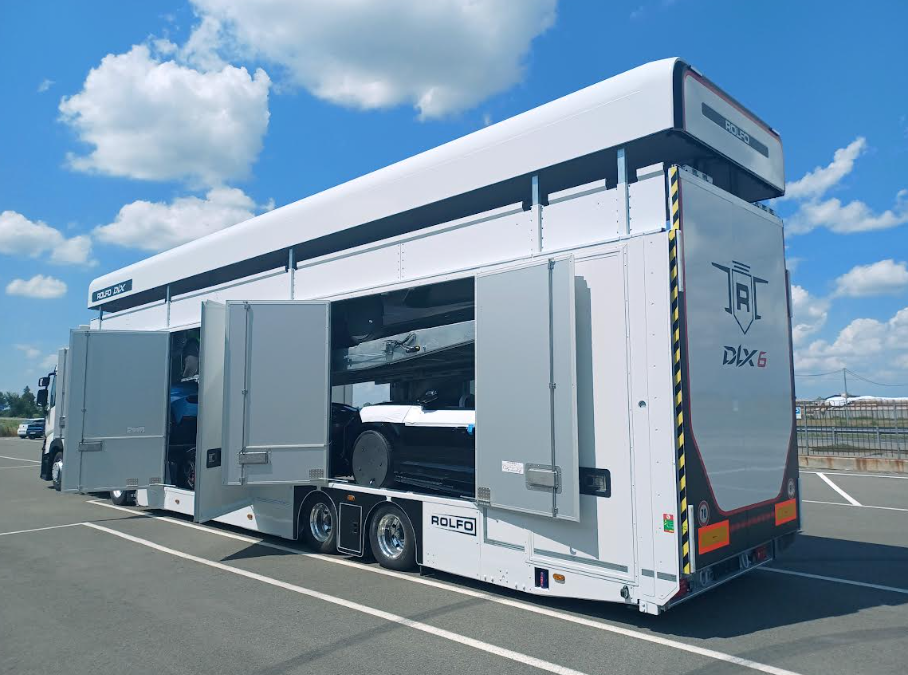
Rolfo is showcasing its latest innovations and its vision for the future of vehicle transport, built around three strategic pillars: the electrification of vehicle transporters, the economic sustainability of the entire supply chain, and the development of digital services capable of creating value for operators, drivers, and fleet managers. Among the key innovations on display in Hannover is the new DLX 6, Rolfo’s first enclosed car carrier semi-trailer specifically designed to be paired with electric tractor units. The new model reflects the industry’s transition toward low-emission mobility without compromising operational efficiency. Thanks to a load volume increased by more than 4%, the DLX 6 optimizes available space utilization while helping to reduce the risk of vehicle damage during loading and unloading operations. Particular attention has also been paid to driver comfort and vehicle aesthetics, both of which are becoming increasingly important factors for professional transport operators. The DLX 6 provides a tangible response to evolving market requirements and introduces the first key theme of Rolfo’s presence at Hannover: the electrification journey of vehicle transport.
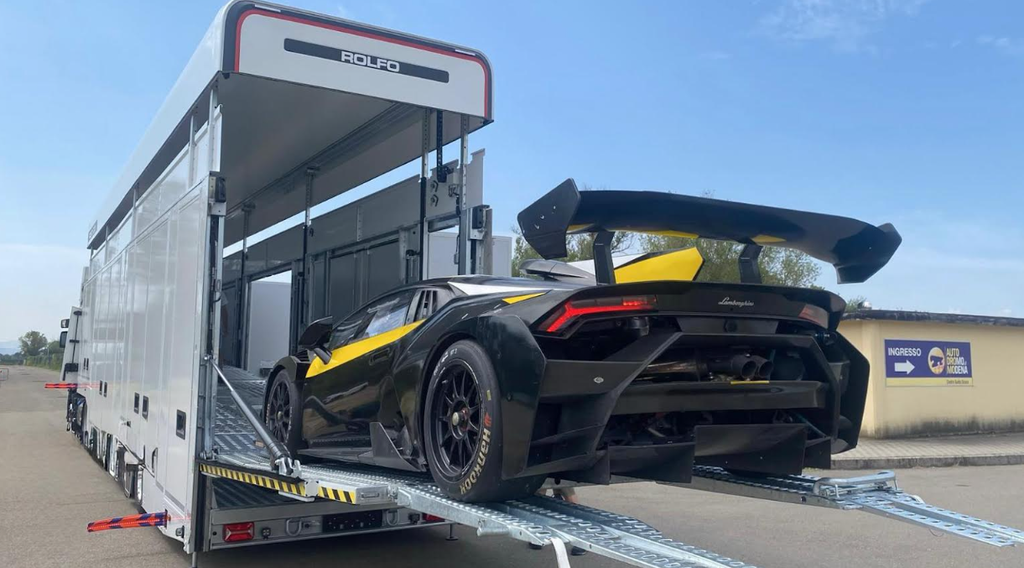
Vehicle Transport Electrification: A Technology Entering the Operational Phase The electrification of heavy-duty transport is no longer just a future prospect. Although challenges related to driving range, charging infrastructure, and transport mission planning still remain, the industry is progressively entering a phase of practical implementation of these new technologies.
The advancements achieved in recent years now make it possible to identify increasingly realistic operational scenarios, particularly for planned routes and highly predictable transport services. In this context, truck manufacturers, logistics operators, and body and equipment builders are working together to accelerate the adoption of sustainable transport solutions.
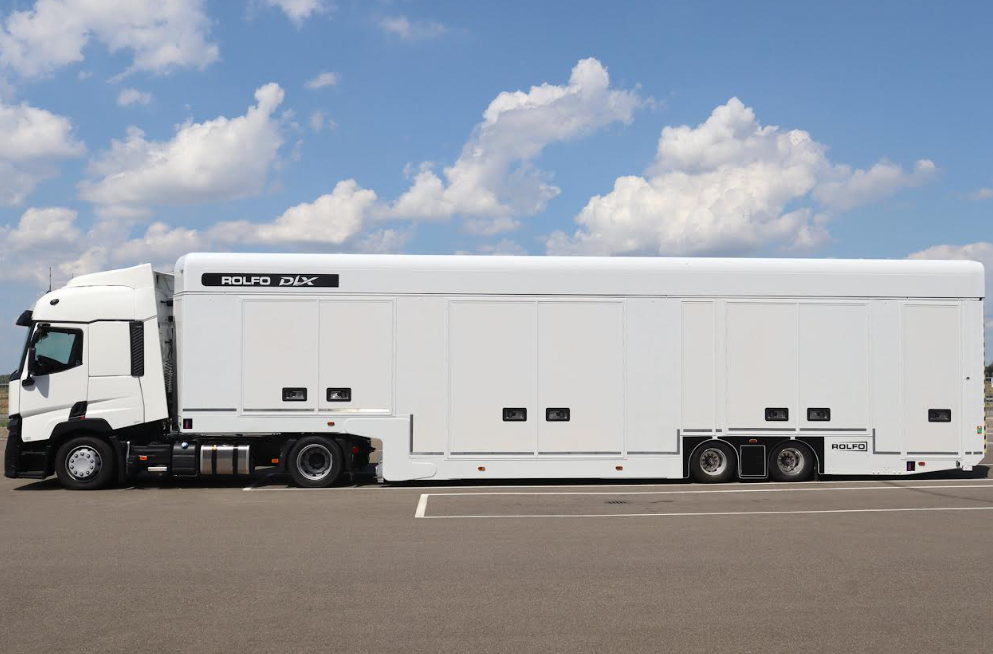
One example is the project developed by Rolfo in partnership with Scania in Poland. The Rolfo transport system mounted on a fully electric Scania chassis demonstrates that it is already possible to combine the operational requirements of vehicle transport with ambitious emissions reduction goals. The vehicle will be exhibited on the Rolfo stand during IAA Transportation 2026, serving as tangible evidence of the industry’s transition from pilot projects and testing phases to real-world operational deployment.
Competitiveness as a Prerequisite for Sustainability
While environmental sustainability is now a widely shared priority, the real challenge for manufacturers will be maintaining competitiveness in a market still characterized by cost volatility, supply chain uncertainty and, at the same time, a market showing signs of recovery, albeit with uneven performance across different segments.
To successfully navigate the transition toward more sustainable mobility, companies must continue investing in innovation while maintaining production efficiency, quality, and reliability. For Rolfo, environmental and economic sustainability must move forward together: an effective transition is only possible if it creates value throughout the entire supply chain.
The Next Challenge Will Be Services
Whereas competitive advantage was once driven primarily by the product itself, an increasing share of value in the coming years will be generated through the services offered to customers.
With this vision in mind, Rolfo has embarked on a significant digitalization journey. In 2024, the company introduced its load planning application.
By entering the countries crossed during the transport route, the vehicle models to be carried, and their respective quantities, the system can automatically generate the optimal loading configuration for the selected Rolfo transporter. This tool provides practical support to dispatchers, fleet managers, and drivers in planning daily operations.
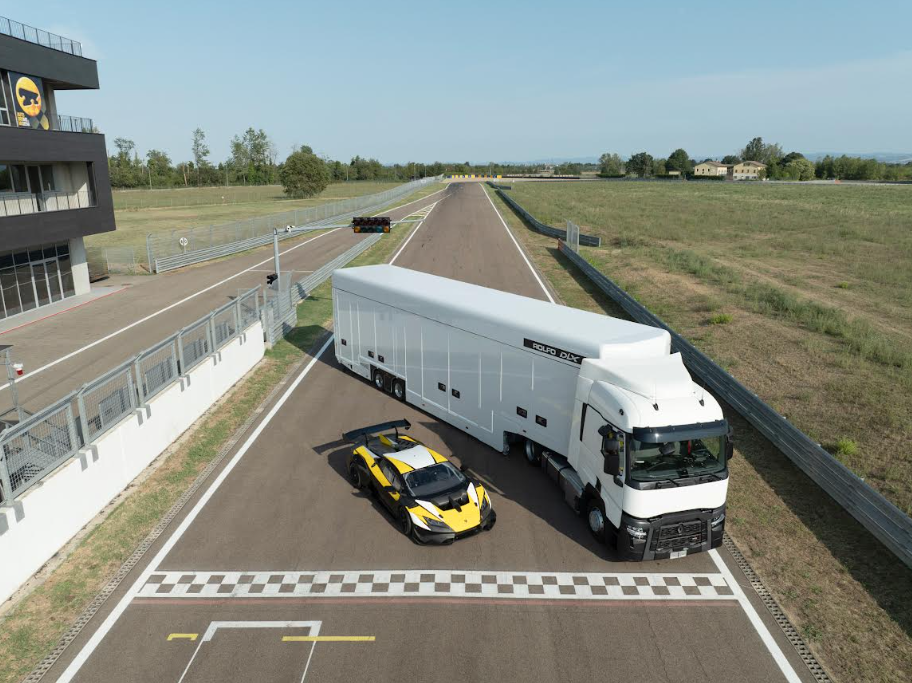
At Hannover 2026, Rolfo will also unveil WIT, a new application developed to simplify maintenance operations. Using a smartphone camera, users can identify a component, instantly obtain the corresponding spare part number, and access the technical information required for its replacement or management. This solution helps reduce vehicle downtime and improve the efficiency of maintenance activities.
Looking Ahead with a Practical Approach
Electrification, economic sustainability, and the digitalization of services are currently the key challenges facing the vehicle transport industry.
At IAA Transportation 2026 in Hannover, Rolfo is showcasing tangible examples of how these transformations can be translated into practical solutions, helping shape a transport model that is increasingly efficient, sustainable, and aligned with the needs of operators.
The Rolfo Group has presented its first Sustainability Report, reaffirming its deep sense of responsibility and long-term commitment to sustainable development.
More than a moment of transparency and accountability, this report represents a strategic opportunity to share the Group’s concrete commitment to building an industrial model capable of combining innovation, competitiveness, and sustainability.
Since 1885, the Group has continuously evolved and grown, establishing itself as one of the leading international players in the design and manufacturing of vehicle transport equipment. Today, more than ever, we are fully aware of the responsibility that a strong company with deep roots in its local territory bears toward the environment, people, and future generations.
The year 2025 confirmed itself as a period of profound transformation, accelerated by increasingly complex global dynamics: the energy transition, the evolution of mobility, climate change, resource scarcity, and the reconfiguration of value chains. In this context, our industry faces a dual challenge: innovating to meet new market demands while fully complying with increasingly stringent environmental, social, and ethical standards.
For us, sustainability is not simply a destination but a fundamental guiding principle that permeates every stage of our operations, from strategic planning to after-sales service, including production efficiency, integrated logistics, responsible resource management, and the value of our connection with local communities. The widespread integration of this approach guides all our activities, driven by the belief that today, more than ever, true innovation must go hand in hand with corporate responsibility.
Over the last two years, significant progress has been achieved through targeted investments in advanced technologies, including the application of artificial intelligence to load optimization, enabling substantial reductions in fuel consumption and emissions. The Group has also strengthened safety standards through intelligent solutions such as the Safety Zone Device and has consistently adopted practices aimed at reducing environmental impact while promoting the principles of the circular economy.
However, there can be no genuine sustainability without people. For this reason, the Group continues to invest in human capital by fostering inclusive, safe, and stimulating workplaces, supporting continuous learning, and encouraging skills development at every level of the organization.
The 2025 Sustainability Report reflects this journey: a story of bold decisions, tangible achievements, and ambitious objectives.
Above all, it embodies a comprehensive vision that places the harmonious balance between economic growth, environmental stewardship, and social well-being at the center of the Group’s development strategy.