Olectra Greentech Limited has reported its best-ever annual performance in FY26, delivering 1,280 electric vehicles — the highest since inception. Revenue grew 28% year on year to ₹2,312.17 crore, EBITDA rose 27% to ₹352.28 crore, and profit after tax increased 29% to ₹179.53 crore. Cumulative deliveries stood at 3,998 units as of March 31, 2026, with an order book of 10,161 vehicles providing strong visibility for future growth.
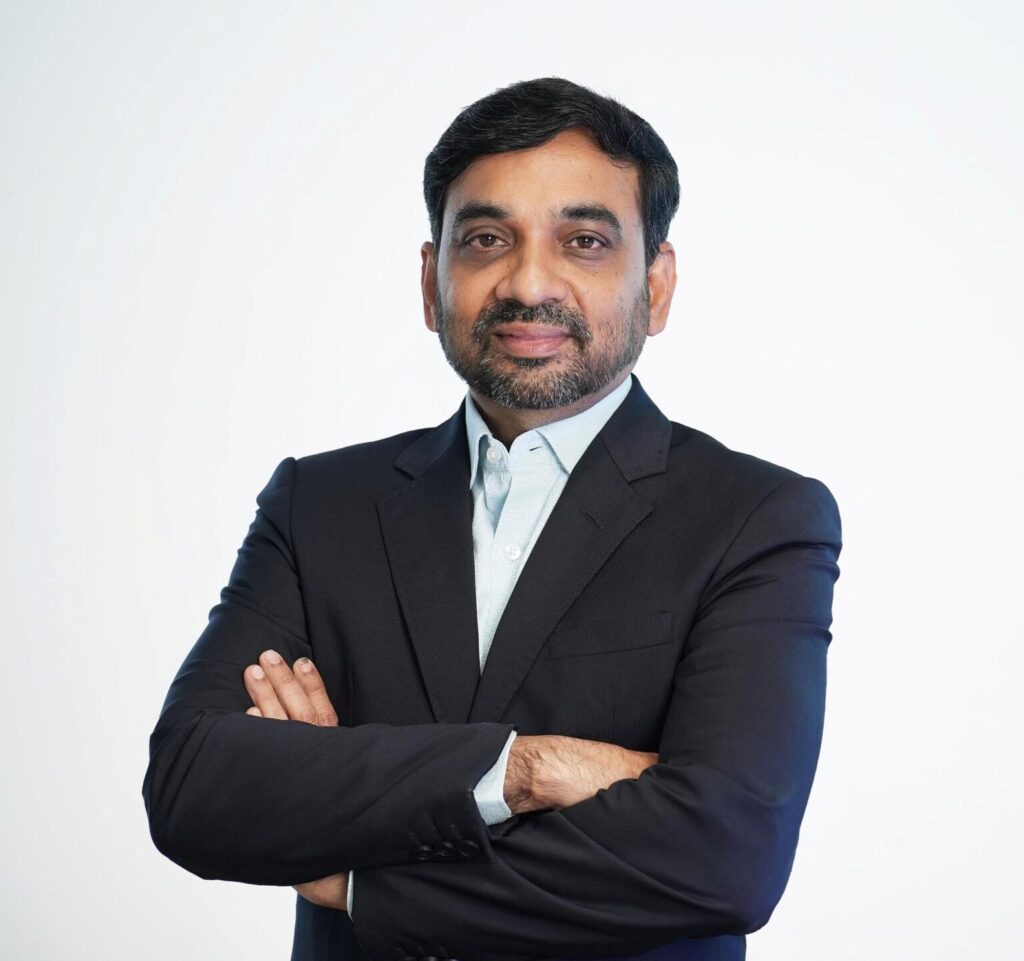
With revenue, EBITDA, and PAT all growing in the 27–29% band, the balance between volume and profitability was no accident. Mr. Mahesh Babu, Managing Director, Olectra Greentech Limited, told this publication that it came down to supply chain improvement, manufacturing consistency, and focused cost optimisation. “There were a lot of costs we believed we could optimise — and we did. Otherwise we would have grown in volume but not in profitability. Multiple things had to work together to get that balance right,” he said.
“We want to be present across most mobility segments using clean energy — electric, hydrogen fuel cell, or anything clean. We want a full product range across buses and trucks within three to five years. And we don’t want to be only an Indian player — we’re working towards presence in at least two or three continents. We want exports to account for at least 10% of revenue within this period,” he said.
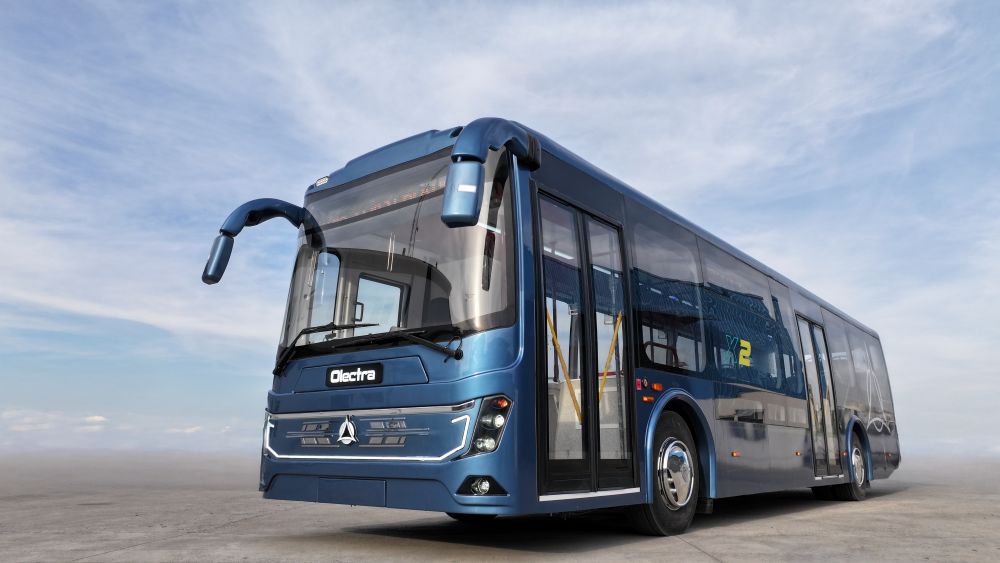
Speaking on the next phase of growth he said, “We have invested in a next-gen bus platform and a truck platform. We’ve already deployed about 100 trucks within the MEIL group — tippers — to understand how electric commercial vehicles perform in real conditions, and we’ve learned a lot from that. We are investing about ₹400 crores across both programmes — product development — and about ₹200 crores in manufacturing capacity upgrade and realignment. The next-gen bus will launch between October and December, and the truck between January and March. By end of this financial year, we’ll have both in the market — that’s the next big leap.”
On the supply chain changes made to sustain delivery momentum, he said, in the last three quarters, the company has consistently delivered more than 350 buses. “The changes we made — one, supply chain management typical to the auto industry: predictability, engaging with vendors, understanding their pain points and ours, and arriving at a working understanding. Second, we improved working capital by reducing inventory by close to ₹80–90 crores, which gave us a lot of capital to rotate and keep momentum going. We also commissioned the Sitharampur plant in October — a stage-wise assembly line — and made significant process control improvements. Third, we focused hard on cost optimisation, because without that, we would have grown in numbers but not in profitability. We also built resilience into the system to handle new turbulence and deliver consistently — the principle being, don’t aim for something unachievable, but also don’t set targets that aren’t stretching you.
Market Evolution
According to Mr. Babu, the total bus market is about 1,15,000 units across all sizes. The nine and 12-metre segment — large buses — is about 60,000. EV adoption in that segment is now at about 9%, up from 3.7% last year overall to 4.7% this year. Once a segment crosses 10–12% EV adoption, it tends to tip very quickly — like what happened in three-wheelers. “I expect that tipping point to happen in buses within the next two years, and for trucks within five years. When I visited China recently, I was surprised to find their truck EV adoption has crossed 50% in the calendar year, up from 10–12% just three years ago. A lot of that was driven by energy security concerns post the Russia-Ukraine war. India imports 80–85% of its fuel, so a similar push is inevitable here,” he pointed out.
EV – Diesel Economics
The upfront cost of an electric bus remains significantly higher than diesel. Therefore, to make TCO argument convincing is a challenge. As over 80% funding is financed through a bank loan, which converts into an EMI, the real comparison is monthly cash flow, not sticker price. “The EMI on an EV is higher — but the fuel cost is significantly lower. The net monthly outflow for an EV operator is actually lower than for a diesel operator. We give operators trial runs, send them daily savings reports, and have a ready calculator — showing them how much they saved in one day, multiplied by 30 days, multiplied by 365 days, versus their EMI cost. That makes the case very tangibly,” Mr. Babu said. EVTrans, a sister organisation of Olectra handles the pay-per-kilometre model for State transport undertakings.
Battery Cell Dependency
About 80% of cells manufactured globally come from China — that’s a global reality, not unique to India. Every country depends on China for cells because no one else has built that kind of capacity. India’s ACC PLI scheme is trying to address this, but it will take at least 5-7 years before India can build even 20–30% of its own cell manufacturing requirement. It needs dedicated funding, bank support, and a large technical workforce working consistently for years. That’s the reality. “What we can do in the near term is battery pack assembly — that’s about 25–30% of the value-add, and we can build that knowledge and capability now, as a stepping stone to eventually getting into cells,” he mentioned.
The Long Game
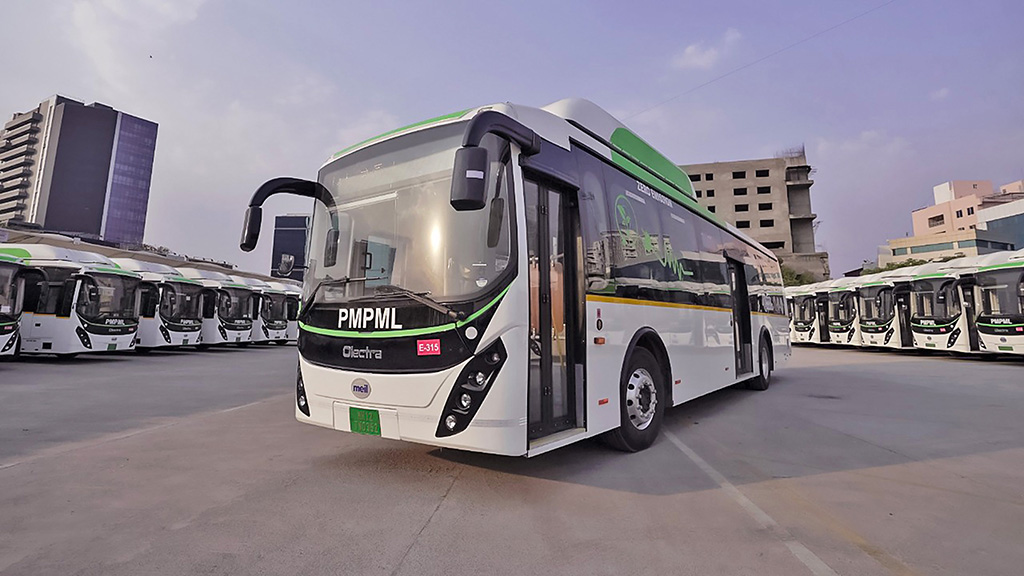
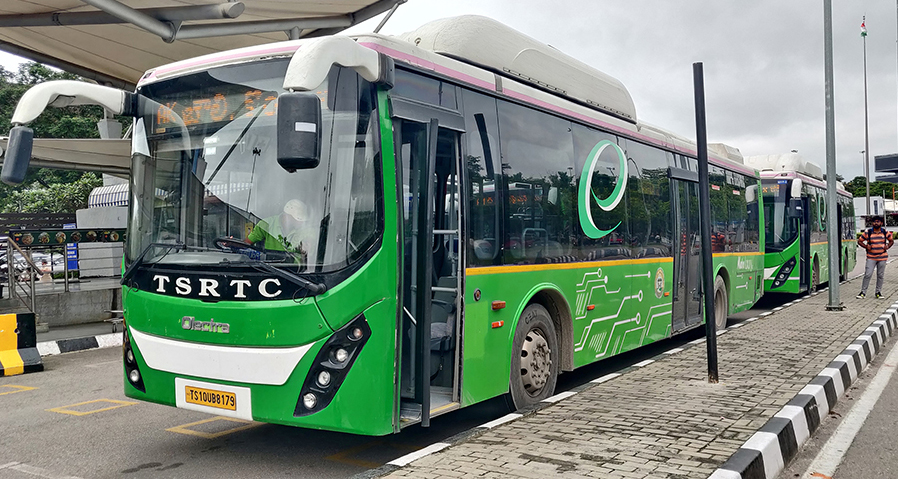
Government procurement may move slowly, but for Olectra, that’s not necessarily a bad thing. With over 99% of electric bus sales currently flowing through state transport undertakings (STUs), the company operates squarely within the rhythm of public sector purchasing — and has learned to work with it rather than against it.
A single order of 10,000 buses can take up to two years to deploy. But as Olectra sees it, that timeline is a feature, not a bug. It creates the breathing room needed to plan production, expand capacity, and execute at scale. “This is a capacity-building industry, not a discounting game,” he emphasised. With five to six serious players currently building manufacturing muscle, the groundwork being laid today could eventually position India not just as a self-sufficient electric bus market, but as a supplier to the world.
Import Bill Myth
One argument often levelled against EV adoption in India is the import dependency — the country already imports 80-85% of its crude oil, and now faces the prospect of importing lithium and permanent magnets too. But Olectra pushes back on this with hard numbers.
“We’ve done a lifecycle analysis for buses and trucks. If you compare the total foreign exchange spent on fuel over the lifecycle of a diesel vehicle versus the total import cost of the battery and components for an EV, the EV import cost is less than one-fourth of the fuel import cost over the vehicle’s life. So even if every bus and truck in India converted to electric and we imported all batteries, India’s overall import bill would still reduce by 75% on a lifecycle basis. That’s the math, Mr. Babu noted.
Building Workforce
No industrial transition happens without people, and the shift to electric mobility is no different. High-voltage systems demand a new kind of skilled technician — one that India currently doesn’t have in abundance. He acknowledges the challenge plainly, but refuses to be derailed by it.
“What we do is take in Graduate Engineer Trainees, train them consistently in the plant in technical areas, and then deploy them in the field. There will always be a supply-demand gap, and trained people will get poached — that’s going to happen for everyone. But as a nation, we need such people. We are not perturbed by it. We’ll continue to train more people, build more capacity — frankly, that is a national need, and I’m very happy to contribute to it,” he signed off.