From a traditional axle and running-gear specialist to a broader mobility solutions provider, BPW is steadily expanding the definition of what a trailer can deliver. At IAA Transportation 2026 in Hannover, this evolution was visible across its product, service and digital portfolio, with the company placing efficiency, total cost of ownership, connectivity and lifecycle support at the centre of its strategy.
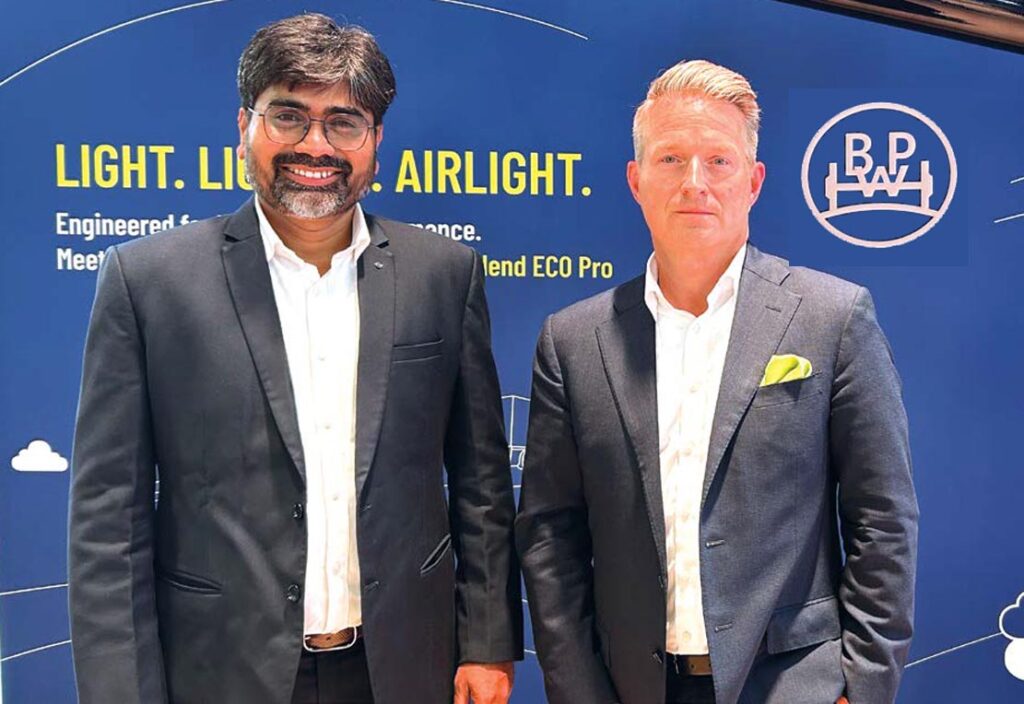
For Mr. Achim Kotz, Personally Liable Managing Partner, BPW Bergische Achsen KG, the transformation is rooted in a simple principle; technology must ultimately create measurable value for the customer. BPW, a family-owned company with roots in Germany, is increasingly positioning itself as a partner that can support fleets not only through hardware, but also through data, maintenance, service and integrated trailer solutions. “We are a service and solution provider. The next steps into digitalisation and the use of telematics are very important for us; we are going in that direction,” emphasised Mr. Kotz.
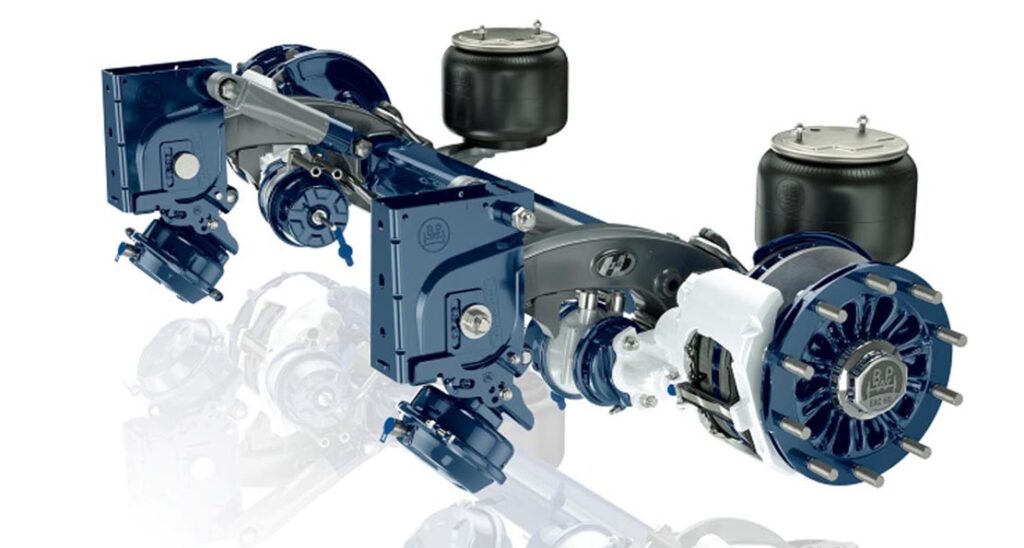
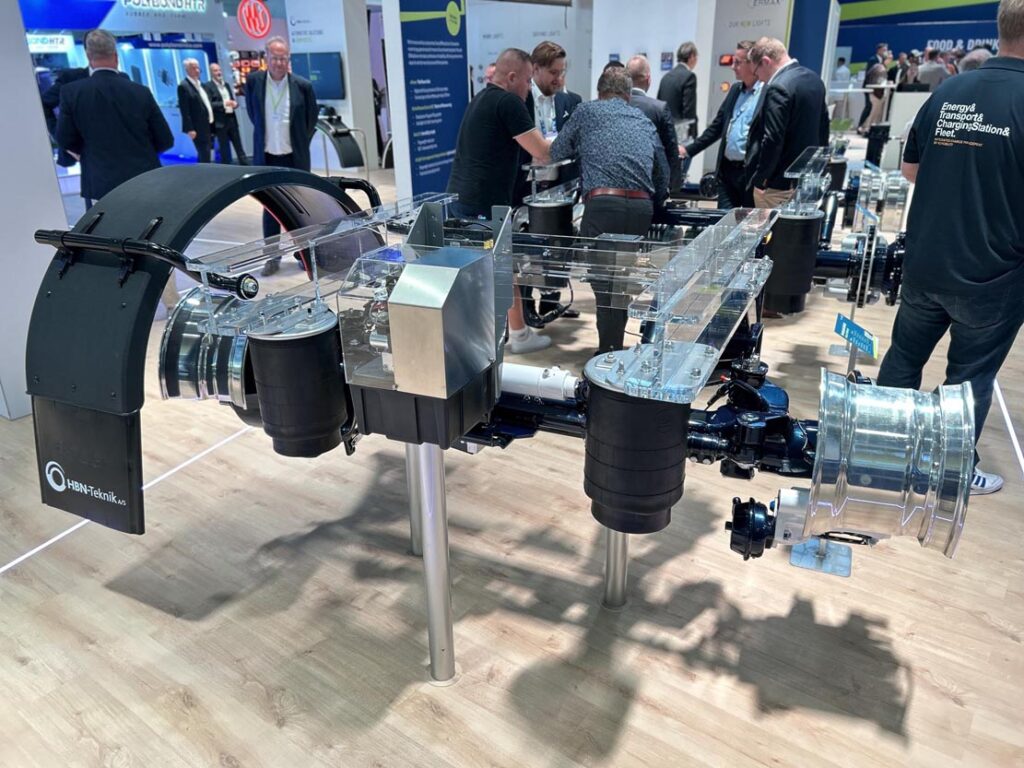
That direction was clearly reflected at IAA, where BPW presented its portfolio as an integrated efficiency system rather than as a collection of individual components. The Group’s approach brings together running gear, axle technologies, telematics, lighting, body-related products, mudguards and fleet services. The objective is to address the complete operating cycle of a trailer and help customers improve uptime and control operating costs.
From Components to Complete Solutions
One of the strongest messages emerging from BPW’s global strategy is that the company wants to move closer to the operational realities of fleets. Its 360-degree service approach covers areas ranging from application engineering and vehicle development to maintenance contracts, warranty and after-sales support. Digital solutions add another layer by providing information on trailer condition, maintenance requirements and vehicle performance.
The company’s ePower axle is an example of how this philosophy extends into electrification. The energy-generating axle uses braking and driving energy to generate electricity, which can be stored in a battery and used to electrically power refrigeration systems. BPW says the technology can reduce diesel consumption and emissions in temperature-controlled transport, depending on the application and equipment.
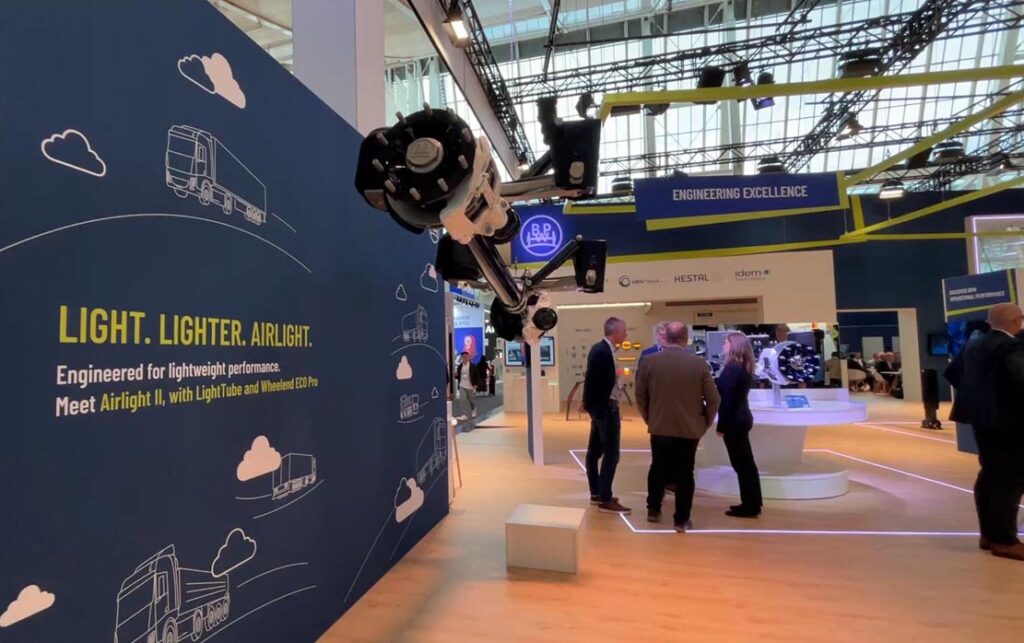
At IAA, BPW also presented the new Wheelend ECO Pro for the European 9-tonne trailer segment. The new wheel end with ET 120 disc brakes reduces weight by 20 kg per axle; when combined with the LightTube solution, the saving rises to 34 kg per axle. BPW has announced an eight-year warranty without a kilometre limitation for the product, while production is planned to begin in small series in 2027 and move towards volume production later in the decade.
“Don’t look for the cheapest product. Look for the best service, the best solution, durability, spare-parts availability and TCO; then you will end up at BPW,” he said.
The emphasis on lifecycle economics is significant. For fleet operators, the purchase price of an axle or suspension is only one element of the cost equation. Payload, fuel or energy efficiency, maintenance intervals, spare-parts availability, workshop time and vehicle uptime can all influence the economics of a trailer over its operating life.
Technology With a Customer-Led Direction
Mr. Kotz sees digitalisation as one of the major opportunities for BPW over the next phase of its development. Telematics can transform data generated by trailers into actionable information, helping operators understand how vehicles are performing and identify potential issues before they become costly failures.
BPW’s iC Plus running gear is part of this evolution. The company is developing additional functions that use existing data to provide insights into trailer condition, braking and running-gear loads without necessarily adding new sensors or hardware. The broader objective is to make the trailer an intelligent operating unit within the fleet.
For BPW, however, technology development is not intended to happen in isolation. Kotz emphasises that customer requirements remain central to the company’s strategic process. BPW renews its strategy periodically and works with its regional teams to identify where customer needs and market developments are heading. “We ask the customers what they need and then we follow. It is all for the customers; that is what you can see as a path in all our strategic goals.”
This customer-led approach is also influencing BPW’s geographical priorities. While Europe remains an important home market, the company continues to see opportunities across the Asia-Pacific region, Middle East, Africa and China. India, in particular, occupies an important position within this international footprint.
India Moves Towards Localised Engineering
BPW’s Indian journey has evolved considerably since the company began operations in the country. According to Kotz, India’s growing economic importance and expanding commercial-vehicle market have strengthened the case for a larger local presence. The company has also been investing in its organisation and facilities, supported by a local team that Kotz describes as an integral part of the BPW family.
For Mr. Nagaraj Ubale, Managing Director, BPW India, the Indian market has undergone an important transition, particularly since regulatory changes and the growing emphasis on ride comfort, safety and vehicle efficiency encouraged greater adoption of advanced trailer technologies.
Air suspension and more sophisticated running-gear solutions are now finding applications across mining, flatbed, sidewall, bulk and express logistics operations. Mr. Ubale believes the next stage will be about matching the technology more closely with the specific application rather than treating every trailer in the same way. “The applications and requirements need to be understood carefully. Once the application is identified, we can identify the right solution and calculate the TCO and return on investment.”
This application-specific approach is particularly relevant in India, where operating conditions and customer priorities can vary considerably. A solution developed for a mining application may have very different requirements from one used for long-distance express logistics. BPW India is therefore working across different axle, suspension and running-gear configurations to create solutions based on actual operating requirements.
Building India Into the Global Supply Chain
Localisation is another important element of BPW India’s medium-term agenda. Ubale points to the development of Indian capabilities in forging, sheet metal and casting as an opportunity not only to serve the domestic market, but also to contribute to BPW’s global supply requirements.
This creates a two-way opportunity. Indian sourcing can improve cost competitiveness for products required in the domestic market, while the development of supplier capabilities can also strengthen India’s role within BPW’s international manufacturing and supply ecosystem.
The company is simultaneously looking at digitalisation and service development. Annual maintenance contracts and preventive maintenance are already part of the offering, while the next step is to use data more effectively to anticipate maintenance requirements and improve uptime. “The future is about getting the data, playing with it and improving efficiency. We are targeting digitalisation, fleet management services and faster preventive maintenance,” he said.
For Indian fleets, this could become increasingly important as trailer utilisation rises and operators look beyond the initial purchase price. Better visibility into maintenance requirements can help reduce unexpected downtime, while digital fleet services can provide operators with a clearer picture of asset performance.
The Next Phase of BPW India
Nagaraj describes the company’s priorities as parallel tracks; strengthening local supplier capabilities, developing running-gear solutions for different applications, responding to evolving regulatory requirements and expanding digital fleet-management capabilities.
The wider BPW Group gives the Indian operation access to technologies beyond conventional axles and suspensions, including body-related systems, lighting, mudguards and telematics. This broader portfolio supports the company’s ambition to provide integrated solutions rather than isolated components. “The group power is always behind us. Engineering excellence, hardware performance, digitalisation and fleet-management services all come together under the BPW umbrella,” he emphasised.
The direction emerging from IAA Transportation 2026 is therefore less about one particular axle or product and more about how BPW sees the future of the trailer. The trailer is increasingly becoming a connected, data-generating and efficiency-oriented asset, with its value extending well beyond its physical components.
For BPW, the medium-term journey appears to be about bringing these capabilities closer to customers across markets while retaining the engineering, durability and service principles that have defined the company. In India, that journey is taking a distinctly local shape through application engineering, supplier development, cost optimisation and digitalisation.
The larger ambition is clear; make the trailer work harder for the fleet, make its performance more visible, and make lifecycle ownership more predictable. That is where BPW’s traditional strength in running gear increasingly meets the next generation of intelligent fleet solutions.