40+ speakers, 11 sessions and fleet owners from Western and Central India gather in Mumbai for the forum’s second edition
The second edition of the Future Fleets Forum (FFF), presented by LightMetrics and powered by Valvoline Cummins, was held on 29 September 2026 at Courtyard by Marriott, Mumbai International Airport. The invitation-only forum brought together over 200 fleet owners and operators from Western and Central India. FFF is organised by Threefold as an ecosystem event of the Commercial Vehicle Forum (CVF).
Opening the day, Pratik Shah, Partner, Automotive, EY-Parthenon India, described 2026 as a year of structural reset for the sector. Road transport continues to account for about 60% of India’s freight movement, yet 75% of operators own only one or two trucks. Indian trucks average roughly 300 km a day, compared with 500–600 km in developed markets, while the country has only 55–60 drivers for every 100 trucks.
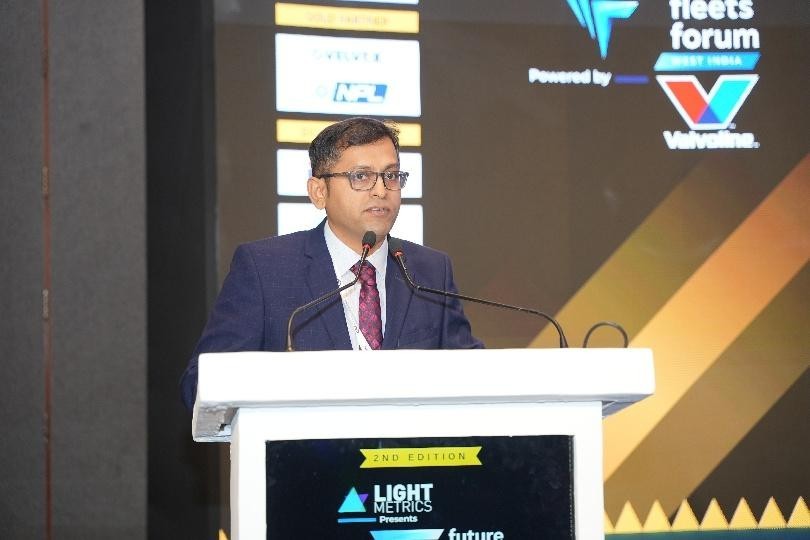
“India’s commercial fleet sector is entering its next phase of growth, where success will be measured not merely by the number of vehicles on the road, but by the quality of outcomes they deliver. As customers increasingly expect faster, cleaner, safer and more transparent movement of goods and people, the industry must evolve beyond vehicles to build integrated ecosystems that combine technology, infrastructure, drivers, energy and services to drive meaningful outcomes,” said Pratik Shah.
Session highlights
1. Beyond the Camera: What Fleets Actually Need from Video Telematics
Subhrajeet Das of LightMetrics argued that adding more hardware to vehicle cabins would not, by itself, prevent crashes. He emphasised the need for AI-filtered and verified events, driver self-coaching and compliance with the Digital Personal Data Protection (DPDP) framework.
2. Panel – The Driver Dilemma: Solving India’s Fleet Manpower Crisis
Reema Jogani (Reema Transport), Chirag Katira (SNGT), Mohit Ashok Nawany (ASL Logistics), Mukesh Agarwal (APML) and Vikram Singh Gill (Meridian Logistics) participated in a panel moderated by Girish Mirchandani (Transtopics). The discussion highlighted fixed salaries, mentored onboarding and owner-driver schemes as potential solutions to the driver shortage. APML’s Driver Seva Kendra at Dudu has reportedly helped reduce accidents by around 40%.
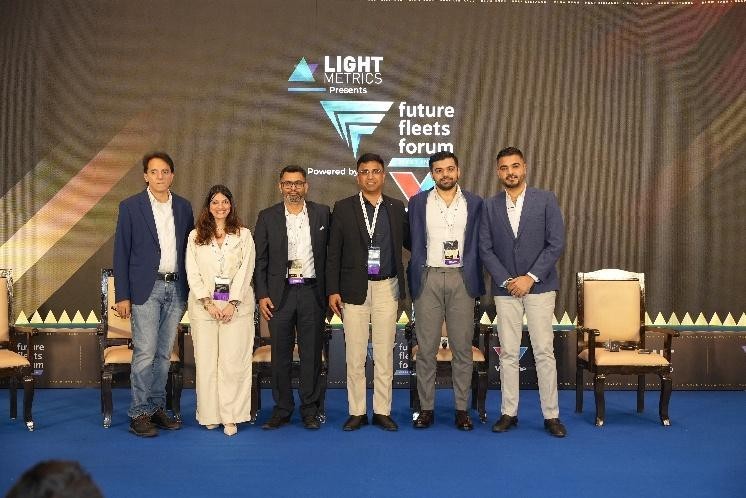
3. The Future of Fleets Isn’t Just About Moving More. It’s About Keeping Moving
Mukesh Kumar of Valvoline Cummins India identified maintenance as a key cost lever under operators’ control. He stressed that the real performance indicator is the number of days a truck remains out of the workshop and available for operations.
4. Panel – Zero Tolerance: Building a Safer Fleet from Road to Rest Stop
Bal Malkit Singh (BAL Roadlines), Abhishek Goyal (BLR LOGISTIKS), Dr Suniil Bharadwaj, IPS (Highway Traffic, Maharashtra), Subhrajeet Das (LightMetrics) and Abhiram M Athavale (Transport and Road Safety Lab) joined the discussion, moderated by Nikita Garodia (Anva Logistics).
The panellists emphasised that road safety is a shared responsibility involving fleet operators, drivers, technology providers and enforcement agencies. Data-led interventions have reportedly reduced accidents by 55% on the Mumbai–Pune Expressway. The session also highlighted the announcement of round-the-clock patrolling on the Samruddhi Expressway and BLR LOGISTIKS’ achievement in halving its insurance costs over three years.
5. The Future of Fleets: Creating More Value
Vikas Gupta of Nandan Petrochem called for a shift from preventive to predictive maintenance and stressed the importance of using BIS-certified AdBlue. He cautioned that a BS VI truck with its emissions-control system bypassed could emit more nitrogen oxides (NOx) than a BS I vehicle.
6. Panel – Beyond the Battery: India’s Multi-Fuel Road to Freight Decarbonisation
Achint Kaul (Safexpress), Dharmindra Bhatt (Blue Dart), Prasanna Patwardhan (Prasanna Purple Mobility), Jayesh Shelar (Blue Energy Motors) and Govind Trivedi (SANY India) participated in a panel moderated by Aneesh Ajayan (EY-Parthenon).
The discussion highlighted how fleet operators are increasingly evaluating green trucks on the basis of total cost of ownership (TCO), rather than subsidies alone. LNG fuelling stations in India have reportedly grown from one to around 50, while battery swapping is helping make electric trucks cash-positive on the Mumbai–Pune route. Panellists’ five-year forecasts for alternative-fuel adoption ranged from 10% to over 25%.
7. Making Sustainability Attainable
Sandeep Gambhir of Vertelo explained how electric vehicle economics are becoming viable for high-utilisation fleets. Vertelo combines advisory services, financing, charging, maintenance and buy-back solutions to simplify the transition. He described electrification as “an owning decision”, rather than merely a buying decision.
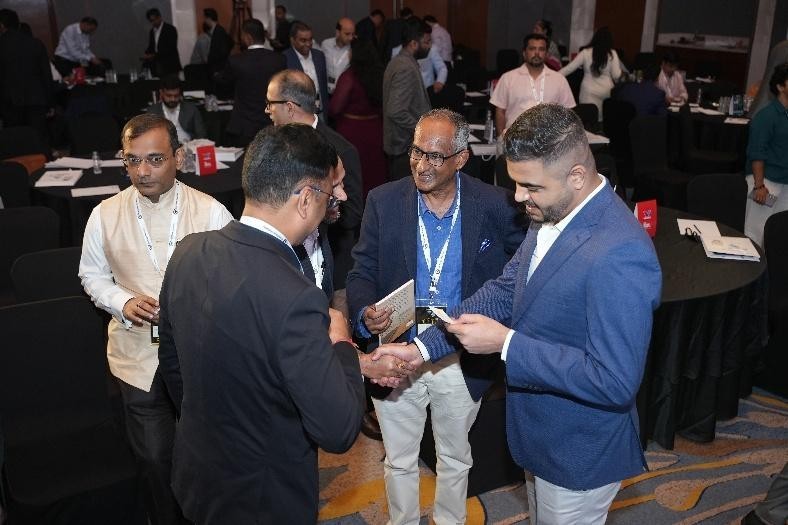
8. Panel – The Digitised Fleet: AI, Data and the Next Efficiency Frontier
Tansher Singh (ABC Express), Naveen Gupta (Trev Mobility), Gautam Saurav (TCI SCS), Jyoti Bansal (ProRido Ultimate Mobility), Bhavesh Panchal (Magenta Mobility) and Manvendra Singh Raghav (Gro Digital Platforms) joined the panel, moderated by Jaspreet Bajwa (EY-Parthenon).
The discussion pointed to AI-led decision-making as the next step in fleet digitisation, moving beyond dashboards towards actionable insights. Examples included voice-based alerts to reduce idling, licence-linked cash advances and fuel-stop recommendations that could deliver savings of up to 20%. Empty running, however, remains a major challenge, accounting for an estimated 40–45% of operations.
9. Panel – Show Me the Money: Financing, Insurance and TCO for Fleet Modernisation
Dr Pushkar Patwardhan (LightMetrics), Anshuman Kumar (JSW Greentech), Rajat Rao (Vikas Group), Bhargav Padh (LivQuik) and Maneet Singh Sahni (Citadel Insurance Brokers) participated in the panel, moderated by Manish Sharma (S M Carrying Corporation).
The panellists emphasised that the purchase price represents only a small part of the total cost of ownership. The discussion covered the use of genuine AdBlue, UPI-based driver wallets, trip-level financing, per-kilometre electric vehicle offerings and cargo-matched insurance solutions.
10. Panel – Squeezed Margins: Winning on Operational Efficiency, Not Just Rate
Prasad Krishna Murthy (Associated Road Carriers), Meet Morjaria (Shree Jalaram Freight Carriers), Suyashh Gupta (Best Roadways), Vaishakhi Limda (Jalaram Transport Company), Rajeev Mehta (UltraTech Cement) and Akhileshwar Jha (Valvoline Cummins) participated in the panel, moderated by Girish Mirchandani.
With freight rates remaining largely flat, the discussion identified disciplined daily planning, fixed corridors and securing return loads as key ways to protect margins. UltraTech Cement’s cost-plus model reportedly helped increase e-truck utilisation from 15 to 35 trips a month. The session also highlighted that trained drivers can outperform their peers by around 20%.
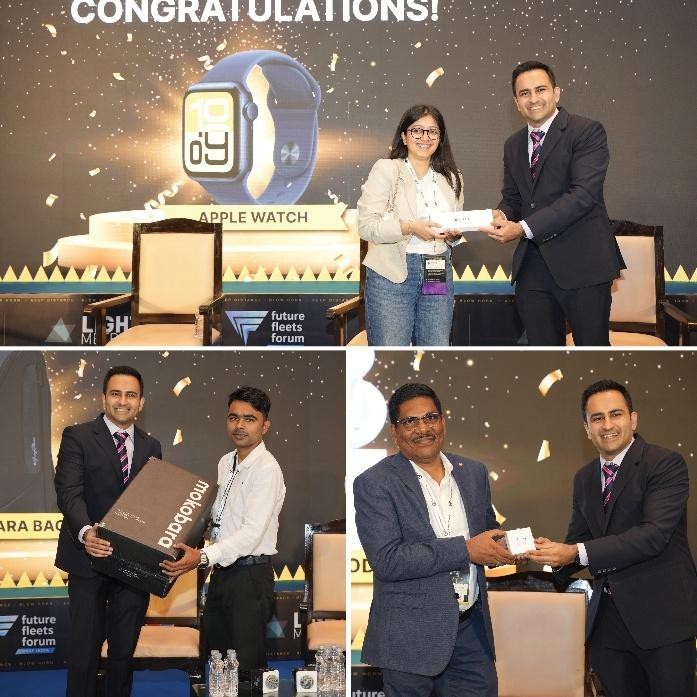
The event concluded with a lucky draw for attendees, featuring an Apple Watch, Apple AirPods and a Mokobara backpack, followed by a networking session.
Partners
FFF 2026 was supported by Title Partners LightMetrics and Valvoline Cummins; Gold Partner Velvex / NPL; Silver Partners TrucksUp, Gro and Vertelo; FASTag Partner LivQuik; and Knowledge Partner EY-Parthenon.
Exhibiting partners included IDFC FIRST Bank, AmolPrala Clean Energy, Edscha Trailer Systems, Marangoni, ConVoye Mobility, Tericsoft, Logixpay and Citadel Insurance Brokers. Association and media partners were AITWA, AIMTC, BOCI, eCargoLog, Logistics Insider, Transtopics, Indian Transport & Logistics News and MOTORINDIA.