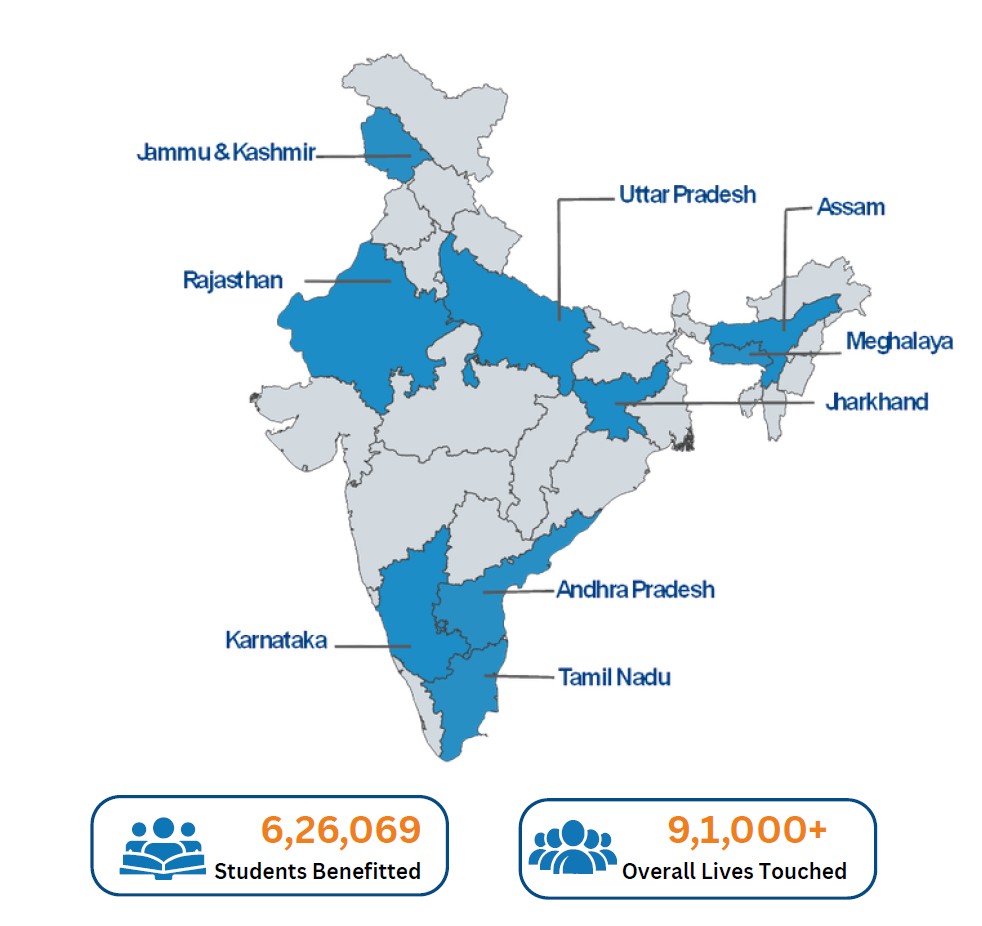
What began in 2015 with just 36 schools in Krishnagiri District, Tamil Nadu, has grown steadily into a programme that today reaches over 6,26,000 students across 4,585 government schools in more than 4,500 villages, spread across 25 districts in nine States.
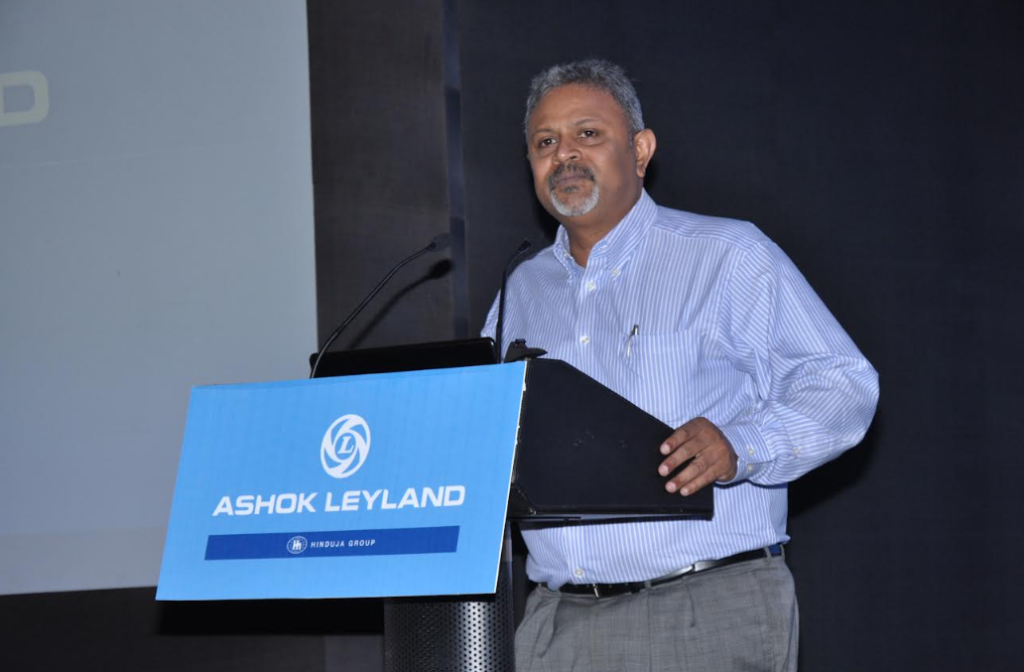
Ashok Leyland Foundation’s Road to School and Road to Livelihood programmes are on course to reach one million children within the next three years — a milestone that would make it one of the most far-reaching corporate-funded school education initiatives in India. The Foundation aims to ensure that every child, regardless of where they are born or what circumstances they grow up in, has access to quality education and a real opportunity to build a life of their own. So far, the company has spent ₹ 220 crore towards this initiative.
Mr. N. V. Balachander, Director – Ashok Leyland Foundation, said, the programme serves students from Grades 2 – 12 through a comprehensive approach focused on improving access, learning outcomes, retention, and life opportunities. The programme is implemented in collaboration with Samagra Shiksha Abhiyan and State governments across Tamil Nadu, Jammu & Kashmir, Rajasthan, Uttar Pradesh, Jharkhand, Andhra Pradesh, Meghalaya, Assam, and Maharashtra.
The Beginning
Long before corporate social responsibility became a legal requirement in India, Ashok Leyland was already doing the work. Seventy years ago, when the company was assembling Austin cars and answered the nation’s call to build transport and passenger vehicles, a sense of social purpose was quietly embedded into its DNA. Over the decades, that purpose expressed itself through initiatives around labour dignity, environment, road safety, employment, and driver training — all in and around the communities where the company operated.
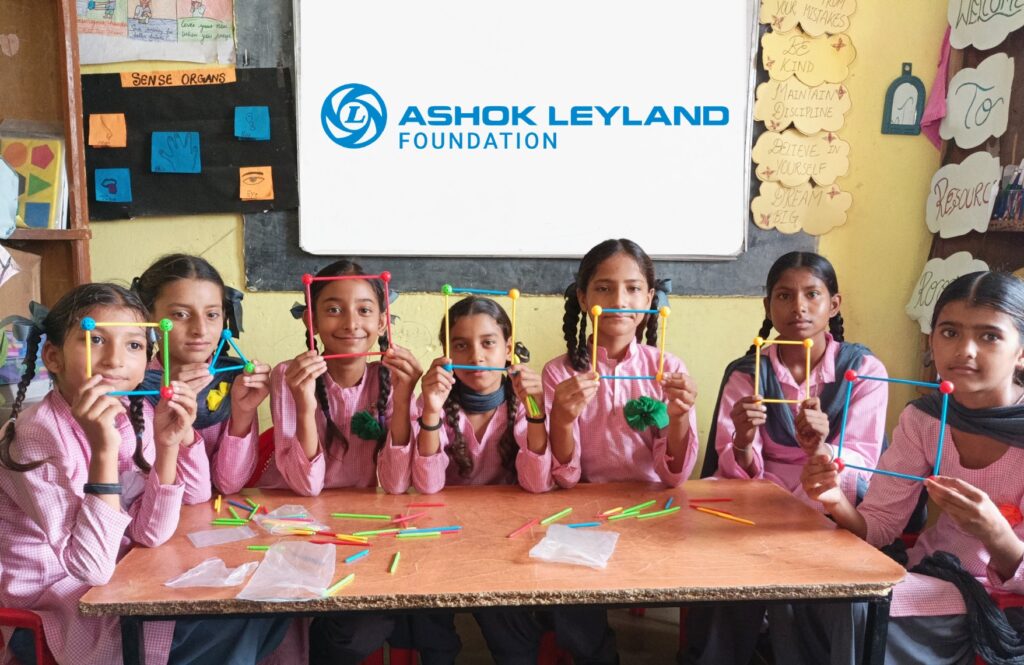
When CSR became compulsory, Ashok Leyland built on its existing social initiatives instead of starting from scratch. The decision was made to channel efforts into one focused area rather than spreading thin across too many — and that area was education. This is because, “education is something that when you provide in its true form, in terms of quality, wholesome education, you cannot take it away. This is something that is embedded in the individual and something that you cannot remove,” Mr. Balachander, emphasised.
To bring structure and independence to these efforts, the vehicle maker set up Ashok Leyland Foundation, operating as a separate entity, attracting dedicated talent and external funding from like-minded organisations, while staying closely connected to the company’s values and people. Its work spans three core areas: education, healthcare, and sustainability.
The programme works exclusively with government and Panchayat-led schools, covering classes one to eight, predominantly in remote and underserved communities across eight States. What makes it different from most education programmes is its refusal to see learning in isolation. It takes a 360-degree view — improving the classroom environment, supporting teachers, involving parents and communities, and addressing health, hygiene, sports, art, and life skills alongside academics. Because, as the he put it, a child who enjoys school is a child who stays in school.
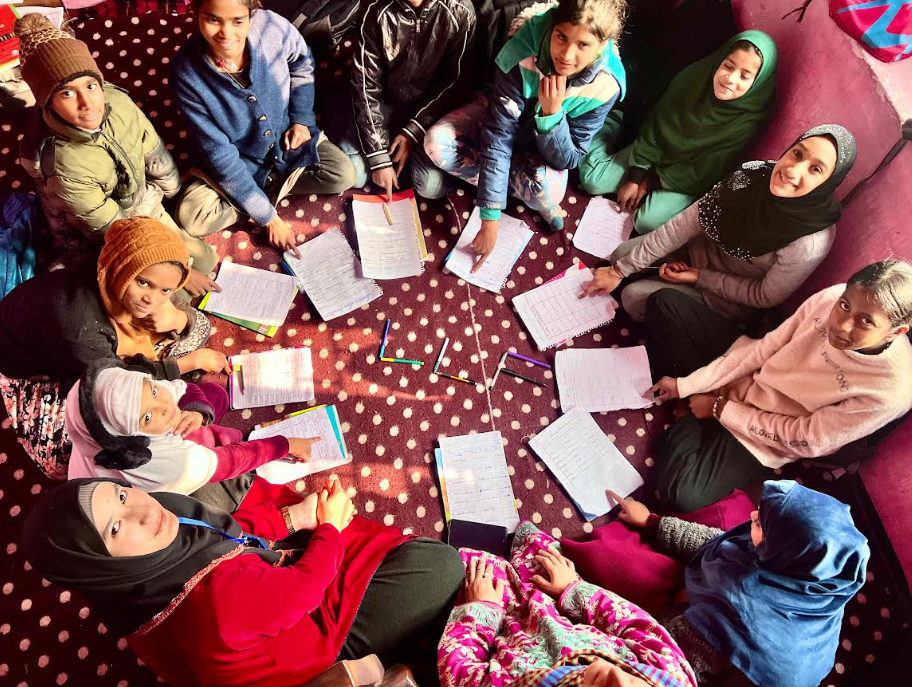
The journey did not stop at the classroom door. Recognising that investing in a child’s early education only to leave them without direction at Class 10 would be incomplete, the foundation extended the programme into Road to Livelihood — covering classes nine to 12, with a particular focus on preparing young people for employment and further education. In what is believed to be a first for any corporate education programme in India, it provides individualised psychometric assessments to help each child identify their natural abilities and make informed choices about their stream of study and career path. Over 20,000 children have benefited from this counselling over the last three years alone.
The programme’s broader philosophy aligns with the National Education Policy’s focus on Foundation Literacy and Numeracy — the belief that a child who can read, comprehend, and calculate can ultimately learn anything. With that foundation firmly in place, the path to STEM education, higher learning, and meaningful employment becomes far less daunting.
From Classrooms to Careers
If the philosophy behind the Road to School programme is ambitious, the implementation is even more impressive, said, Mr. T. Sasikumar, CHO, Ashok Leyland Foundation. The entire journey — from a six-year-old walking into a village classroom for the first time to an eighteen-year-old choosing a career path — has been carefully mapped, tested, and refined over a decade of real-world learning across some of India’s most remote communities.
The programme is structured across three stages, each with distinct objectives. The first stage, covering Classes 1-5, focuses on building strong foundations. In many villages, parents often take children to work because there is no one to care for them at home. Ensuring school enrolment was therefore the first challenge, and today attendance across programme schools stands at nearly 99%—an exceptional achievement in rural India.
Once enrolled, children are taught foundational literacy in their local language and basic mathematics, based on the principle that strong reading and numeracy skills enable lifelong learning. Health and wellness habits, including hygiene and self-care, are also introduced, alongside art education and structured sports programmes that help children enjoy school and discover new interests.
The second stage, covering Classes 6-8, builds on this foundation through project-based learning, giving students hands-on exposure to science and other subjects. Spoken English is introduced to help bridge language barriers, while sports coaching becomes more focused, identifying talented children and creating pathways to competitive events and, in some cases, the Sports Development Authority of Tamil Nadu. An annual two-day Technology Day at the company’s R&D centre showcases industry innovations alongside projects created by programme students, attracting strong interest from families and visitors.
The third stage, Classes 9-12, forms the Road to Livelihood programme. Tracking students revealed that transitioning to higher education was challenging, particularly alongside peers from English-medium and CBSE schools. To address this, the programme introduced digital literacy, spoken English, adolescent wellness, menstrual hygiene, and personalised career guidance based on psychometric assessments and counselling involving parents. As a result, 85% of students have progressed to higher education, over 60% chose courses aligned with their interests, and 59% of girls opted for STEM programmes—well above state and national averages, Mr. Sasikumar pointed out.
Over 200 social workers are embedded in the communities around these schools, ensuring that the impact reaches not just the child in the classroom but the family and the village around them. One chapter of the story stands out on its own. In the Kolli Hills — a remote, hilly terrain where 98% of the population is tribal and the culture is deeply distinctive — the programme chose to do something more than just run a school intervention. It undertook a full five-year transformation of the region, working with the community holistically across education, health, and society.