One app for payments, trips, tracking, invoicing and accounts — built by a third-generation transporter who has run his own fleet — is helping more than 500 fleet owners take the guesswork, and the leakage, out of every trip.
India’s trucking industry has adopted digital tools across several functions, but these systems often operate independently. FASTag, fuel payments, GPS tracking, accounting and driver payments may all be digital, yet fleet owners still have to move between multiple applications, spreadsheets and WhatsApp conversations to manage a single trip. VAHN is seeking to change that by bringing these functions together on one platform.
Founded around a year and a half ago, with its app going live about seven months ago, VAHN was created to simplify the everyday operational and financial challenges of truck owners. The company says more than 500 fleet owners, operating over 4,000-4,500 trucks, are currently using its platform.
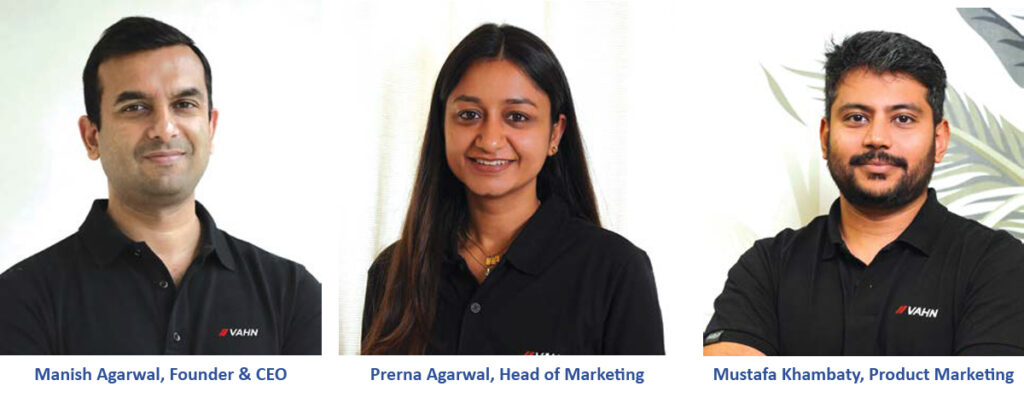
“VAHN has come from a very real understanding of the trucking industry. We want to make the lives of truck owners easier, while also creating a better, more organised and efficient ecosystem for everyone involved,” says Ms. Prerna Agarwal, Head of Marketing, VAHN.
Bringing scattered operations onto one platform
VAHN was founded by Manish Agarwal, the third generation of a family that has spent more than six decades in Indian transport. His grandfather, Shri P.D. Agarwal, began with a single truck in 1958 and built it into Transport Corporation of India Ltd, or TCI; Manish went on to become the Chief Express Distribution Officer at Gati Limited, India’s first express company, as well as the CEO of Gati Kausar which had a 250-truck cold-chain fleet. This experience has influenced VAHN’s approach; solving practical industry problems rather than simply adding another technology layer.
Mr. Mustafa Khambaty, Product Marketing Lead, VAHN, brings around 12 years of experience with BharatBenz. According to him, the challenge facing transporters is not a lack of digitalisation, but its fragmentation. A fleet owner may use one application for GPS, another for fuel, another for FASTag and separate systems for banking and accounting.
“The industry is already digitised in many individual areas, but the data is sitting in different silos. VAHN brings those pieces together, so the truck owner can understand not just where the truck is, but where the money is and what has been spent on each trip,” Mustafa explains.
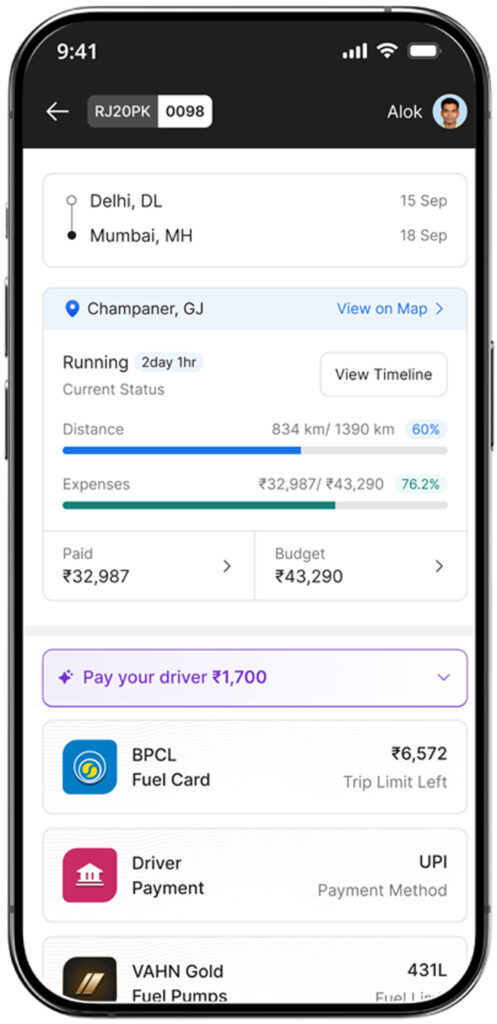
The platform provides all information on one screen: which driver, which trip, where the truck is, how much has been paid out, how much of the budget is left, and the live profit or loss on that trip. Importantly, owners do not have to replace what they already use. VAHN has integrated with most GPS providers through APIs, allowing operators to retain their existing tracking systems while bringing relevant information into a consolidated environment.
Making every trip easier to manage
For a transporter, a trip involves multiple expenses; fuel, FASTag, driver advances, repairs and miscellaneous payments. The challenge is not simply making these payments, but knowing exactly why, where and for which vehicle the money was spent.
VAHN addresses this through a centralised wallet and payment system. Owners can make fuel payments through integrated fuel networks, recharge FASTag, transfer money to drivers through UPI or NEFT and make other merchant payments. Transactions are linked with the relevant vehicle, driver and trip, creating a consolidated financial record. Owners retain any points and loyalty benefits provided by IndianOil, Bharat Petroleum, etc.
This can simplify trip-sheet preparation, which traditionally involves reconciling information from several portals and records. VAHN also provides digital visibility of vehicle-related documents, including information such as registration, insurance, fitness and permits, reducing manual data entry.
“Actionable information is useful only when you can act on it. If the app tells you that a truck needs fuel but you have to leave the platform to make the payment, part of the convenience is lost. With VAHN, the insight and the action happen in the same place,” says Mustafa.
Building trust through verified transactions
Authentication is an important element of the platform. Fuel transactions are processed through integrated fuel networks and can be authenticated through driver OTPs. Driver payouts through UPI or NEFT generate transaction reference numbers, while FASTag transactions are processed through the relevant payment infrastructure.
VAHN also uses government-linked digital infrastructure to retrieve vehicle information once a truck is added. Driver KYC helps ensure that payments are directed to the intended beneficiary.
The company says onboarding has been designed to be straightforward. After KYC and wallet creation, vehicles and drivers can be added and payment services configured. VAHN estimates that the basic onboarding process can take less than 10 minutes, with transactions becoming active after the necessary banking processes.
The objective is to establish a single source of truth for fleet operations, reducing dependence on manual records and multiple people to reconcile payments. Control is built around that record. Payments and trip sheets are prepared by the team but approved only by the owner, or by whoever he authorises, so no rupee moves without his eyes on it. Logins are free and unlimited — owner, manager, accountant, operator — with each branch manager seeing only his own trucks, and every entry carrying a name, a time and an amount. Owners on the platform report roughly 60 per cent fewer “how much, to whom” phone calls, simply because everyone is already looking at the same live figures.
Turning visibility into savings
VAHN estimates that an owner can save around ₹2,000-₹2,500 per truck per month through better control of operational leakages. These can include unnecessary padding done by managers or drivers, irrecoverable advances given to drivers, untracked expenses not properly logged against the right trip, incorrect freight calculations, forgotten detention charges and other costs that may only become visible after a trip is completed.
Actual savings will naturally vary depending on the fleet and its operating model. However, VAHN sees significant potential among small and medium-sized transporters, who often manage substantial operational complexity without the technology infrastructure available to larger fleets.
Its customer base currently ranges from owners operating two trucks to operators managing around 200 vehicles. The company believes this small and medium-sized segment represents a significant opportunity because these operators need better visibility but often rely heavily on manual processes.
VAHN is also building a fuel network to add direct financial value for customers. It currently has tie-ups with around 45 fuel stations, where participating truck owners can receive discounts of up to ₹1.20 per litre, with the network expected to expand.
Expanding the ecosystem to drivers
VAHN follows a subscription model, with a monthly plan priced at ₹299 per truck and an annual plan at ₹169 per truck per month, billed annually. A seven-day trial is also available, while the company says it does not charge transaction fees for payments made through the platform. At the annual rate, it points out, a month of software costs less than two litres of diesel.
The next phase of development will increasingly focus on drivers. Driver availability and retention remain important challenges for the trucking industry, and VAHN believes technology can help improve the experience for both drivers and fleet owners.
The company is developing its driver-facing proposition with features and incentives intended to provide greater value to drivers while helping operators manage their workforce more effectively.
“Our vision is not limited to putting more truck owners on an app. We want to create an ecosystem that empowers both owners and drivers. If technology can make their work easier, improve transparency and create better incentives, it can contribute to making trucking a more attractive profession,” says Prerna.

Building the digital backbone of trucking
Over the next two to three years, VAHN aims to expand its footprint across India while deepening the capabilities of its platform. Its early traction indicates that operators are willing to adopt technology when it addresses tangible problems without adding complexity.
The company’s proposition goes beyond fleet tracking or digital payments; it is about connecting the different operational layers of trucking, from vehicles and drivers to fuel, tolls, payments, documentation and trip management.
By bringing these elements together, VAHN wants owners to spend less time chasing information and more time making informed decisions. For an industry where operational efficiency directly influences margins, that could become an increasingly important advantage.
“Trucking is ultimately what keeps India moving. Our goal is to improve the lives of the people who make that movement possible, and technology is the means through which we want to create that impact,” Prerna concludes.