For the company, the focus has shifted towards disciplined growth, financial resilience and the ability to adapt quickly in an increasingly uncertain global environment.
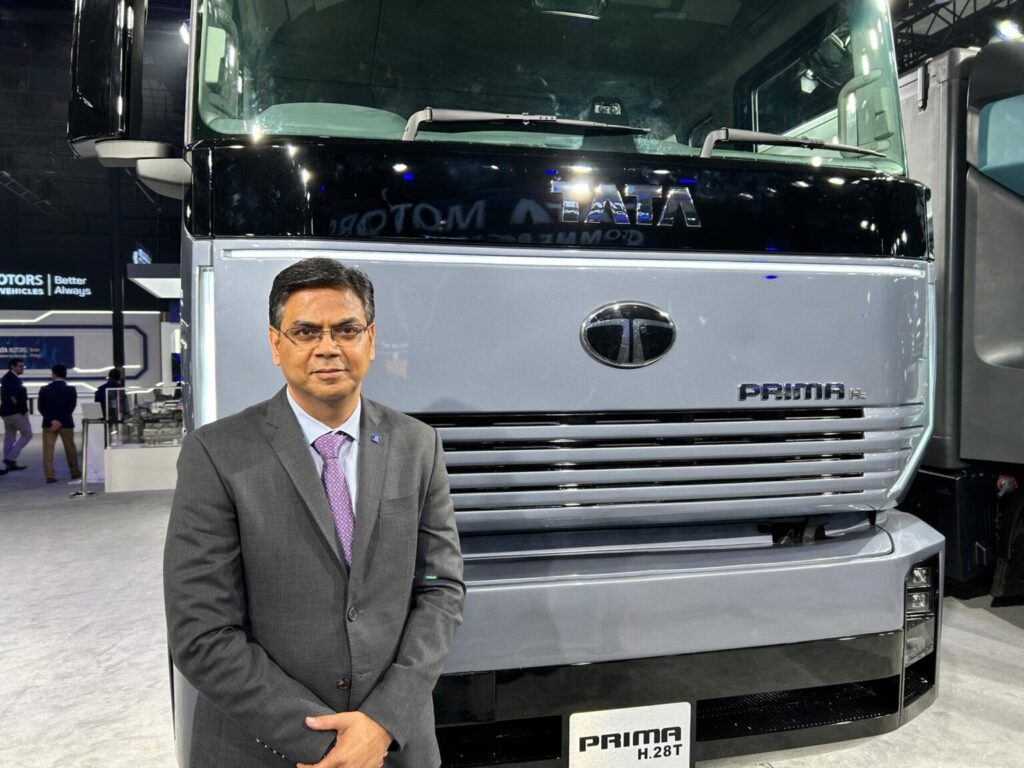
Despite the challenging environment fuelled by geopolitical crisis across the world, the overall mood within Tata Motors remains cautiously optimistic. The belief is that while the world may be facing uncertainty, India’s freight movement, infrastructure growth and underlying commercial vehicle demand continue to show resilience.
The confidence at Tata Motors stems from a strong FY26 financial performance marked by record profitability, healthy cash generation and disciplined cost management. The company delivered a 22% rise in Q4 standalone revenue to ₹24,500 crore, while EBITDA surged 35% with margins touching 13.9% — among its strongest quarterly performances in recent years. Strong free cash flow generation, a robust net cash position of ₹13,700 crore on a consolidated basis and an industry-leading ROCE of 72% have further strengthened the company’s ability to navigate external uncertainties while continuing to invest for future growth.
For Tata Motors, the strategy now is not about aggressive expansion at any cost. It is about staying agile, protecting profitability, managing risks carefully and being ready to adapt quickly in a world where uncertainty has become the new normal, Mr. Girish Wagh, MD and CEO of Tata Motors, has said.
At a conference call to discuss the FY2026 and Q4FY26 results, Mr. Wagh said, the war in West Asia may have shaken global markets, disrupted supply chains and triggered fears of rising fuel prices, but for Tata Motors, the road ahead is not entirely uncertain. Instead of panic, the company is responding with caution, agility and close monitoring of market signals.
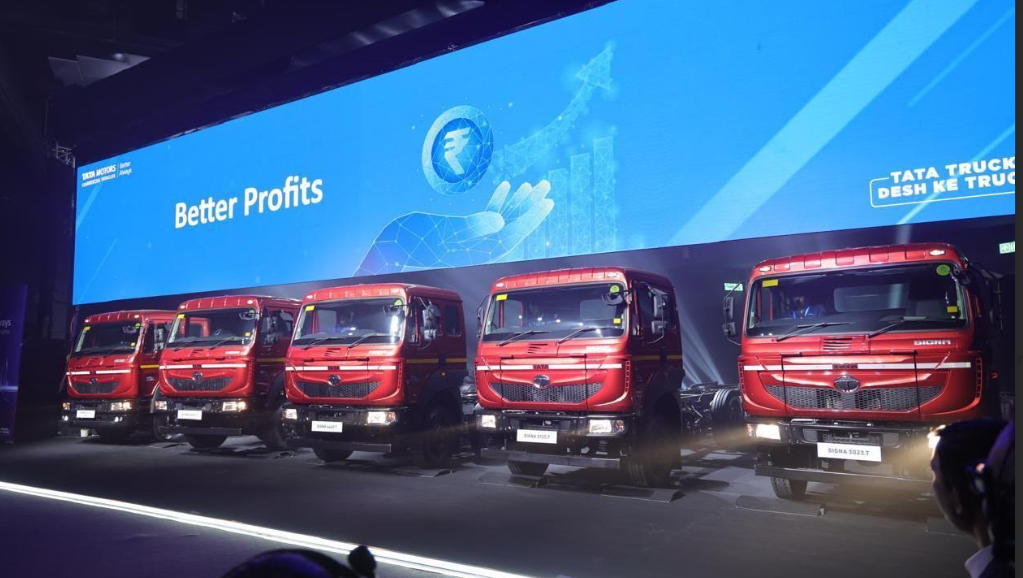
Speaking about the ongoing geopolitical crisis and its impact on the commercial vehicle industry, he acknowledged that the conflict has created multiple headwinds. Export markets in the Middle East and parts of North Africa have seen disruptions, fuel availability briefly became a challenge, especially LPG, and commodity inflation has intensified pressure on costs. Yet, beneath all the uncertainty “the demand continued to stand strong,” he said.
According to him, the truck movement across India remains healthy, supported by strong freight availability and robust E-Way bill generation. Vehicle utilisation levels are also showing encouraging trends, suggesting that economic activity and logistics demand remain active despite external pressures.
Fuel Price Concerns
The impact of rising diesel prices remains one of the biggest concerns for the trucking industry. Diesel contributes anywhere between 25% and 50% of a fleet owner’s total operating cost depending on the vehicle segment. Even a small increase in fuel prices can therefore significantly affect profitability. While closely tracking diesel price movements, the company has also started implementing austerity and cost-control measures from the beginning of the financial year itself. Travel restrictions, pooling initiatives and tighter control over discretionary expenses have already been rolled out to prepare for a prolonged period of uncertainty, Mr. Wagh highlighted.
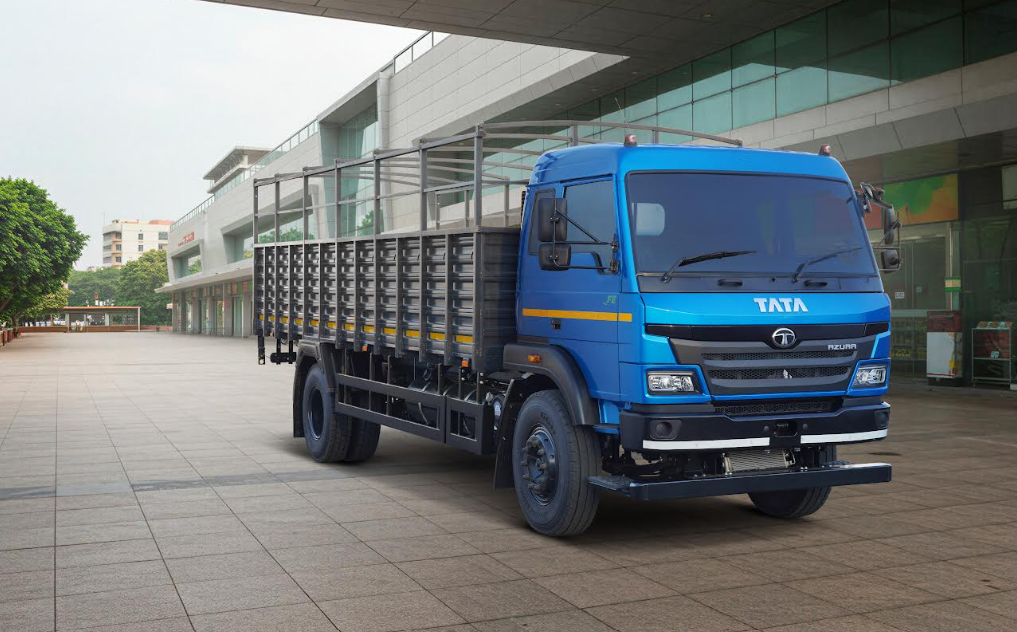
At the same time, he clarified that it is not stepping back from its long-term investment plans. Capital expenditure for FY27 remains intact, although the timing of certain projects may be adjusted depending on market conditions. “The global crisis, however, has changed the company’s operating playbook,” he said, adding that business decisions are now being taken with far greater caution and flexibility. External indicators such as fuel prices, commodity inflation, freight rates, rainfall forecasts and geopolitical developments are being tracked continuously to allow quick adjustments whenever required,” he said.
Commodity Inflation
Commodity inflation has emerged as another major challenge. Steel, aluminium, rubber and precious metals have all witnessed sharp price increases. The company revealed that commodity costs had already increased significantly in the previous quarter, with further escalation seen in the current quarter.
To partly offset these pressures, a price increase of around 2% was implemented from April 1. However, the company has consciously avoided passing on the entire cost burden to customers in order to protect market demand and preserve growth momentum.
Interestingly, despite concerns raised by transporters over stagnant freight rates, the company believes fleet owner profitability has actually improved over the last few years. Increased truck utilisation and gradual improvement in freight rates after the introduction of BS6 Phase 2 vehicles have helped improve operating economics across segments.
Electrification
Another major transformation underway is electrification. Tata Motors now has one of the widest electric commercial vehicle portfolios in the country, ranging from one-tonne cargo vehicles to 55-tonne trucks and electric buses. Customer interest in electric mobility is steadily rising, particularly in buses and small commercial vehicles, he pointed out.
Government incentives such as GST benefits, PM E-Drive, PM E-Bus Seva and Production Linked Incentive schemes have helped accelerate EV adoption. Electric buses, in particular, are seeing faster acceptance because of stronger operating cost advantages and aggregated demand from government agencies. He believes that electrification will continue gaining momentum globally as rising fuel costs make alternative mobility solutions more attractive. Markets affected by fuel shortages and high diesel prices are also beginning to show greater interest in electric vehicles.
Export Markets
On the international front, South Asian markets such as Bangladesh, Nepal and Sri Lanka are slowly recovering from earlier economic difficulties, although the current geopolitical crisis has once again created fresh pressure. Sub-Saharan Africa, North Africa and the Middle East continue to remain strategically important export regions for the OEM, he mentioned. Interestingly, the company expects the Middle East market to eventually rebound strongly after the conflict because of increased infrastructure and reconstruction requirements.
The company is also preparing for future environmental regulations. It said discussions with the government and industry bodies on End-of-Life Vehicle (ELV) and Extended Producer Responsibility (EPR) norms are progressing constructively. To strengthen its readiness, Tata Motors has already established 11 registered vehicle scrapping facilities under its Re.Wi.Re network, with plans to expand into every major state across India.
Meanwhile, the company’s much-awaited acquisition of Iveco Group is moving closer to completion. Most regulatory approvals have already been secured, with only a few pending financial approvals in Europe. Once completed, the acquisition is expected to significantly strengthen Tata Motors’ global commercial vehicle ambitions, Mr. Wagh added.