The company has committed to achieving Net Zero by 2047 and continues to strengthen its Environmental, Social and Governance (ESG) initiatives, says Mr. Vijay Vashisht, Vice President, Safexpress.
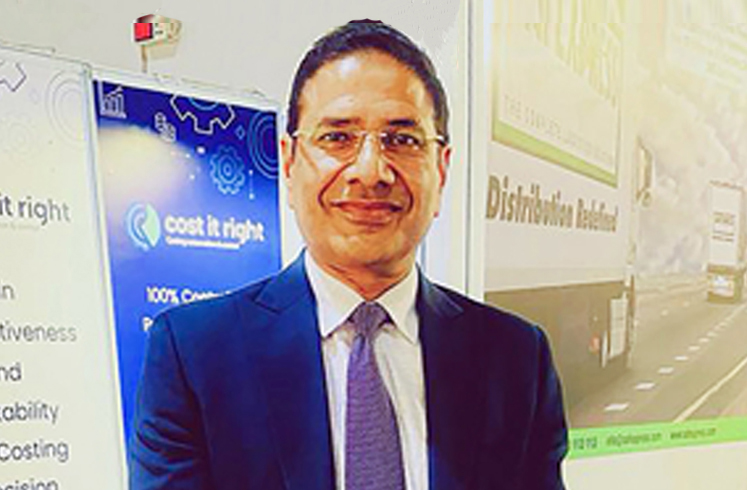
India’s logistics and commercial mobility sector is entering a transformational decade, driven by economic growth, digitalisation, sustainability, and infrastructure expansion. By 2030, the industry will be shaped by five major trends.
First, technology-enabled logistics will become the industry standard. Artificial Intelligence (AI), IoT-enabled fleet management, predictive analytics, cloud-based ERP platforms, GPS tracking, and automation will enable real-time visibility, higher operational efficiency, predictive maintenance, and superior customer experience. Safexpress has already integrated real-time tracking, automated business intelligence reporting, Oracle Fusion Cloud ERP, Salesforce CRM, WMS solutions, and digital proof-of-delivery across its operations.
Second, multimodal transportation will accelerate with significant investments in highways, Dedicated Freight Corridors, airports, multimodal logistics parks, and the PM Gati Shakti National Master Plan, enabling faster and more cost-efficient freight movement across India.
Third, sustainability will become a core business imperative rather than a compliance requirement. Customers increasingly expect environmentally responsible supply chains. Green transportation, energy-efficient logistics parks, paperless operations, circular waste management, and gradual adoption of cleaner vehicle technologies will define the future.
Fourth, resilient and integrated supply chains will gain importance as businesses seek diversified sourcing, inventory visibility, risk management, and end-to-end logistics partnerships instead of standalone transportation services.
Finally, customer-centric value-added logistics solutions such as warehousing, 3PL, supply chain consulting, industry-specific logistics, and digital integration will continue to grow as manufacturers and retailers increasingly outsource supply chain management to specialised partners, Mr. Vashisht said.
On the Horizon
Safexpress’ Vision 2030 focuses on operational excellence, nationwide infrastructure expansion, multimodal capabilities, digital investment, governance, customer relationships, first-mile efficiency, productivity, and talent development — all anchored in sustainable, technology-driven, customer-centric logistics.
Safexpress operates one of India’s largest logistics networks — 346 area offices, 853 gateways, 104 transshipment hubs, 94 logistics parks, over 21.5 million sq. ft. of warehousing, connectivity across 31,282 PIN codes, and a GPS-enabled fleet of over 14,500 containerised vehicles. Through its ESG roadmap, the company is committed to green practices, ethical governance, and achieving Net Zero emissions by 2047 while supporting several United Nations Sustainable Development goals.
Looking ahead to 2030, Safexpress will continue building an agile, resilient, digitally enabled, and environmentally responsible logistics ecosystem that delivers superior customer value while contributing meaningfully to India’s economic growth and supply chain competitiveness, Mr. Vashisht added.
Under its Vision 2030 framework, Safexpress keeps operational excellence front and centre — investing continuously in employee training, technology adoption, standardised processes, and performance monitoring.