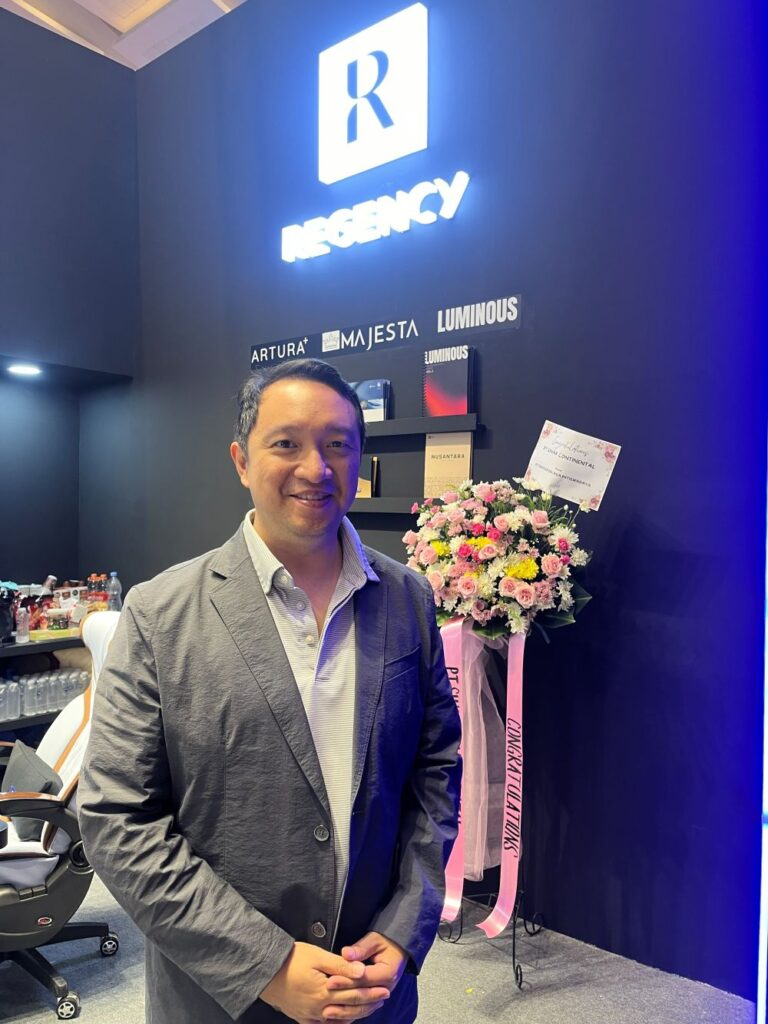
As public transport systems expand across Southeast Asia and beyond, demand for high-performance seating materials is evolving rapidly. PT Sinar Continental, one of Indonesia’s leading suppliers of automotive and transportation upholstery materials, is leveraging decades of expertise in fabric and synthetic leather production to cater to changing customer preferences, regulatory requirements and emerging export opportunities.
For over four decades, PT Sinar Continental has been serving the automotive and transportation industries with specialised upholstery materials, building a strong reputation in Indonesia while steadily expanding its footprint across regional and international markets. The company manufactures both synthetic leather and fabric materials for seating applications in buses, railways and passenger vehicles, making it one of the few suppliers in the region with expertise in both product categories.
Speaking at Busworld Southeast Asia in Jakarta, Andrew Wibowo, Business Director, PT Sinar Continental, shared insights into evolving seating material trends, market opportunities and the factors shaping the future of the industry.
From Fabric to Synthetic Leather
One of the most notable changes in Indonesia’s bus industry over the last decade has been the shift in seating material preferences. While fabric was once the dominant choice, synthetic leather has now emerged as the preferred option among bus operators and bodybuilders.
“As you know, we are material producers for car seats and bus seats, be it synthetic leather or fabric, especially moquette fabric,” said Andrew. “We are one of the few suppliers in this region who can produce both fabric and synthetic leather.”
According to him, synthetic leather currently accounts for around 80% of bus seating applications in Indonesia, with fabric making up the remaining 20%.
“I think it is because of customer preference. It looks more modern and you can play with different colours and different styles of stitching,” he explained. “On synthetic leather, customers can do much more with stitching and design, whereas fabric has certain limitations in that regard.”
The trend marks a significant departure from historical market preferences. When PT Sinar Continental first entered the segment, fabric dominated bus interiors, reflecting global trends prevalent across Europe and other mature markets.
“We have been doing this for more than 40 years. In the beginning, they were all using fabric, as Europeans and many other parts of the world were using fabric,” Andrew recalled. “We have only seen the change from fabric to synthetic leather over the last 10 years, particularly before and after Covid.”
Strong Presence in Passenger Vehicles
While public transportation remains an important market for the company, passenger vehicles continue to form the backbone of its business.
“We are actually bigger in passenger vehicles than in commercial vehicles,” Andrew noted. “We supply major passenger car manufacturers in Indonesia, including Toyota, Honda, Suzuki and Nissan.”
The scale difference between the two sectors is substantial. Indonesia produces around one million passenger cars annually, compared to roughly 5,000 buses. Although a bus consumes significantly more upholstery material per vehicle, passenger vehicle volumes create a much larger overall market.
Thanks to its long-standing presence and relationships with leading OEMs, PT Sinar Continental has established itself among the country’s leading suppliers of automotive seating materials.
“I would say we are among the top three,” Andrew said when asked about the company’s market position in Indonesia.
Expanding Across Southeast Asia and Beyond
Beyond its domestic market, PT Sinar Continental has steadily strengthened its export business. Today, the company supplies upholstery materials to customers across Singapore, Malaysia, Thailand, Vietnam and the Philippines, while also exploring opportunities in larger markets such as India.
“India is way bigger than Indonesia. We are still in the beginning phase of the export market there,” Andrew observed.
One interesting aspect of the Indian market is the contrast in seating material preferences compared to Indonesia. While synthetic leather is often regarded as a premium option in Indonesia, fabric continues to enjoy stronger acceptance in India, particularly in higher-end bus applications.
“India is fabric today,” he said. “Fabric is generally seen as the more premium choice there, whereas in Indonesia synthetic leather is considered the higher-end option. Every country has its own preference.”
The company currently serves the Indian market through seat manufacturers and fabric distribution partners, although exports remain at a relatively early stage compared to its established Southeast Asian business.
Meeting Evolving Regulatory Requirements
As transportation systems become more sophisticated, upholstery suppliers are increasingly required to meet stringent safety and performance standards. Andrew believes this creates opportunities for companies with strong technical capabilities and deep industry knowledge.
“These kinds of products are niche products and require technical expertise, strong networks and the ability to satisfy both customer demands and industry regulations,” he said.
Fire-safety compliance, in particular, has become a critical focus area for public transport applications.
“Regulations are becoming more and more strict, especially fire regulations because public transport involves a large number of people,” Andrew explained. “We are constantly accommodating requests from customers and regulators, and the requirements are different for each country.”
As regulatory frameworks continue to evolve globally, manufacturers must adapt their products to meet varying standards across different regions and applications.
Public Transport to Drive Future Growth
Looking ahead, Andrew remains optimistic about the long-term outlook for public transportation and the opportunities it presents for suppliers such as PT Sinar Continental.
He pointed to growing investments in public transport infrastructure, particularly in Indonesia and other emerging economies, as a key demand driver.
“Public transport is much more affordable than private transportation,” he said. “The trend of people moving towards public transport can be seen everywhere in the world.”
He added that governments are increasingly prioritising investments in mass mobility solutions, creating favourable conditions for sustained industry growth.
“That growth is going to be there,” Andrew concluded. “Even in Indonesia, the previous government invested heavily in public transport infrastructure, and we are seeing that continue. That is good for the business.”