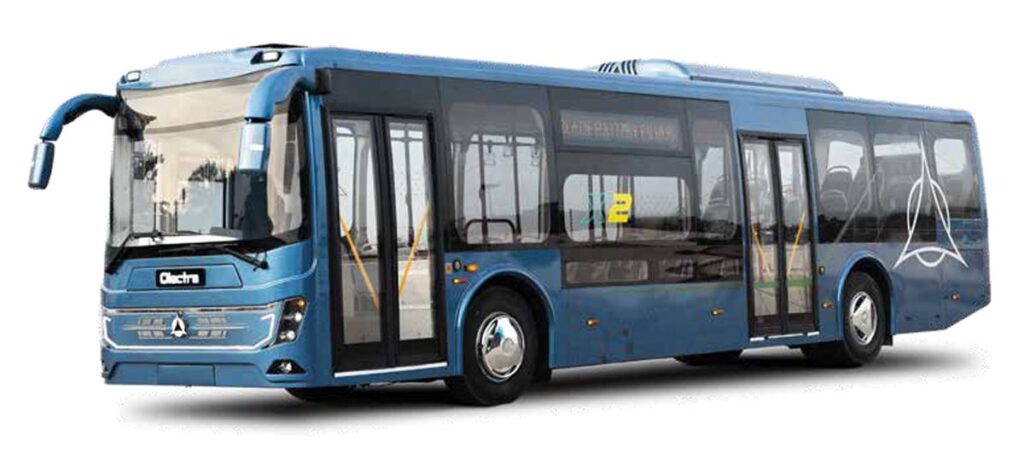
Olectra Greentech Limited has crossed a significant milestone in India’s electric mobility journey, with more than 4,000 electric buses delivered and over 750 million kilometres covered in operations. For Managing Director Mahesh Babu, the milestone reflects years of learning from real-world fleet operations, state transport undertakings and customers across diverse operating environments.

Olectra was among the early companies to deploy electric buses in India, including challenging high-altitude operations around Manali and Rohtang. These deployments have provided valuable insights into battery performance, range, charging and fleet management. According to Mahesh Babu, the experience has also helped operators understand the long-term economics of electric mobility. “Today, we are very happy that we have delivered 4,000 buses and covered about 750 million kilometres. The learnings have been tremendous for us, STUs and customers,” he said.
One of the important learnings has been battery durability. Mahesh Babu pointed to Olectra’s early buses operating around Manali and Rohtang, saying that after almost eight years, battery health on these vehicles remains around 80% or above. While challenges remain around driver availability, training and battery management, the company believes its growing operational experience is helping address these issues.
Optimising Charging And Total Cost
Olectra is now focusing increasingly on optimising the complete electric bus ecosystem, rather than looking at the vehicle in isolation. Depot charging, renewable energy, route planning, charging schedules and charger efficiency are becoming important components of the company’s strategy to improve total cost of ownership.
The company is exploring solar captive power for charging depots, while also studying time-of-day charging and route optimisation. According to Mahesh Babu, even relatively small improvements in charger efficiency can generate substantial savings when implemented across a large fleet. “We are looking at green energy for the depots, including the possibility of solar captive parks. Optimising charging time and linking routes with time-of-day tariffs can make a significant difference,” he said.

Olectra is also using operational data and AI-based analysis to understand energy consumption and improve fleet efficiency. Mahesh Babu indicated that charger-efficiency improvements alone could potentially generate savings of around ₹25-30 crore annually across operations.
Manufacturing and Product Portfolio
The company is simultaneously preparing for the next phase of growth. Its Seetharampur facility in Hyderabad has an annual per-shift capacity of around 2,500 buses, with the potential to reach around 5,000 units through additional shifts. Olectra plans to further expand capacity towards 10,000 vehicles annually across buses and trucks over the next few years.
The company is targeting around 2,000-2,500 deliveries this year and more than 4,000 in the following year. Its product roadmap will cover 9-metre and 12-metre buses for city and coach applications, along with electric trucks in the 28-tonne to 55-tonne range, including tippers and RMC applications. “Our intention is to get to more than 4,000 manufacturing volumes in the coming year. In about three years, we want to reach 10,000 units annually across buses and trucks,” Mahesh Babu revealed.
A key focus will be tailoring battery capacity to actual operating conditions. Mahesh Babu noted that the same 12-metre bus can consume significantly different amounts of energy in Hyderabad and Mumbai because of differences in traffic, average speeds and loading conditions. Olectra is therefore using route-level data to optimise battery size and charging requirements.
Competition To Accelerate Evolution
With several manufacturers entering electric mobility, competition is increasing across buses and commercial vehicles. Mahesh Babu believes this will ultimately push manufacturers to improve technology, products and customer support. “Competition will only refine the product. Customers will get more options, and competition will make every company more resilient,” he emphasised.
For Olectra, the next phase is therefore about combining manufacturing scale with operational intelligence and product development. Having crossed the 4,000-bus milestone, the company is now looking to translate its accumulated experience into larger volumes, broader applications and increasingly efficient electric mobility solutions.