Masstrans has introduced a seat vibrator system (aka driver seat haptic actuator) for commercial vehicle drivers, a deceptively simple but highly practical solution to one of the most dangerous situations on Indian roads, such as a driver falling asleep at the wheel, particularly during late-night intercity runs.
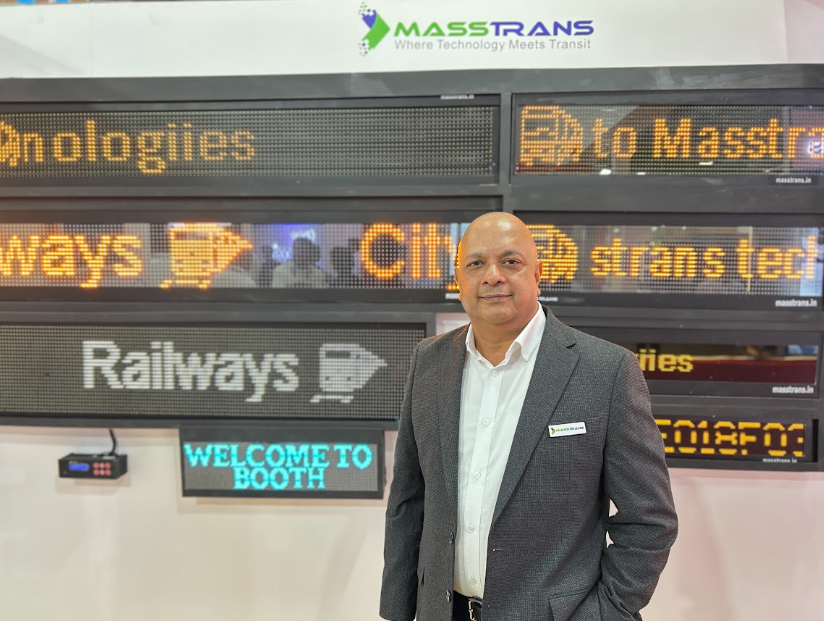
Speaking to this publication after unveiling the product at the recently concluded PRAWAAS 5.0, Mr. Vinay Jain, Managing Director of the company, said, “The existing driver drowsiness detection system relies on a mechanism that gives a gentle audio alert, which is unlikely to rouse someone who is severely fatigued or nodding off at 3am in the morning on a highway. Driver seat haptic actuator addresses this differently, the moment the system detects that the driver is yawning, closing their eyes, or showing signs of fatigue, the seat vibrates immediately. The physical jolt wakes the driver instantly, in the way that no sound alert reliably can. For intercity operators, who are acutely aware that driver fatigue is responsible for a significant proportion of road accidents, the response has been enthusiastic.”
The seat-mounted vibration motor is the newest addition to the technology portfolio that Masstrans has been building for more than three decades. The company’s journey has tracked the evolution of bus technology closely, starting with LED roof lights, moving into passenger information system through a long-standing partnership with Hanover Displays from the UK, and then into Moving Off Information Systems (MOIS), 360-degree Surround View System, Advanced Driver Assistance System (ADAS), Driver Status Monitoring (DSM), Blind Spot Detection (BSD), Ticket Validator, passenger information and infotainment displays, Automatic Passenger Counter (APC), Estimated time of Arrival Signages (ETA) and digital instrument clusters.
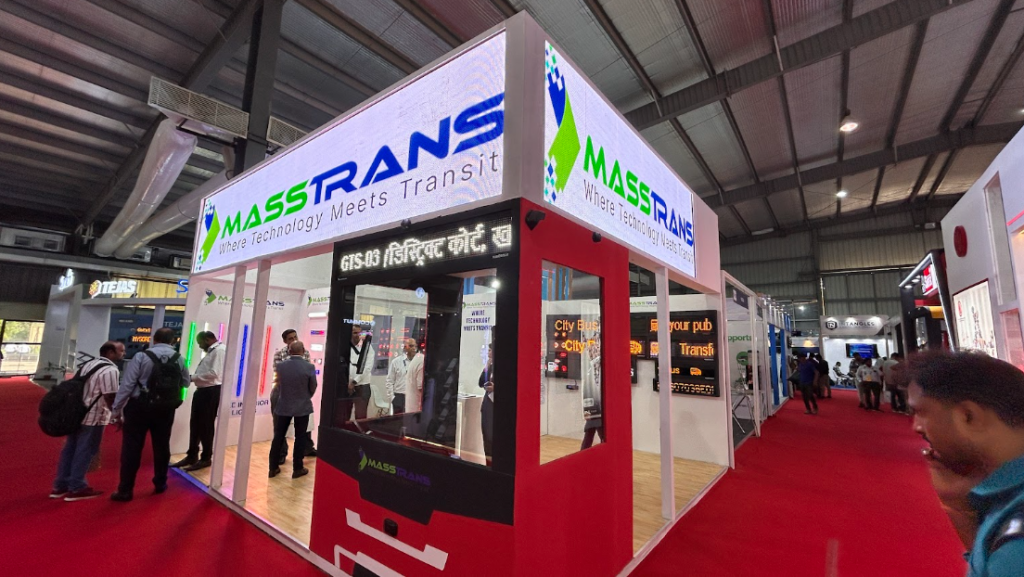
For intra-city application, Mr. Jain said the 360-degree camera solution provides a bird’s eye view around the bus for awareness and MOIS, moving off information system address a different but equally serious safety gap. In city traffic, a driver seated high up in a bus may not see a cyclist or motorcyclist stopped directly in front of the bus. When the light turns green and the bus moves, the consequences can be fatal. Masstrans’ system provides a warning before the driver acts, giving a critical few seconds of awareness. Furthermore, with ticket validators now being mandated, Masstrans brings a distinct industry advantage through proven large-scale deployment experience, having successfully supplied ticket validators across 950 Switch Mobility buses in line with CESL requirements. This proven track record, combined with an established solution and hands-on technical expertise, positions Masstrans strongly to meet the requirements of the PM e-Bus Sewa program at scale. Masstrans’ Automatic Passenger Counter (APC) provides accurate boarding and alighting counts for transit operations. Used alongside ticket validators, passenger counts can be compared with ticketing data to support revenue reconciliation, ridership analysis and better operational planning.
For inter-city applications, Masstrans is offering a range of safety and mobility solutions. Advanced Driver Assistance Systems (ADAS) support the driver with safety alerts; Driver Status Monitoring (DSM) monitors the driver for signs of fatigue such as yawning; and the driver-seat vibration motor provides a physical alert by vibrating the seat when fatigue is detected. The Blind Spot Detection (BSD) system detects people, cyclists or pedestrians close to the sides of the bus and alerts the driver through on-screen visuals and an audio warning.
Masstrans has made its way into passenger information and infotainment. New screens showcased at the expo display real-time information including the next bus stop and estimated arrival time, while also offering operators the ability to sell advertising space on the same screen. The system is location-aware, allowing operators to display information about areas the bus is passing through a local shop’s discount offer, a point of interest, or a neighborhood landmark. The screen can be split as per requirement, it does not have to be 50-50 and can be 70-30 or any other proportion the customer wants with one portion dedicated to information and the other to revenue-generating content, he mentioned.
While public transport remains a key focus area for Masstrans, the company’s technology and engineering capabilities are not limited to the mobility sector. Its solutions can be adapted and developed for applications across industries, depending on the requirement. A recent example is the deployment of Ethernet-based corridor displays at a leading hospital, where the system indicates the room or bed requiring immediate attention when a patient raises a call.
The project reflects Masstrans’ agile approach to product development and its ability to translate existing technological capabilities into solutions for entirely different applications. With 30+ years of engineering experience, the company remains open to exploring new use cases, industries and customer-specific requirements—whether through adapting an existing platform or developing a solution for a new application.
For Masstrans, the starting point does not necessarily have to be an existing product—it can simply be a problem that needs a technology-led solution.