India isn’t just keeping pace with the global auto industry — it’s positioning itself to lead it, with the scale, skill, and supply chains to become one of the world’s go-to destinations for automotive manufacturing and sourcing, says Mr. Vikrampati Singhania, President, ACMA.
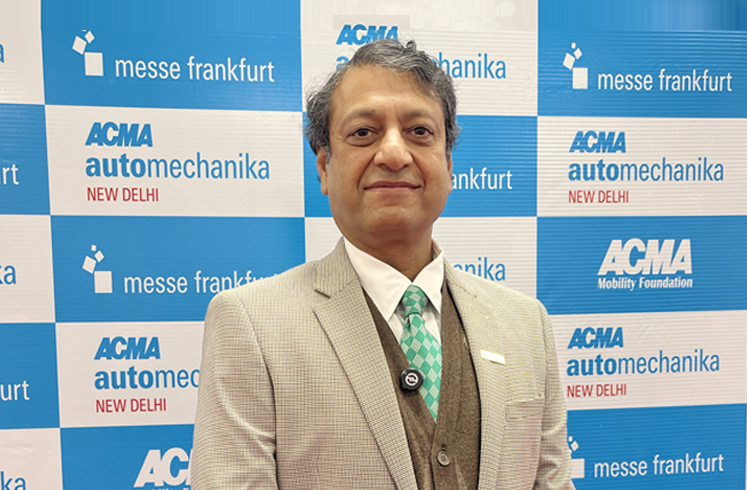
The automotive component industry is entering a defining decade, shaped by five powerful forces – technology, trade, sustainability, talent and trust.
In the immediate term, geopolitical developments, evolving trade agreements and shifting tariff regimes will continue to reshape global supply chains. As manufacturers seek to diversify sourcing and build resilience, India is uniquely positioned to emerge as a preferred global manufacturing and sourcing hub, backed by its engineering capability, cost competitiveness, policy support and growing domestic market, Mr. Singhania has said.
Technology will be the biggest differentiator. Electrification, SDVs, ADAS, connected mobility, lightweight materials, and AI are transforming vehicle architecture, making components smarter, more integrated, and software-driven — demanding continuous investment in innovation and digital capabilities.
Sustainability will increasingly define competitiveness. Decarbonisation, circularity, and responsible supply chains are no longer compliance requirements — they are business imperatives that shape customer choices, investor confidence, and global market access.
“Equally important is talent. The transition towards next-generation mobility demands new capabilities in electronics, software, systems engineering and advanced manufacturing. Building a future-ready workforce will be as important as investing in new technologies,” he emphasised.
Mission 2030
According to Mr. Singhania, ACMA’s priorities for the coming years are centred on strengthening the competitiveness of the Indian auto component industry and enabling members to succeed in a rapidly evolving mobility landscape.
The focus is on accelerating technology adoption through Industry 4.0, digitalisation, and automation, while deepening capabilities in quality, lean manufacturing, supply chain resilience, and sustainability. Workforce upskilling is also priority for future mobility. Through collaboration with start-ups, academia, and global technology partners, ACMA is building an ecosystem ready for electric, hybrid, hydrogen, and intelligent mobility.
ACMA works closely with government on trade, localisation, ease of doing business, logistics, standards, skilling, and technology adoption to strengthen the global competitiveness of Indian manufacturers.
The next decade presents India with a once-in-a-generation opportunity. The goal is not just a larger manufacturing base, but to make India the world’s most trusted partner for automotive technology, engineering, and supply chain excellence, and ACMA is committed to making that ambition a reality, Mr. Singhania added.
By 2030, India’s automotive ambitions go beyond domestic demand — the country can become a leading global manufacturing and sourcing hub, provided industry, government, and academia keep investing in technology, quality, and sustainability together.