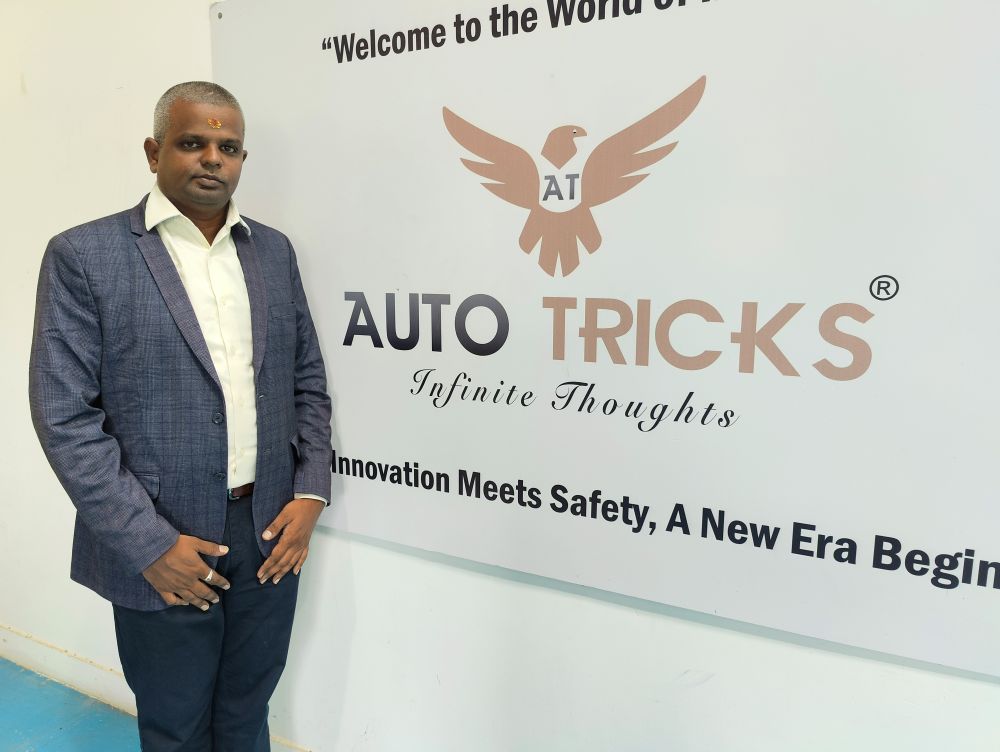
The company was not built in a boardroom. It was built on a question that refused to go away: Why do India’s vehicles still leave safety to chance?
Imagine stopping on a steep road — at a signal, in traffic, or at a speed breaker. The moment you lift your foot off the brake, the vehicle starts rolling back. Gravity does not care about your schedule or your nerves. To stay put, you either keep your foot on the brake, use the handbrake, or juggle the clutch and accelerator. It is exhausting, stressful, and for many drivers — especially those operating heavy commercial vehicles on hilly terrain and defence vehicles — it is an everyday reality.
The problem is not limited to steep gradients either. Even a mild incline, a speed breaker, or an invisible slope in city traffic can cause a vehicle to roll unexpectedly. In bumper-to-bumper conditions, that roll can mean a collision. And all this constant braking, half-clutching, and handbrake use quietly adds up — wearing out brake pads and clutch components faster, burning more fuel, and placing unnecessary physical and mental load on the driver.
What Existing Technology Misses
Some modern vehicles come with Hill Hold Control and Hill Descent Control technologies designed to address exactly this problem. But they come with conditions attached. They work only on specific slopes and hold the vehicle for just three seconds after the driver releases the brake pedal. Beyond three seconds, the driver has to manage on his own. And since this feature exists only in a handful of new vehicles, most vehicles on Indian roads remain vulnerable to rolling. It may be noted that these technologies comply with only Indian Standards.
The Genesis
The story starts in 2004 — not with a product, but with a problem. Mr. Yuvaraja. P, Managing Director of Auto Tricks Private Limited, looked at the vehicles around him and could not understand why something as fundamental as braking safety was being left unaddressed. Roads were getting busier, vehicles were getting heavier, and yet the systems keeping drivers safe had barely evolved. That observation became an obsession, and the obsession became a company.
The first four years were spent entirely in the mechanical world — understanding braking systems from the inside out, pulling apart gearboxes, experimenting with anti-gravity principles, and learning what it truly takes to stop a vehicle safely on Indian terrain. By 2008, he made the leap from mechanical to electronics, aided by training from the MSME Development Institute in Chennai. By 2010, the core product — the Sensible Braking System or SBS — was ready enough to file for Patents.
The Long Road to Certification
Building the technology was one challenge. Getting it recognised was another. In 2010, Mr. Yuvaraja filed two patents — for the hydraulic braking and pneumatic braking systems. He incorporated Auto Tricks in 2012 and approached ARAI and iCAT for a Development Test Report. The certification, however, took nearly five years to come through, finally arriving in 2017. ARAI stated that the evaluated vehicles with SBS were holding on the gradient of 12% to 18% in a stable position and no roll back or roll ahead was observed, even when the vehicle was accelerated to negotiate the gradient further. As soon as accelerator pedal gets pressed the SBS gets deactivated.
Five years later, the technology was added to Automotive Industry Standards — AIS 169, and the SBS was officially validated for use across vehicle segments, covering hydraulic braking systems used in passenger cars and SUVs, as well as pneumatic and air braking systems used in commercial, off-road, and heavy vehicles, including those deployed for defence.
Ten Years, One Solution
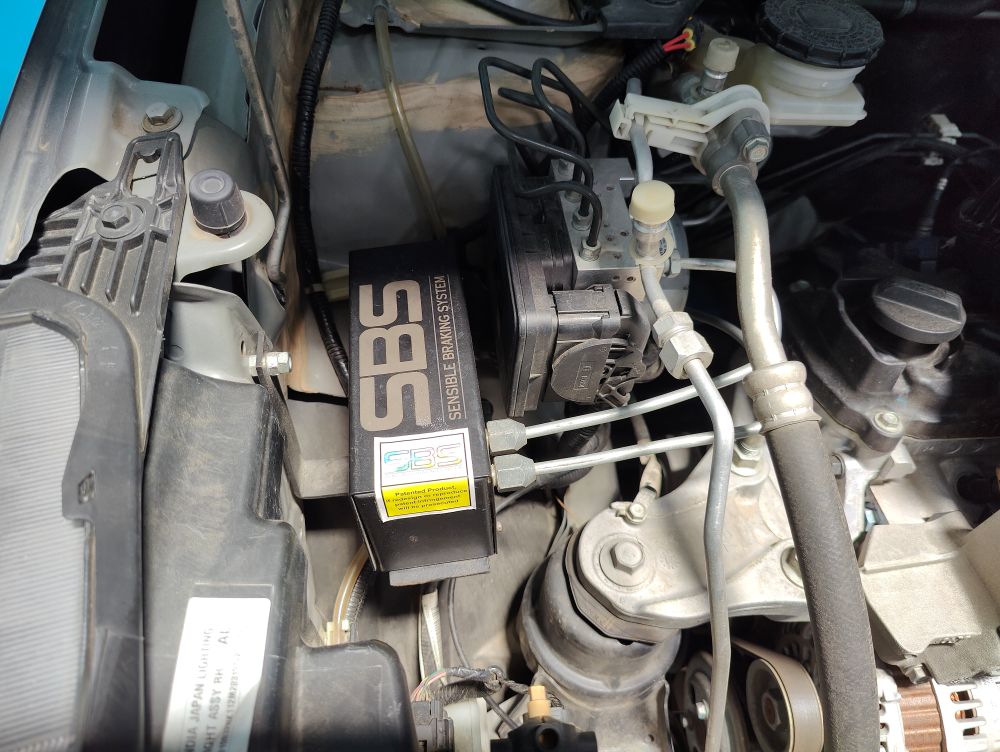
According to Mr. Yuvaraja, the idea behind SBS is that when a driver stops a vehicle, it should stay stopped — for as long as the driver needs, on any gradient, without any additional effort. With SBS fitted, a driver stopping on an uphill slope can lift his foot off the brake pedal completely and sit back without worrying about the vehicle rolling. There is no timer counting down, no predefined incline angle required, and no need to reach for the handbrake. When the driver is ready to move again, he can simply press the clutch, engage the gear, release the clutch, and press the accelerator — and the vehicle moves forward without rolling back even an inch. On a downhill slope, the same principle applies. For automatic transmission vehicles, it is even simpler — the driver takes their foot off the brake, the vehicle holds its position, and pressing the accelerator is all it takes to move again.
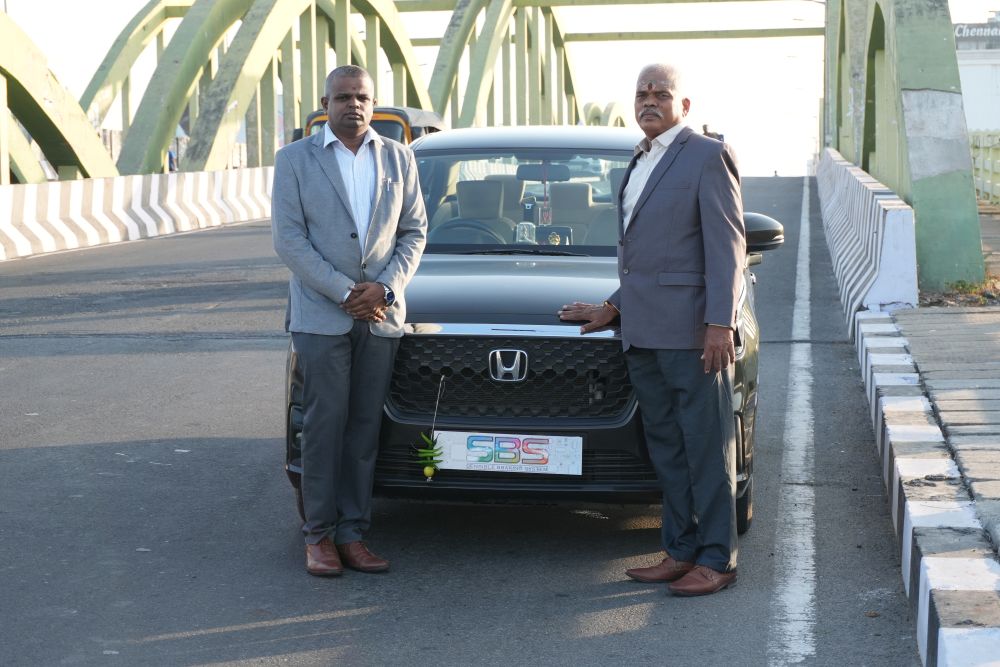
What makes SBS particularly well-suited to the Indian context is its versatility. It works on both manual and automatic vehicles, with or without ABS, and can be retrofitted onto existing vehicles as easily as it can be installed on new ones. It is compatible across vehicle types too — from three-wheelers and passenger cars to buses, trucks, multi-axle vehicles and off-road vehicles.
Built For Indian Roads
SBS does not replace the ABS unit. It works alongside it, sitting between the master cylinder and the ABS modulator to improve braking performance. For vehicles without ABS, it connects directly to the wheel cylinder. The system comprises an ECM — electronic control module — and a brake modulator, rated IP65 and IP68 respectively, making them fully dustproof and waterproof and reliable across India’s extreme conditions, from the heat of Rajasthan to high-altitude routes used by the armed forces.
Beyond safety, SBS delivers benefits that matter deeply to commercial vehicle operators, especially bus fleets. Clutch life extends by 5–10% as the system entirely eliminates half-clutch driving on slopes — one of the biggest causes of unnecessary wear and fuel waste in commercial fleets. For fleet owners, that translates directly into lower operating costs and fewer breakdowns. SBS is especially critical for defence vehicles operating in forward areas and at high altitudes, where even an inch of rollback — on gun carriers and similar heavy equipment — could prove fatal. Drivers of such vehicles constantly handle the clutch on difficult terrain, leading to chronic knee stress and fatigue. The same is true for drivers of city buses, tractor-trailers, heavy duty vehicles, and those plying in mines or carrying over-dimension cargo.
Trust Earned In The Field
The most meaningful early validation for Auto Tricks did not come from a passenger car or a commercial vehicle brand. It came from the Indian Army. In 2021, the company supplied nearly 50 units to the Indian Army for vehicles deployed in high-altitude areas including Kargil, Leh & Ladakh, Durbuk, Siliguri, and a few other places including Bangalore — where reliable braking is not a comfort feature but a matter of life and death. For Auto Tricks, an order through the Government e-Marketplace (GeM) was the strongest signal yet that the technology had earned trust where it matters most. On the defence side, Auto Tricks has secured orders to supply SBS to new vehicles through Ashok Leyland Defence Systems, BEML, and Mahindra Defence Systems. A few more OEM engagements are currently in progress. In FY25, the company supplied around 500 units for army buses through OEMs and 250 units directly to the Indian Army.
The Road Ahead –
Two decades in, Auto Tricks is at an inflection point. The company is in active discussions with passenger car OEMs for retrofit fitment at authorised service centres, where installation takes as little as three hours. It is also building out a franchise-led aftermarket network — a model where local entrepreneurs, from wheel alignment shops to battery dealers and driving schools, can offer SBS installation, Mr. K. Yuvaraj, Director, Auto Tricks, said.
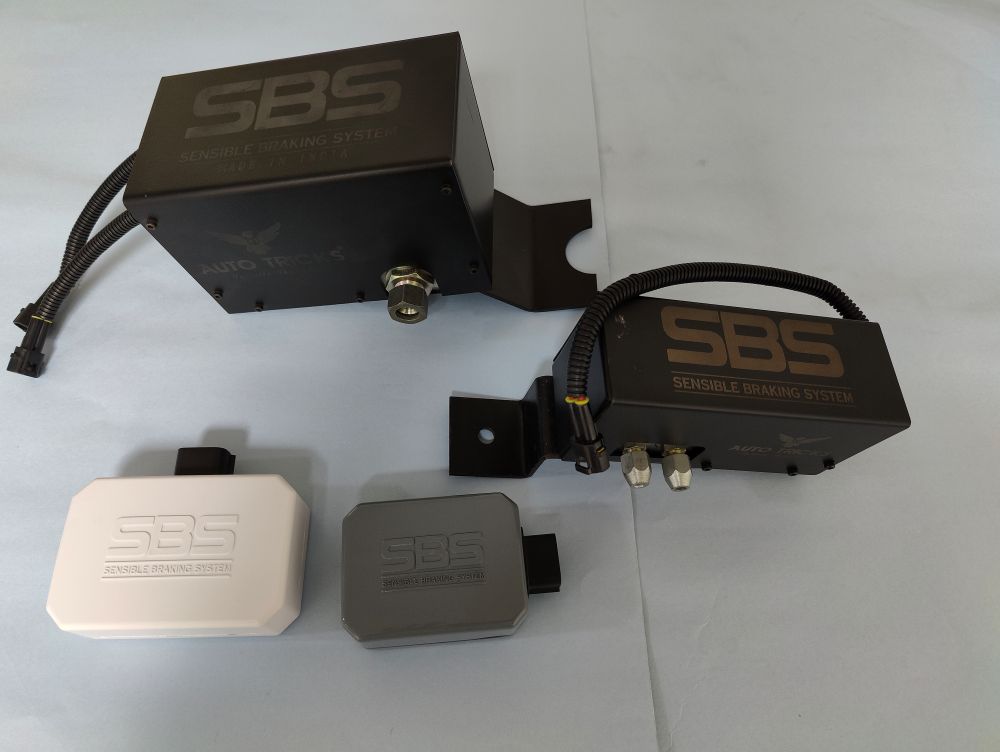
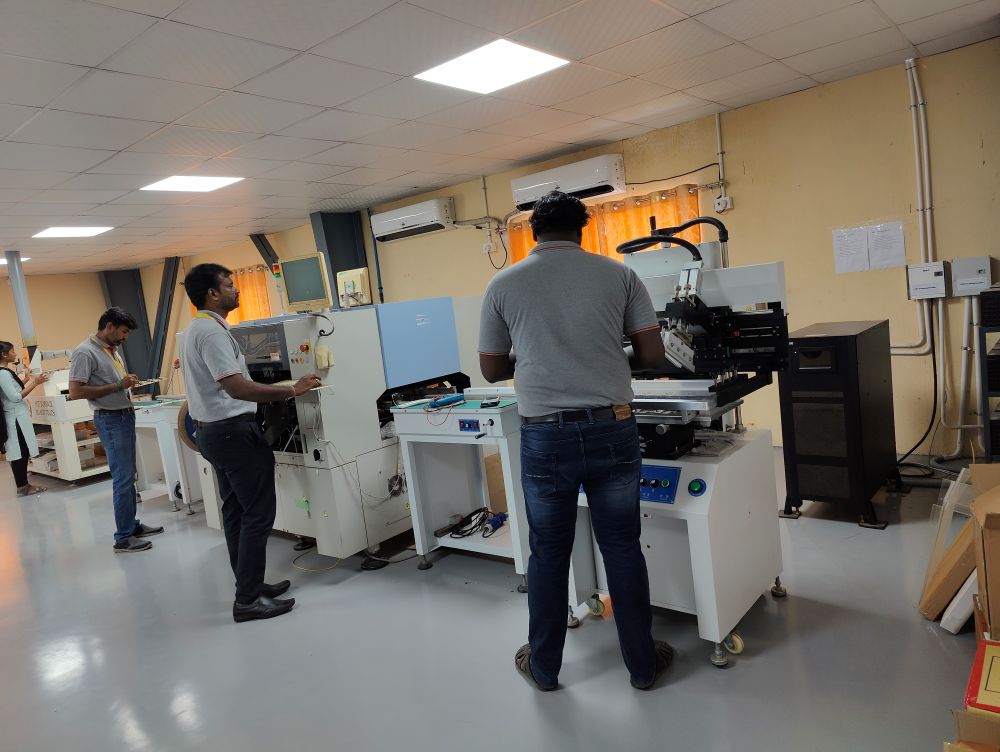
Operating out of a 10,000 sq ft factory in the Thirumudivakkam industrial area in Chennai, the company currently utilises about 40% of its space. As demand grows, it plans to fill the remaining capacity and is also exploring the option of increasing from a single shift to multiple shifts.
What began as one entrepreneur’s question about why Indian vehicles were not safer has, over twenty years, become a certified, field-tested, defence-approved technology with a growing commercial footprint. The product is ready. The market is opening. And Auto Tricks is just getting started.