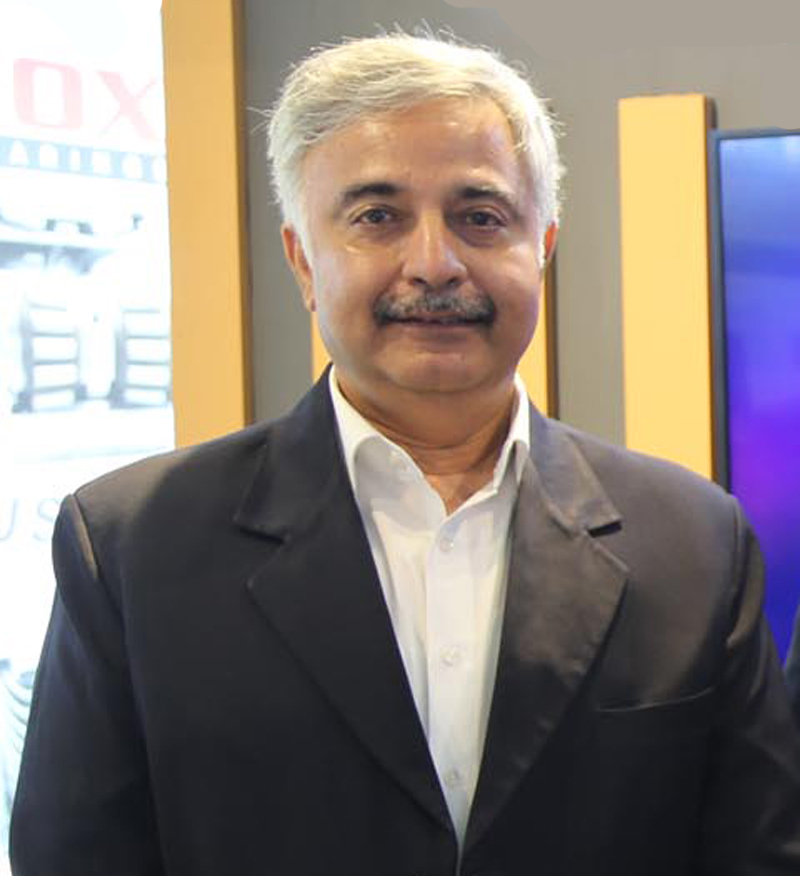
Integrating road with rail, air, and sea is how the industry eliminates bottlenecks, cuts costs, and keeps pace with a world that expects everything yesterday, says Mr. Ramachandra Puttanna, MD, India and SAARC countries, Ferdinand Bilstein India Pvt Ltd.
The automotive world is quietly being rewritten by three big shifts. First, the fuel is changing — electric vehicles are moving into the mainstream, while hydrogen and CNG are giving commercial vehicles a cleaner path forward without sacrificing range or payload.
Second, the vehicle itself is becoming a software product. Smart algorithms now monitor fleets in real time, predicting breakdowns before they happen, while AI, augmented reality, and digital cockpits are transforming the cab into a connected, comfortable workspace — something the industry overlooked for far too long.
Third, ownership is giving way to usership. Subscriptions, leasing, and ride-sharing are reshaping how people access vehicles, and India is no exception.
The automotive OEMs are transitioning the commercial ecosystems into multi-cycle service providers, offering integrated energy solutions and lifecycle management (e.g., handling 2nd- and 3rd-hand vehicles). To cope with the e-commerce boom and faster last-mile delivery expectation Multimodal Logistics Integration is taking place and there is also strong trend towards integrating road transport with rail, air, and maritime networks. This minimises supply chain bottlenecks and maximizes cost efficiency.
This time when traveling back from Düsseldorf to Bangalore, the Lufthansa had Düsseldorf to Frankfurt by rail and Frankfurt to Bangalore by air (it is called as Lufthansa Express and this combination is economical + convenient). “We can expect many such innovative hybrid models in supply chain too,” Mr. Puttanna opined.
Ferdinand Bilstein in 2030
A technology-driven company with products tested to OE standards, Ferdinand Bilstein serves customers across more than 170 countries through 23 international subsidiaries and logistics centres, delivering aftermarket solutions at the best possible cost. “With the acquisition of the Mexican spare parts specialist INTERAUTO in 2025, we also have warehouse space in Central America. This allows us to be close to our customers and provide them with personalised service,” he mentioned.
“Our vehicle research team acts as a ‘compass’ on the new product launch and we have more than 95,000 SKUs to support customers. We are among the few companies that can launch ‘new-to-range’ aftermarket parts when a new vehicle is introduced in the market,” he highlighted.
“Vehicle uptime is a top customer priority, driven by quality, cost, and delivery — and Ferdinand Bilstein is already building the competence to deliver on all three.”