India’s rapidly evolving bus industry is creating fresh opportunities for advanced climate control and thermal management technologies, and Eberspaecher Suetrak is positioning itself to capitalise on the momentum. At Prawaas 5.0, the company showcased its latest product portfolio while underlining its long-term commitment to the Indian market through investments in technology, localisation and manufacturing.
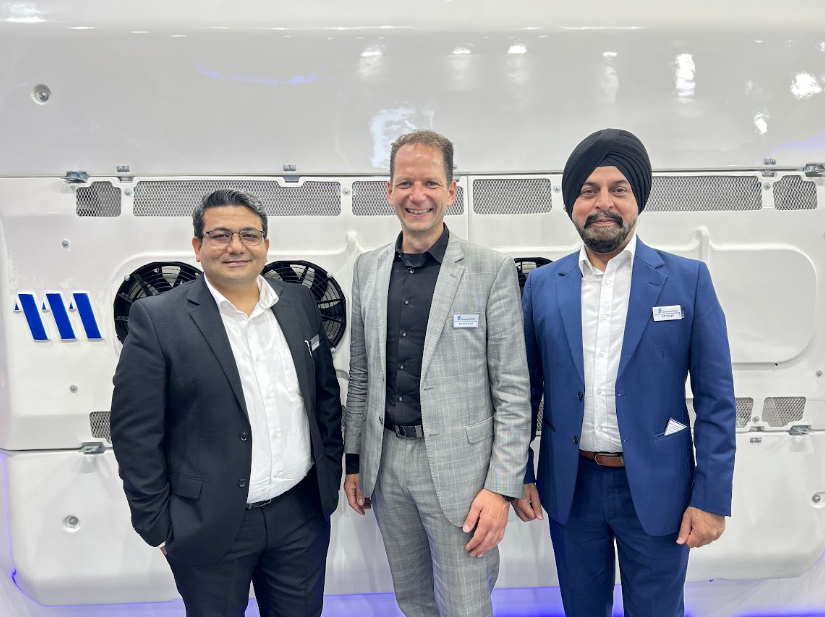
Sharing their perspectives with MOTORINDIA were Mr. Kuno Zeller, Director, Global R&D, Climate Control Systems, Bus & Coach, Eberspaecher Suetrak; Mr. K.P. Singh, Managing Director India & Head – Asia Pacific, Eberspaecher Suetrak India; and Mr. Tarun Malhotra, Director – Sales and Marketing (Asia Pacific), Climate Control Systems – Bus & Coach, Eberspaecher Suetrak India.
Reflecting on the exhibition, Kuno noted that Prawaas has grown remarkably in both scale and international participation since its previous edition. “The exhibition has become much bigger and far more international. You can clearly see the industry’s progress, especially with the strong focus on electrification. Every edition reflects how rapidly the market is evolving,” he observed.
Addressing the next phase of bus electrification
The company’s key highlight at the show was the launch of its high-performance 50 kW rooftop air-conditioning unit for diesel buses, developed to meet the increasing cooling requirements of larger buses operating in India’s harsher climatic conditions.
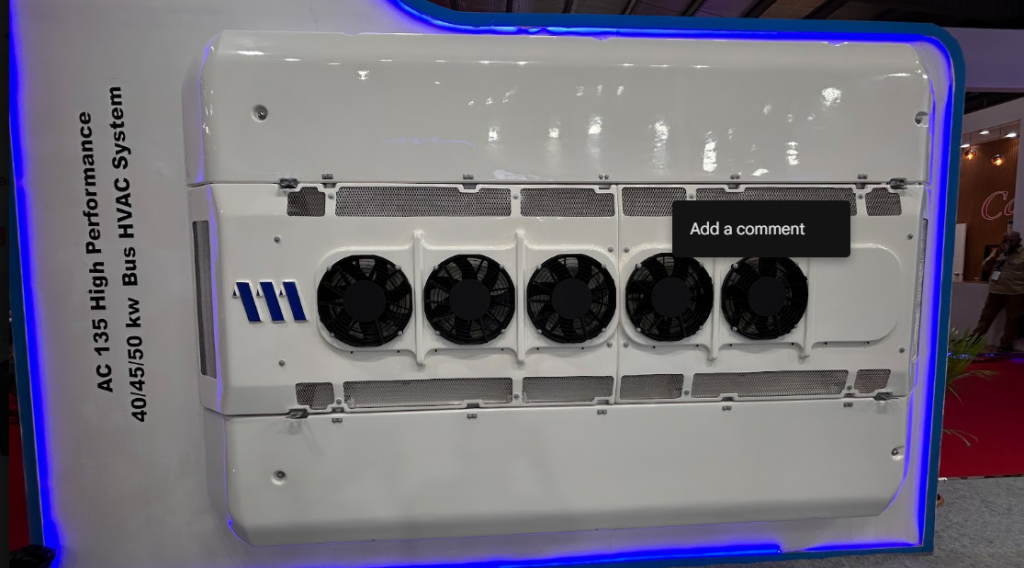
Singh explained, “We have introduced a high-performance 50 kW AC unit because buses are becoming longer and Indian summers are becoming more demanding. Prawaas gives us an excellent platform to engage with OEMs and operators from across the country while showcasing solutions that address these evolving requirements.”
Tarun added that the company’s product portfolio now spans high-capacity electric HVAC systems upto 50 kW, alongside a comprehensive range of thermal management components for electric buses.
“Today’s electric buses require an integrated ecosystem. Beyond air-conditioning, we offer battery cooling systems, thermal management solutions, electric water pumps and other supporting technologies. Since these are connected systems, cybersecurity has also become critical, and our solutions are designed to meet those requirements,” he said.
Kuno highlighted that technology development is increasingly centred around intelligent thermal management rather than standalone hardware. “The future lies in combining efficient hardware with smart software and advanced thermal management. Our R&D focus is on delivering systems that maximise efficiency, enhance passenger comfort and support the growing demands of electric mobility,” he said.
India emerges as a global growth engine
According to Singh, India’s bus industry is benefiting from multiple structural growth drivers. Rising investments in highways, increasing intercity travel, growing aspirations for premium passenger transport and the rapid penetration of air-conditioned buses are collectively creating significant opportunities.
“Air-conditioned buses accounted for barely 10% of the market a few years ago. Today, that number has increased to around 35-40%, and we expect this trend to continue. At the same time, India’s electrification programmes are progressing at an unprecedented scale, making this one of the most exciting markets globally,” he remarked.
From a global perspective, Kuno believes India’s scale makes it strategically important for the entire industry. “India is an incredibly attractive market because decisions here impact a very large ecosystem. The country’s rapid growth, expanding public transport and accelerating electrification are drawing global investments and encouraging greater innovation. Ultimately, this benefits both the industry and the country’s economy,” he said.
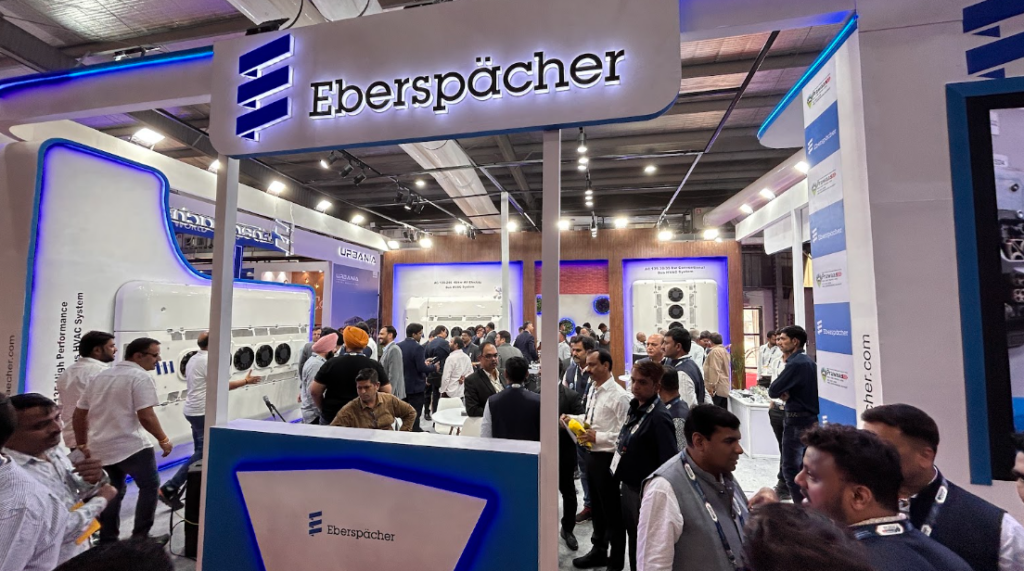
Tarun pointed out that the industry’s focus is steadily shifting from capital expenditure to operational efficiency. “Electrification has enabled us to optimise vehicle performance through software. Intelligent controls can adjust cooling requirements based on passenger load, helping operators reduce energy consumption and improve operational economics. With our software development capabilities based in Bengaluru, we are able to develop products and intelligent control systems locally for the global market,” he explained.
Looking ahead, the company remains optimistic about market prospects while continuing to expand its local capabilities. Singh revealed that Eberspaecher Suetrak’s new manufacturing facility adjacent to its existing Bengaluru plant is set to become operational shortly, increasing production capacity and enabling greater vertical integration.
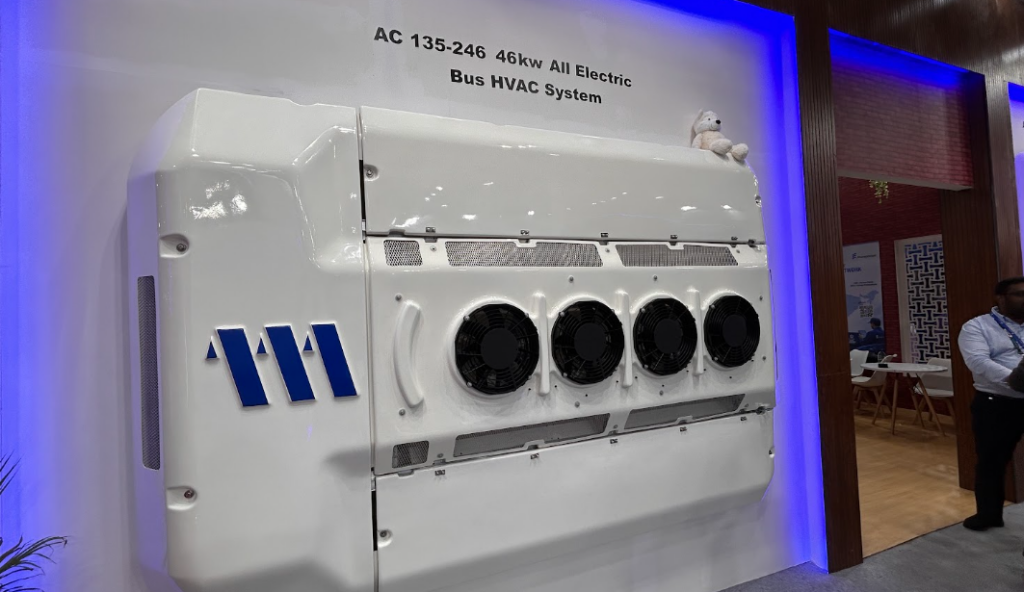
“The outlook remains very positive. Operators are becoming increasingly technology-focused and are paying greater attention to lifecycle costs and total cost of ownership. We are investing in additional capacity, deeper localisation and new technologies to support this growing market,” he said.
For Kuno, India’s leadership in electric buses is particularly encouraging. “What excites me most is seeing electric buses becoming part of everyday traffic. The pace of adoption has been remarkable, and it reinforces the importance of continuously developing technologies for battery cooling, thermal management, software and climate control.”
Tarun concluded by emphasising that the company’s growing service network remains a key differentiator. “We continue to expand our service footprint in line with our customers’ operations. Wherever our customers operate, we want them to have the confidence that Eberspaecher Suetrak will be there to support them.”