This is the story of how two companies, separated by geography but united by philosophy, came together to build a cleaner future for mobility.
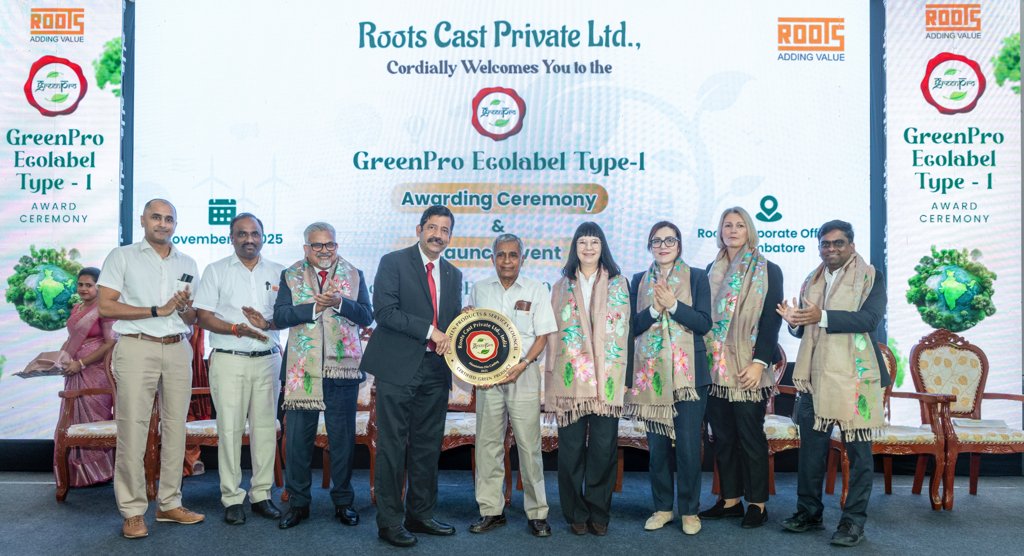
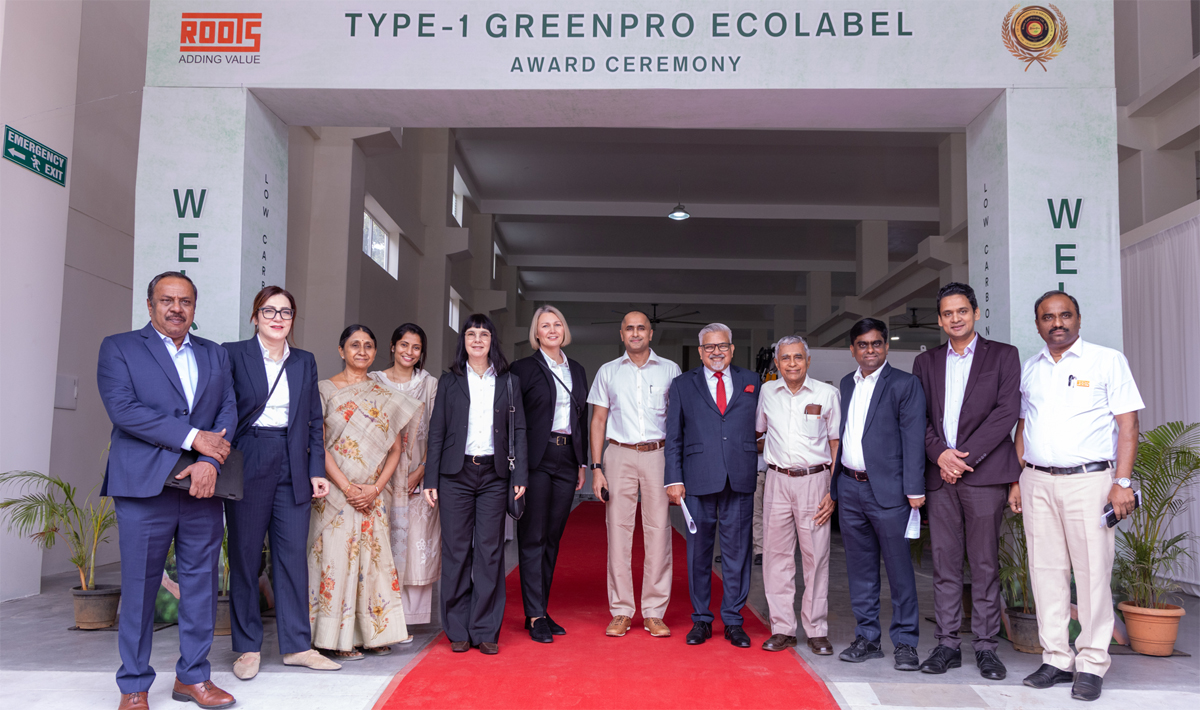
Some sustainability stories start now – but a few began long before the word became fashionable. Volvo Penta’s recent partnership with Coimbatore-based Roots Cast for low-carbon aluminium castings is one such story rooted in shared values and parallel journeys. The global OEM didn’t simply choose a supplier; it chose a like-minded partner whose commitment to green manufacturing runs deep.
Both Volvo and the Roots Group have spent decades shaping responsible industrial practices, long before climate action became a global mandate. Their new collaboration is a natural extension of this mindset – where clean energy, reduced emissions, and ethical manufacturing are not targets, but habits built over generations.
Volvo’s early Green Vision
Volvo Group began its sustainability journey long before the world started talking about climate action. Inspired by Sweden’s strong environmental movement and the landmark 1972 UN Stockholm Conference, the group recognised as early as the 1970s that protecting the planet had to be part of its core purpose. What started as an early awareness has now grown into a clear, science-backed roadmap – a commitment to reach net-zero emissions by 2040.
Today, Volvo drives this mission through multiple clean-energy technologies – battery-electric systems, hydrogen fuel cells, hydrogen-combustion engines, and renewable biofuels – while also focusing on CO₂-free sourcing across its supply chain. In Sweden, every Volvo manufacturing plant operates entirely on renewable electricity, supported by major energy-efficiency improvements. At the same time, circular-economy practices such as large-scale remanufacturing, recycling, and designing products for longer life drastically reduce resource consumption.
A Legacy of Service and Sustainability that Began Long Before its Time
Roots Group’s journey toward sustainability did not begin in boardrooms or with modern climate goals – it began several decades ago, shaped by the beliefs of Founder & Chairman Mr. K. Ramasamy’s father and his guru, Swami Sachidananda. They taught him a simple philosophy: the purpose of life and business is to serve society. Profit matters, but only as a byproduct; what truly counts is trust, people, and doing the right thing. This service-first mindset still defines the company today.
Mr. Ramasamy shared that the family’s green journey started long before sustainability became a global concern. In the 1940s, his father quietly built India’s first cow-dung gas plant, providing clean cooking fuel using only organic waste. During World War II, when petrol was scarce, he designed a charcoal gas system for trucks – starting with a Swedish model and then re-engineering it to suit Indian coal. Perhaps this was the beginning of the Group’s connection with Sweden. He spent months in Kirloskarvadi overseeing fabrication and even tested the vehicle himself on a non-stop drive to Coimbatore.
In 1954, he built a sago factory near Salem and created a full circular economy around it. Tapioca waste fed pigs and cows, the dung powered a biogas plant for the factory and nearby homes, and dried tapioca peels were used as fuel, reducing the need for forest wood. Even their family home, built in 1953, ran on gobar gas and had a solar water heater – significant choices for that time.
These early acts were not labelled “sustainability” back then, but they carried its spirit. They shaped a family culture that valued resource protection, avoided waste, and believed in innovation for society’s benefit – a legacy that still drives Roots Group today.
A Shared Vision for a Greener Tomorrow
Mr. Ramasamy believes that knowledge should never be locked away. It must be shared – especially when it can help the planet. With this belief, he is committed to helping other casting manufacturers in Coimbatore adopt the same green model that Roots has built. His dream is simple: to make Coimbatore India’s first hub for fully green castings. With support from partners like Volvo and other OEMs, he sees this vision as completely achievable – a collective step toward a cleaner and more responsible industrial future.
For him, sustainability is not just a project or a business target; it is a legacy, a responsibility, and a promise to the generations that will come after us. This thinking closely mirrors Volvo’s own philosophy. When Volvo invented the modern seat belt, it made the patent free for every automaker to use – because saving lives mattered more than owning an invention. Today, Volvo continues this spirit of shared progress by partnering with companies to source fossil-free steel and develop future low-carbon vehicles. Its global supply chain follows strict standards on renewable energy, low-carbon materials, human rights, and full Scope 3 transparency. The OEM also emphasises safety, diversity, and people development through its “Zero Accidents” vision and inclusive workplace culture. Together, these ideals show how shared knowledge and shared purpose can drive an industry toward real, lasting change.
Volvo Penta’s roadmap for a Greener, Smarter Future
Volvo Penta’s long-term vision is built on four simple pillars – Customer Success, Sustainability, Business Growth, and People & Culture. According to Ms. Eugenia Wretman, Vice President of Engine & Transmission Purchasing of Volvo Penta, every decision in the company reflects these principles. The goals are ambitious: to become 100% safe, 100% fossil-free, and 100% more productive, not just within Volvo Penta but across its global supply chain. Strong performance backs this direction – over the last decade, sales grew 2.5 times, profits 4.5 times, and cash flow six times, enabling major investments in clean technology. A turning point came ten years ago, when the company expanded beyond leisure boats into industrial, commercial, and yacht sectors – a shift that now drives much of its growth.
A clear path to Decarbonisation
Volvo Penta has set firm timelines: a 40% cut in CO₂ by 2034 and complete CO₂ elimination by 2040. To get there, it is building hybrid and battery-electric systems, renewable-fuel engines, and advanced battery-storage solutions – innovations designed not just for performance, but for the planet and future generations. The company knows it cannot reach these goals alone. Suppliers play a central role, and Volvo Penta works closely with them to rethink old processes, experiment with new ideas, and co-create low-carbon solutions. Sustainability, here, is viewed as a shared mission, she observed.
Three Guiding Stars
Volvo Penta’s sustainability work focuses on:
- Climate – reducing CO₂ across products and supply chains, with all plants already running on 100% recycled green energy.
- Resources – using materials smartly, phasing out harmful substances, and designing products that need fewer raw materials.
- People – protecting human rights, ensuring safe workplaces, and promoting diversity and inclusion across every link of the value chain.
Circular Thinking at Core
To break away from the traditional ‘take–make–waste’ model, Volvo Penta follows the 9R (Refuse, Rethink, Reduce, Reuse, Repair, Refurbish, Repurpose, Recycle and Recover) circular-economy framework. This means smarter manufacturing, extending product life, repairing and reusing wherever possible, and recycling responsibly. The aim, according to Ms. Wretman is simple: use fewer resources, create less waste, and keep products valuable for longer.
How both entities built a Cleaner, Smarter Supply Chain
The partnership between Volvo Penta and Roots Cast began with a simple idea – sustainability should be practical, measurable, and part of daily work. With this shared belief, both teams started by studying how aluminium castings were made. They collected detailed data and mapped Scope 1, 2, and 3 emissions, a moment that clearly showed where the real challenges and opportunities lay.
To ensure global standards, they brought in the Confederation of Indian Industry (CII). What followed was a disciplined process – supplier visits, factory audits, and careful documentation that turned sustainability goals into real actions on the shop floor. A major turning point came in subsequently, when the first Life Cycle Assessment (LCA) – done using both Volvo and CII methods – revealed the true carbon footprint of the castings. It was a wake-up call that led to a clear roadmap for cutting emissions and shifting to cleaner operations.
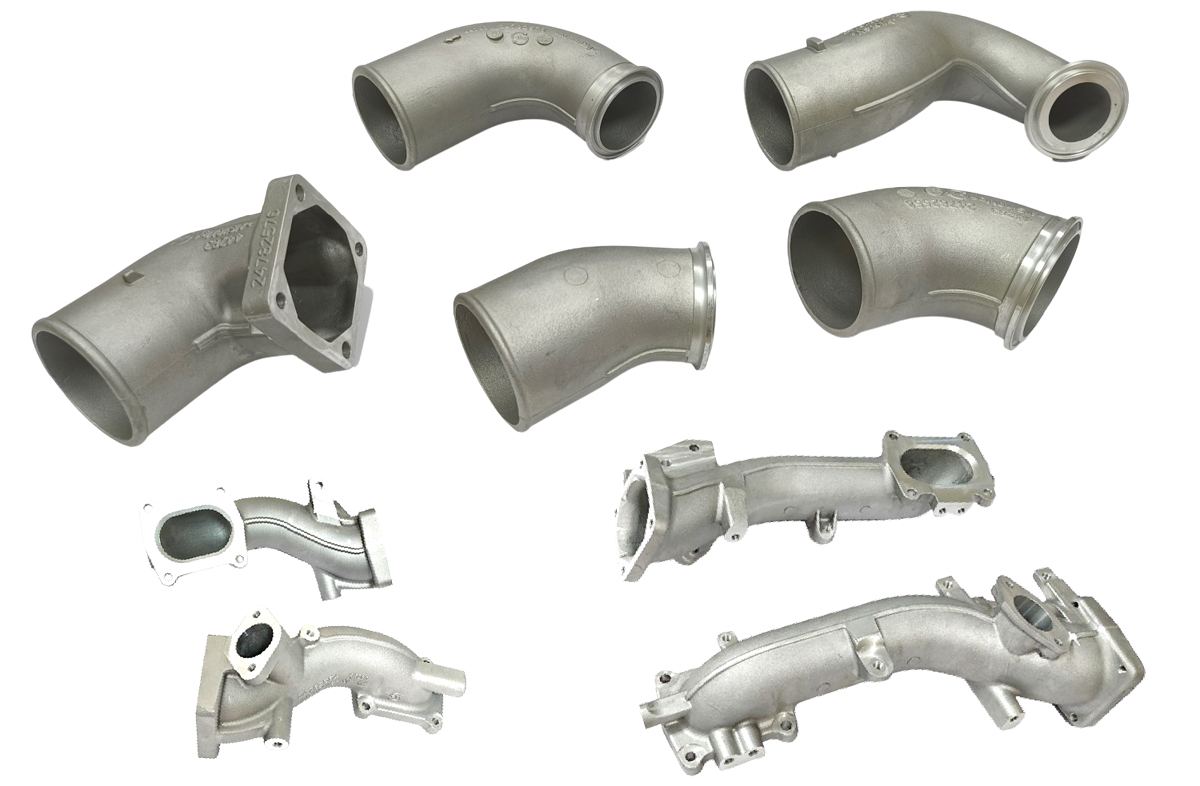
The results were visible within a couple of months. A second LCA confirmed that the plant had moved to 100% clean energy, proving that the transformation was not just planned but implemented. The journey reached its milestone with the launch of Roots Cast’s low-carbon aluminium castings for Volvo Penta – a product that stands as a symbol of shared responsibility, strong partnership, and a long-term commitment to a sustainable future.
As Mr. Kamal Bali, MD & President of Volvo Group India, put it, “This development marks another milestone in the journey towards clean, sustainable manufacturing. We are delighted to be associated with this initiative, which supports our ambition to be net-zero by 2040.”
According to Mr. Bali, four factors are powering India’s journey toward a bigger, bolder and better future: decisive structural reforms anchored by digitalisation; massive capex investments in infrastructure and social development; significant progress in green energy transition; and a young, democratic, digitally skilled and diverse workforce backed by a thriving start-up ecosystem.
Roots Cast’s five-year Green Revolution
Five years ago, Roots Cast began a quiet but determined transformation – guided by Chairman Mr. Ramasamy’s belief that business exists to serve society, and profit is only a by-product. In 2019, a detailed environmental audit revealed a hard truth: the company was emitting 4,594 tonnes of CO₂ a year, and only a quarter of its energy came from renewable sources. Instead of seeing this as a setback, Roots Cast treated it as a turning point. Teams across production, utilities, administration, and logistics joined forces to rethink how the factory used energy – setting the stage for a complete green overhaul.
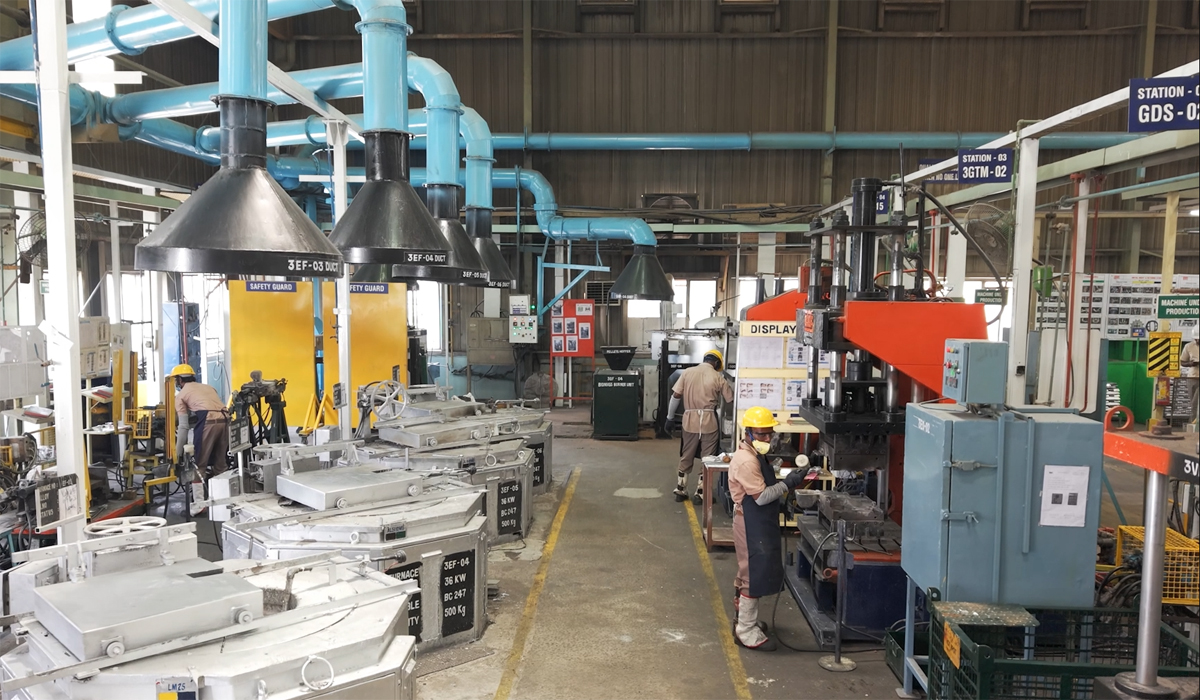
A series of smart, practical upgrades followed. The company introduced Variable Frequency Drives (VFDs) across machines and utilities to cut power use. Furnaces – the biggest energy consumers – were reengineered with optimised heating coils, upgraded burners, and digital temperature controls. Induction motors were replaced with servo systems, oversized pumps were downsized, and old vaporizer controls were modernised. These changes significantly reduced electricity demand across the plant.
The infrastructure also evolved. LEDs and BLDC fans replaced older fixtures, and every streetlight was switched to solar. Some furnaces shifted to biomass pellets made from waste materials, cutting emissions by up to 80%. Sand from gravity die casting was reclaimed instead of dumped, and all internal transport vehicles became electric.
The biggest leap came through clean energy. Roots Cast tapped into a 2mW wind plant and added a 440kW rooftop solar installation, generating over 5.6 lakh units of clean power each year. With an additional 100 kW system being installed, the plant now runs entirely on green energy – rising from 25% renewable use in 2019 to 100% by mid-2025.
This effort earned global validation. A full Life Cycle Assessment by Volvo and CII showed that Roots Cast emits just 0.789 kg of CO₂ for every 1kg of aluminium casting, far lower than the global average of 2–25 kg for primary alloys. Even with sales doubling since 2019, annual emissions have dropped to 1,930 tonnes. The company now aims to bring this down to 1,000 tonnes by 2030 and reach carbon neutrality by 2040.