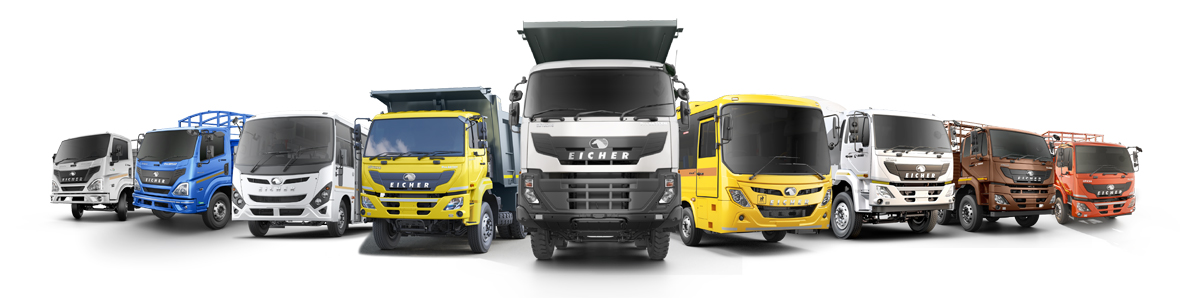
Volvo Eicher Commercial Vehicles (VECV) is steadily rising from being a strong Indian player to becoming one of Volvo Trucks’ most important global growth hubs. For Volvo Group, India is no longer just a market – it is becoming a centre of competence, technology, and future-ready manufacturing. The latest proof of this shift is Volvo’s ₹544 crore investment in a new Automated Manual Transmission (AMT) plant at Vikram Udyogpuri near Ujjain, Madhya Pradesh.

In a conversation with this publication, Mr. Vinod Aggarwal, MD & CEO of VECV, said the greenfield facility will start with an annual capacity of 40,000 units and produce Volvo’s highly regarded 12-speed AMT systems. These transmissions will power both Eicher’s heavy-duty trucks and Volvo’s fleets across Asia and Oceania.
According to Mr. Aggarwal, this is not the first time Volvo has placed global responsibility in VECV’s hands. Since 2013, the Indian venture has been the worldwide manufacturing base for Volvo’s 5- and 8-litre MDEP engines. The new investment signals deeper trust in India’s engineering strength, cost competitiveness, and supportive policy environment. It reinforces Volvo Group’s strategy to localise advanced technologies and build India as a global hub for high-tech automotive components – perfectly aligned with the Make in India vision, he observed.
Shaping Safer, Smarter, and More Efficient Highways
As VECV looks ahead, its mission is clear – to modernise mobility across India and key developing markets through a full range of Small CVs, LMD trucks and buses, and heavy-duty vehicles, all supported by a connected 24×7 service network. “This customer-first approach is backed by the company’s strong legacy as an 18-year joint venture between Volvo Group and Eicher Motors, known for bringing safer, more productive transport solutions to Indian roads. Long before the industry shifted, Eicher introduced factory-built cabins across its truck range and today operates the country’s largest OEM bus plant at Baggad. Every Eicher truck and bus sold since 2021 is connected to the Pithampur Uptime Centre through the MyEicher app, while Volvo trucks and buses continue to set benchmarks with their advanced safety technologies,” Mr. Aggarwal said.
VECV’s latest innovations strengthen this transformation. The Eicher Pro Plus Series brings factory-fitted AC, higher payload, and intelligent telematics, while the new Eicher Pro X EV offers an electric-first SCV solution for last-mile logistics with features like lie-flat seats, efficient drive modes, and driver state monitoring. At the heavy end, Volvo’s FM 420-based Road Train delivers 50% more cargo volume than standard semi-trailers, and the Volvo 9600 bus – built at the state-of-the-art Hoskote facility – remains a favourite among travellers for its comfort and safety, he pointed out.
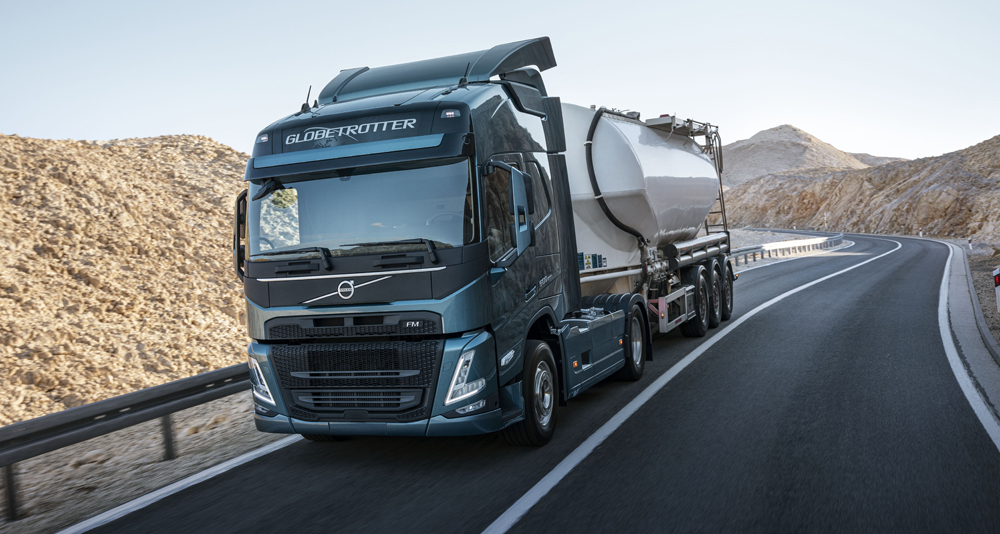
According to Mr. Aggarwal, safety and sustainability anchor all these advancements. VECV is rolling out ADAS features, collision warnings, and next-generation safety systems, while also building a clean-mobility portfolio with CNG, LNG, hydrogen internal combustion engines, and hydrogen fuel cells. Together, these efforts support India’s Net Zero 2070 goals and the Gati Shakti Master Plan, paving the way for safer highways, lower emissions, better efficiency, and improved driver well-being.
A Growth Story Built on Consistency, Customer Trust
VECV’s journey in India has been one of steady growth, strong execution, and rising customer confidence. Since the Volvo–Eicher joint venture began in 2008, the company has transformed its market position across every major segment. Eicher’s light and medium-duty trucks have grown from a 25.4% share to 36%, making the brand a market leader, while its bus business has jumped from just 5.2% to over 20%. In heavy-duty trucks, VECV has climbed from 2.1% market share in 2008 to nearly 10% today, and Volvo Trucks and Buses continue to lead their premium segments with unmatched value and reliability.
This momentum, he said, reflects clearly in VECV’s recent performance. In the first half of FY2025, the company achieved 7.8% sales growth, delivering 42,389 units compared to 39,336 a year earlier. The LMD truck range remained the strongest contributor, recording 19,962 units – a 10.2% year-on-year rise driven by e-commerce, logistics, and infrastructure demand. Exports too played a major role, growing over 40% and gaining traction across Africa, the Middle East, and Asia-Oceania, especially in heavy-duty and LMD categories, he noted.
With ongoing investments in electrification, automation, and advanced manufacturing, VECV is positioning itself for the next phase of India’s commercial mobility transformation. Its growing global footprint and strong domestic foundation underline a simple truth: the company is not just keeping pace with the industry’s evolution – it is helping shape it, Mr. Aggarwal asserted.