The company’s digital twins and virtual ECUs let engineers test and refine vehicle systems before hardware exists, catching issues early and speeding development.
Commercial vehicle including electric variant (CV) makers are racing against time. Lead times are shrinking, competition is rising, and technologies are changing faster than ever. In this churn, one thing is clear: traditional engineering models no longer work. The industry now needs agile, customised solutions that can evolve as quickly as the vehicles themselves.
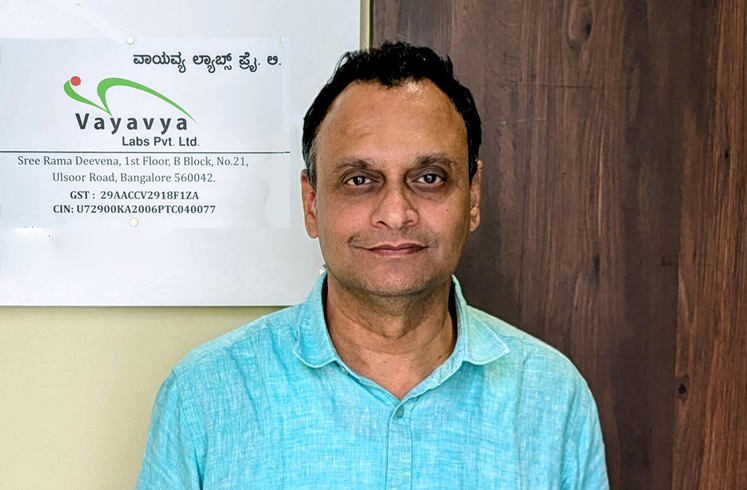
According to Mr. Deepak Samaga, Vice President of Business Development at Vayavya Labs, three big shifts are reshaping how CVs are engineered today. Electrification is pushing OEMs to rethink platforms and systems. Software-defined vehicles (SDVs) are turning trucks and buses into complex electronic machines packed with code. And autonomy—from basic driver assistance to full self-driving—is demanding new ways of designing, testing and validating systems.
This is where Vayavya tailors its approach. Instead of relying on long, physical test cycles, the company helps Tier 1s and OEMs move critical development into simulation. “What once required running vehicles on test tracks for days can now be recreated virtually, with advanced models that mimic real-world physics. Edge cases that were nearly impossible to test in the physical world can now be examined in detail, giving engineers far more confidence in how an ADAS or autonomous stack will behave,” he mentioned.
The same shift is happening in vehicle architecture development. Vayavya supports customers in building virtual ECUs and subsystems on the cloud, allowing global teams to write and test software without needing a physical prototype. Features can be tried, layered and refined long before they reach a real vehicle. And because today’s vehicles are increasingly software-driven, OEMs can launch with a base set of features and update the rest over time.
Virtual Safety
As vehicles become more complex and the pressure to shorten development grows, Vayavya steps in with a powerful idea: don’t wait for hardware, build it virtually. The company creates digital twins and virtual ECUs—full simulation models of vehicle subsystems. These models allow engineering teams to design and test their work long before any physical parts exist. It means problems can be caught early, ideas can be tried quickly, and the entire process moves faster.
This virtual approach also strengthens the way ADAS and autonomous systems are validated. Instead of depending only on physical test tracks, engineers can now create difficult edge cases inside advanced simulation environments. These digital scenarios behave like the real world, helping make vehicles safer and more predictable.
But safety isn’t just about sensors and algorithms. It is also about the human behind the wheel. While SDVs focus on building architectures and subsystems, the real challenge of driver errors and abusive driving sits on the autonomous-driving side. Here too, technology is catching up, he observed.
Modern vehicles collect huge amounts of real driving data—eye movements, gear changes, pedal use, cabin behaviour and more. Cabin-monitoring systems and onboard sensors capture tiny events that reveal how a driver reacts in different situations. Accident databases add another layer of real-world insight. All this data becomes fuel for simulation.
Vayavya uses these inputs and goes a step further. Its internal AI tool can take a real accident report and generate hundreds of possible scenarios that might have happened seconds or minutes before the crash. It blends physics, learning models and generative AI to recreate every plausible chain of events. OEMs can then test how their systems respond to these situations, not just the single recorded accident.
Tech Layers
When people ask whether Vayavya works on user experience, the answer comes with a gentle correction. Mr. Samaga mentioned that the company lives deeper in the machine. The company calls itself a silicon-to-systems engineering specialist—working one level above the hardware and one level below the apps that touch the driver. This is the space where operating systems, device drivers, protocol stacks and abstraction layers are built. It’s a “world of chips, firmware and communication frameworks, not dashboards and design. The user experience teams build on top of these foundations, using the layers it creates,” he said.
This focus shapes Vayavya’s role in the industry. In the automotive supply chain, the company sits as a Tier-3 or even Tier-4 contributor. OEMs depend on Tier-1s like Bosch and Aumovio for complete vehicle systems. Those Tier-1s, in turn, rely on specialised suppliers like Vayavya to build the critical, low-level software and components that feed into larger subsystems. That means Vayavya doesn’t directly optimise performance or emissions of vehicles—but the technology it builds often becomes the hidden layer that enables Tier 1s to do exactly that.
The same layered approach applies to autonomy. Developing self-driving systems is expensive and slow to monetise, especially in open public environments. But Mr. Samaga pointed out that in controlled spaces—mines, factories, ports and airports—autonomy is already mainstream. Vehicles here routinely operate at Level 3 or Level 4, with reliable returns and clear business cases. The technology behaves impressively well because the environment is predictable and the variables are fewer.
On public roads, the picture is different. Robotaxis may still take time, with Level 2 or Level 3 autonomy likely to dominate markets such as India. Even so, companies are actively testing these systems in Indian conditions, where unpredictability is part of daily driving, he observed.
To manage high R&D costs, OEMs partner closely with Tier 1s, sharing development, amortising investment and spreading technology across multiple vehicle lines over many years. Vayavya’s contribution sits at the validation layer. It doesn’t build the ADAS stack itself—but it plays a key role in testing these stacks virtually. By helping OEMs and Tier-1s verify and validate autonomous systems early and at scale, it reduces cost, improves confidence and speeds up the journey from lab to road, he explained.
Deep Foundations
Vayavya’s work inside the automotive world begins long before a vehicle takes shape. Much of the software it builds goes straight into silicon chips—microcontrollers that later power ECUs for powertrains, battery systems, braking, infotainment and body controls. In many cases, the company’s code enters the automotive value chain even before an OEM or Tier 1 touches the hardware, he noted.
Directly, the company also develops control software for advanced battery thermal management and modern vehicle access systems such as doors, windows and sunroofs. Alongside this, it provides digital twins and virtual ECUs so suppliers can write and test software without waiting for physical hardware. And finally, it supports the verification and validation of autonomous systems. These four areas form the core of its automotive services.
As vehicle architectures shift from domain-based designs to zonal computing, the industry is rewriting how systems are connected and controlled. High-power computing, fewer ECUs and simpler wiring demand new thinking. Vayavya stays ahead here by investing heavily in R&D. The company holds multiple international patents and plays an active role in global standards bodies, he said.
It contributes to Accellera’s Portable Stimulus Standard for chip verification, to ASAM’s OpenScenario DSL for autonomous-driving simulations, and to SOAFEE—which explores how cloud-based methodologies can shape future vehicle architectures. The company co-authors specifications, sample code and tools, ensuring that its knowledge feeds directly into emerging global standards.
These capabilities become especially important when OEMs try to size a vehicle’s processors for a future full of over-the-air updates and expanding features. Choosing the right SoC affects performance, safety and cybersecurity. Here Vayavya’s semiconductor background gives it an edge. The team analyses chip options, functional-safety levels and security features, helping customers choose hardware that can support their long-term needs, he signed off.