With focused incentives for batteries and local manufacturing, the Union Budget powers India’s ambition to become a global hub for affordable, future-ready mobility.
The Union Budget this year opened with a clear message: India wants to accelerate its shift toward cleaner, future-ready mobility and infrastructure development. The Finance Minister Ms. Nirmala Sitharaman reinforced the government’s long-term vision for steady, broad-based economic expansion. Rather than chasing short bursts of activity, the focus remains on building the foundations that support durable growth—strengthening domestic manufacturing, expanding modern transport infrastructure such as freight corridors and inland waterways, and maintaining disciplined financial management. The overall message is one of continuity: India’s growth story will be powered by investment in capacity, connectivity and careful fiscal stewardship.
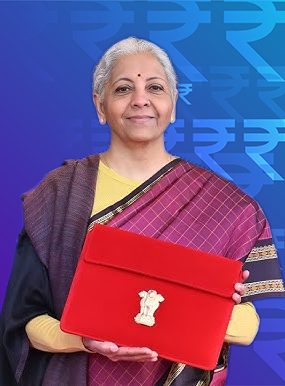
The Finance Minister highlighted electric mobility as a national priority, outlining measures designed to make EVs more affordable and to strengthen the country’s manufacturing base. A notable point the announcements were customs duty relaxations and incentives aimed at boosting battery production — a critical step for bringing down EV costs and supporting companies building the next generation of electric vehicles and components.
“Keeping atmanirbharta we have pursued far reaching structural reforms, fiscal prudence and monetary stability whilst maintaining a strong thrust on public investment,” she said.
The Finance Minister signalled that India’s infrastructure push is only set to grow stronger. Public capital spending, which stood at around ₹2 lakh crore a decade ago, has expanded more than fivefold—and the coming year will see it rise further to ₹12.2 lakh crore. The intent is clear: keep the momentum going and give private developers greater confidence to invest alongside the government. To support this, a new Infrastructure Risk Guarantee Fund is being created to offer carefully designed credit guarantees during the construction phase, reducing financial uncertainty in large, long-gestation projects.
Alongside this, the government is preparing to unlock more value from public-sector real estate. After years of success with Real Estate Investment Trusts (REITs) as a tool for monetisation, dedicated REIT structures will now be created specifically to fast-track the recycling of major Central Public Sector Enterprise assets.
The Budget also placed strong emphasis on cleaner and more efficient freight movement. New Dedicated Freight Corridors will link the eastern industrial hub of Dankuni with the western port city of Surat. Twenty additional National Waterways will be put into operation over the next five years, starting with a major stretch in Odisha connecting mining belts with Paradeep and Dhamra ports. Training centres will be set up along these corridors to build the talent needed for a modern waterway-based logistics ecosystem, while ship-repair facilities in Varanasi and Patna will help create new local employment clusters. A dedicated Coastal Cargo Promotion Scheme will encourage businesses to shift from road and rail to water transport, with the long-term goal of doubling inland waterways and coastal shipping’s share by 2047.
To improve connectivity to remote regions and open new tourism routes, the Budget also proposed incentives for domestic seaplane manufacturing and a viability-gap funding scheme for operators. Such initiatives are expected to lift demand for construction equipment and, in turn, stimulate higher sales of commercial vehicles across multiple segments.
A major push has been given to cleaner public transport, with the government earmarking 4,000 electric buses specifically for the Purvodaya States — a move that will significantly speed up the shift to greener urban mobility. On the manufacturing side, the Budget extended duty relief on equipment used to produce lithium-ion batteries and continues concessional import duties on cells and components used in EV and hybrid batteries until March 2028. Together, these measures will make it easier and more cost-effective for companies to build batteries in India, helping strengthen the country’s electric vehicle supply chain and supporting the growth of a strong, self-reliant EV ecosystem.
In a major relief for thousands of families affected by road accidents, the government has proposed that interest awarded by Motor Accident Claims Tribunals will now be entirely tax-exempt, with no TDS applicable, regardless of the amount.
On the manufacturing front, India’s electronics ecosystem continues to accelerate. The Electronics Components Manufacturing Scheme—launched less than a year ago—has already attracted commitments worth twice its original target. To build on this pace, its outlay will be expanded to ₹40,000 crore.
Meanwhile, the government is also preparing to deepen India’s presence in the strategic rare-earths sector. States such as Odisha, Kerala, Andhra Pradesh and Tamil Nadu will receive support to establish dedicated Rare Earth Corridors, covering mining, processing, research and manufacturing, helping India secure materials critical for clean energy, EVs and advanced electronics.