Centre for Digital Economy Policy Research (C-DEP), in collaboration with IIT Delhi, has released a new report titled Study of Technology-Enabled Intra-City Logistics for MSMEs, highlighting how digital goods transportation platforms are reshaping logistics efficiency for small businesses. The report was launched at the India Habitat Centre in New Delhi.
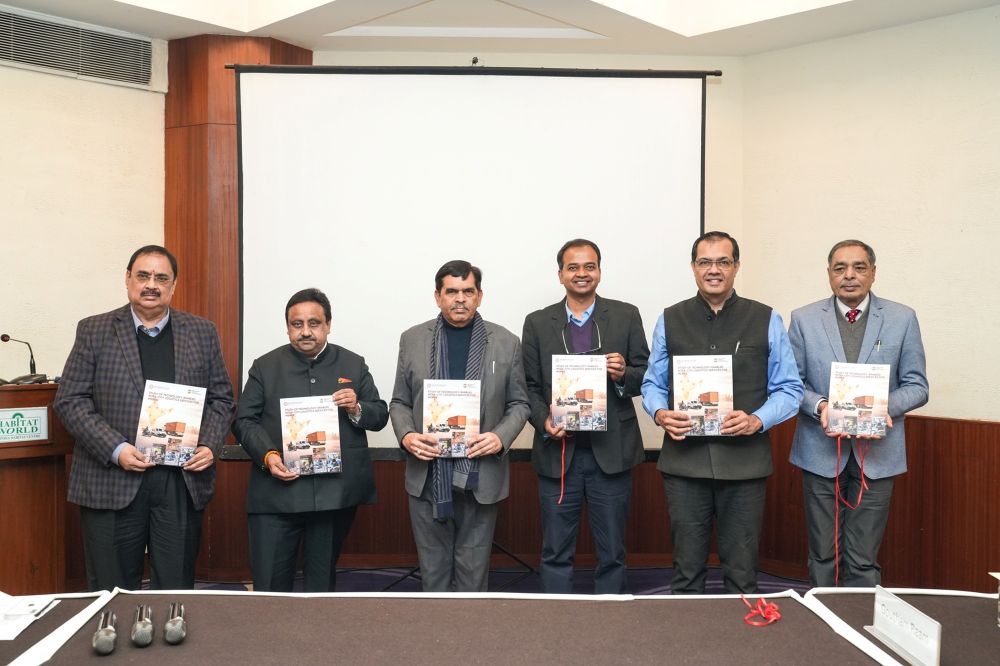
The study was formally released by Mr. Praveen Khandelwal, Member of Parliament and Secretary General of the Confederation of All India Traders (CAIT), and Mr. Ashwini Mahajan, Co-Convener of Swadeshi Jagran Manch.
MSMEs contribute close to 30% of India’s GDP and around 45% of industrial output, yet continue to face high costs and inefficiencies in moving goods within cities. Based on interviews with MSMEs, technology-enabled logistics providers, and analysis of aggregated platform data, the report finds that app-based goods transportation services have become a critical enabler for day-to-day MSME operations by lowering costs, improving reliability, and speeding up deliveries.
Speaking at the release, Mr. Khandelwal said reducing logistics costs is central to India’s ambition of becoming a developed nation. He noted that road transport accounts for a major share of logistics expenses, and improving efficiency in intra-city and road-based logistics will be essential if India is to bring overall logistics costs down to 4–5% of GDP.
Mr. Mahajan highlighted the broader role of technology in strengthening India’s economic backbone, saying MSMEs have demonstrated their capabilities across sectors with the support of digital tools. He pointed to India’s strong technology ecosystem as a foundation for global leadership and collaboration.
Dr. Jaijit Bhattacharya, President of C-DEP, observed that a significant portion of logistics costs within road transport comes from intra-city movement. He said technology-enabled goods transport services are delivering clear benefits to MSMEs by reducing costs, improving time efficiency and increasing reliability. He cautioned that higher taxes could make these services unaffordable, depriving MSMEs of an important efficiency tool and weakening customer trust.
According to the report’s findings, business users make up around 71% of users on tech-enabled logistics platforms but account for nearly 97% of all intra-city goods transport orders across two-wheelers, three-wheelers and four-wheelers. Among surveyed MSMEs, 73% reported lower transportation costs, 95% saw improved on-time deliveries, and about 27% expanded their customer reach due to access to on-demand logistics. Faster vehicle availability and access to appropriately sized vehicles allow businesses to complete more orders per day without investing in their own fleets.
The report also flags policy risks that could undermine these gains. It warns that under GST 2.0, digitally booked goods transport services could be misclassified as “Local Delivery Services,” increasing GST from 5% to 18%. Such a hike could raise per-trip logistics costs by over 12%, disproportionately impacting MSMEs operating on thin margins and potentially pushing them back towards informal transport options.
Professor P. Vigneswara Ilavarasan from IIT Delhi’s Department of Management Studies said tech-enabled logistics services have helped MSMEs improve efficiency, expand market reach and achieve meaningful cost savings, contributing to more sustainable growth. He emphasised that regulation should support, not restrict, these benefits.
The study also highlights the need for a smooth transition toward formalisation and electrification. While State initiatives promoting electric freight vehicles are a positive step, challenges remain around compliance, digital access and charging infrastructure. The report recommends clear GST clarification, gradual formalisation of informal transport operators through digital public infrastructure, and targeted PLI-based support to enable adoption of electric freight vehicles without increasing logistics costs for MSMEs.