
When Rajesh Rajgor sat down with Ramratan Singhi, the mechanical engineer-turned-entrepreneur behind Sure Logitrans Pvt. Ltd., it became clear that this wasn’t just another logistics company; it was a meticulously engineered business built on safety, discipline, and long-term thinking. In this conversation, Singhi opened up about his journey from cargo securing solutions to running a fleet of over 200 high-tech trucks, and why he believes logistics must now be run with the precision of manufacturing and the accountability of service.
In an industry long defined by unorganised operations and price wars, Sure Logitrans Pvt. Ltd. stands out as a rare example of discipline, innovation, and engineering-led leadership. Founded in 2008 by Ramratan Singhi, a mechanical engineer by qualification, Sure Logitrans brings a technical mindset to the logistics business; prioritising safety, systems, and long-term value in an ecosystem that often runs on instinct and improvisation.
The company’s story began with a foundational understanding of packaging and load securing. Long before it had a fleet of trucks, it was solving a fundamental logistics problem, how to ensure cargo remains secure in transit. Sure Logitrans pioneered the car lashing belt in India, a product that gained early approval from Maruti and quickly became standard across the country’s car carriers.
“My approach was always rooted in engineering. Even in packaging, I saw a gap between what was being done and what should be done. That mindset carried into our trucking operations as well,” says Ramratan Singhi, Founder and CEO of Sure Logitrans.
The real pivot happened in 2013, when Singhi recognised a larger opportunity in India’s long-haul trucking sector. Back then, the logistics industry was largely fragmented, but demand for organised, tech-enabled services was quietly growing. Sure Logitrans stepped in with a game-changing pilot, executing a Delhi-Chennai run in 72 hours using BharatBenz trucks and double-driver operations for Blue Dart, well ahead of the standard 96 – 104-hour timeline.
“We wanted to show that even in India, logistics can be built on time commitment, not excuses. And we proved that with the right equipment and planning,” recalls Singhi.
Fleet Strength and Achievements
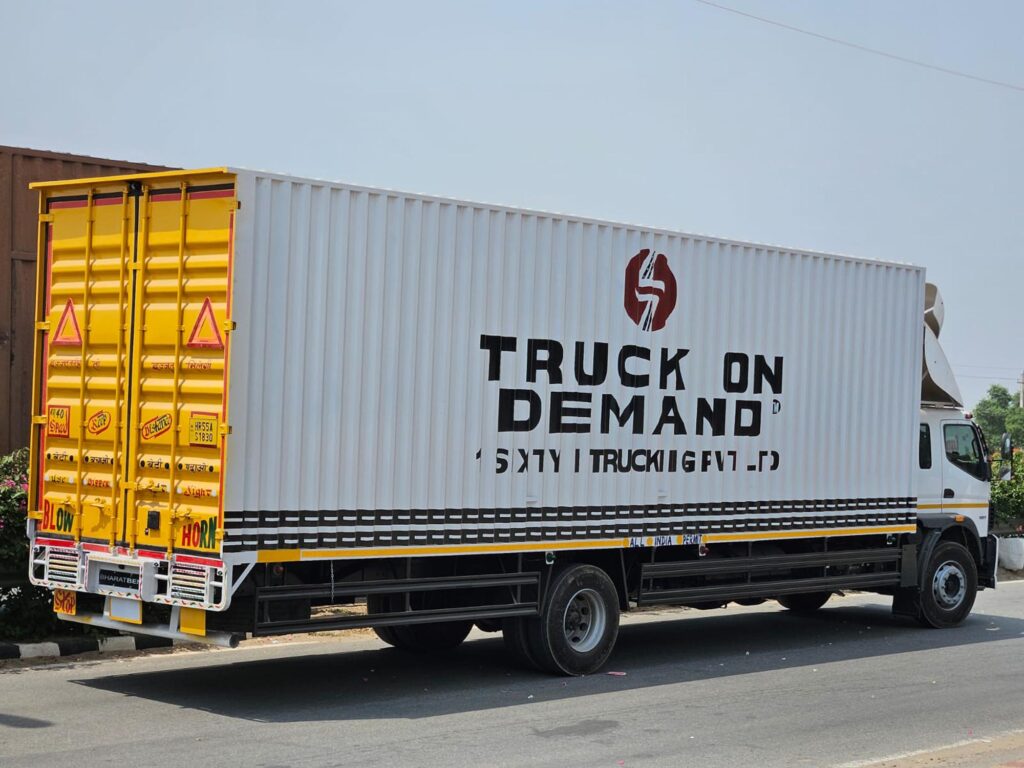
Today, Sure Logitrans operates over 200 BharatBenz vehicles, including 150 high-capacity 28-tonne container trucks and 50 lighter 10-tonners. These trucks are not generic; they’re fitted with video telematics, driver state monitoring, digital locks, and predictive maintenance systems. This focus on standardisation and smart technology allows the company to serve sensitive cargo segments like mobile phones, laptops, and electronic components with the assurance of security and real-time traceability.
The shift to BharatBenz was intentional. The vehicles offer durability, safety, and emissions compliance; all critical for modern logistics. Sure Logitrans also benefits from the long lifecycle of these trucks, which remain efficient for more than a decade with the right maintenance practices.
“We didn’t want to be just another transporter. We built a fleet that reflects our values; reliable, efficient, and transparent,” says Singhi.
The results have been tangible. Since 2019, when the company had a 100-truck fleet, it recorded around 36 major accidents annually. By 2023, with double the fleet and advanced monitoring systems in place, accidents were down to just six per year. That reduction isn’t just a safety milestone; it’s a cost advantage too, cutting accident-related losses from ₹2 crore a year to a fraction of that. “Every life saved, every accident prevented, that’s the ROI I care about. Our systems weren’t bought for show, but to change outcomes,” he says.
Emerging Trends Reshaping Trucking and Logistics
India’s trucking industry is no longer the loose, unregulated space it once was. A wave of policy reforms and infrastructure development—like the introduction of GST, BS6 norms, logistics corridors, and four-lane highways, has pushed transporters to rethink operations. Clients, too, are no longer content with “safe delivery”, they want visibility, consistency, and risk management. “The trucking business is no longer about just moving goods from point A to point B. It’s about providing an integrated, reliable, and transparent service,” Singhi asserts.
Another big shift is in client expectation. High-value cargo clients; especially in electronics and e-commerce, now demand real-time updates, safety compliance, and proof of delivery on digital dashboards. Sure Logitrans, with its early investment in tech and training, has found itself ahead of the curve.
The company also runs all trucks with air-conditioned cabins; a feature that became compulsory in 2025 but was adopted early in 2023 by Sure Group. It’s part of a larger cultural shift to treating drivers not as labourers, but professionals. Comfortable cabins, coupled with safety training, have led to lower fatigue, better focus, and stronger driver retention. “Drivers are the backbone of this industry. If we expect performance, we must offer dignity and safety in return,” he emphasises.
Use of Technology and Focus on Sustainability
For Sure Logitrans, technology isn’t an overlay; it’s built into the very design of operations. Every vehicle is a moving node in a digitally connected grid. Video telematics track driver alertness, while digital locks and cameras protect cargo integrity. Maintenance schedules are automated, and every kilometre logged feeds into dashboards used for route optimisation and fuel analytics. “Technology helps us prevent mistakes, not just fix them after they occur. Prevention is profit,” notes Singhi.
Sustainability, too, is more than a buzzword. By standardising on BharatBenz vehicles with longer lifespans and better mileage, the company lowers its environmental footprint while improving operational efficiency. It’s an OPEX-first approach; new tech is leased or bought based on lifecycle value, not upfront cost.
Michelin tyres, route planning software, and IoT-based alerts help reduce fuel consumption. The trucks, on average, deliver 10–15% better mileage than traditional setups, translating into both financial and environmental wins. “If your truck runs efficiently, your business runs efficiently. Sustainability is good math,” says Singhi with characteristic pragmatism.
Meeting Customer Expectaations
Sure Logitrans positions itself as a premium logistics partner; not the cheapest, but the most dependable. Clients may initially hesitate at higher quotes, but often return after poor experiences elsewhere. Safety, uptime, and cargo protection have become differentiators in a market that once rewarded only low prices. “Clients may not always pay extra for safety and technology, but over time, they see the value in reduced risk and consistent service. That’s our USP,” says Singhi.
To reinforce that value, the company educates clients on what goes into their service; showing accident data, monitoring footage, and training protocols. This transparency builds trust and positions Sure Logitrans as more than just a vendor, it becomes a risk partner.
Driver training is also a critical investment. Monitoring systems initially sparked resistance, but Singhi turned them into learning tools, sharing real footage to demonstrate accident causes and improvement areas. “We don’t blame. We coach. And when drivers feel respected, they start taking pride in performance,” he adds.
Navigating the Road Ahead: Opportunities and Challenges
Looking ahead, Sure Logitrans sees strong growth opportunities in high-value cargo, pharma logistics, and digitally integrated 3PL operations. Its early adoption of safety tech also gives it an edge as AIS 184 and similar regulations become mandatory.
But challenges persist. Clients remain cost-sensitive, and the industry’s low entry barriers mean competition often comes from unorganised players who undercut on price while compromising on quality. “It’s easy to start a trucking business, but hard to sustain one with discipline. We compete by building trust, not cutting corners,” Singhi says.
Talent is another constraint. The company continues to face a shortage of trained, willing long-haul drivers. It mitigates this through incentives, training, and infrastructure; but the broader ecosystem still lacks the support systems needed for a thriving driver community.
In response, Singhi is now exploring a “drag-and-drop” relay model that allows trailers to be swapped at unloading point, while drivers runs back for another trailer load. This would reduce fatigue, increase uptime, and tackle the driver shortage by removing the need for end-to-end runs.
“The idea is to create a network where trailers move like cargo packets; drivers don’t have to go end-to-end, and assets are used more efficiently. It’s ambitious, but I believe it can work,” says Singhi.
At its core, Sure Logitrans is not chasing scale for its own sake. Instead, it’s doubling down on quality, culture, and engineering discipline; hoping to inspire a model that the larger industry can look up to. “We’re building for the long run. Let others race; we’ll keep improving every day,” he concludes.