
With its roots tracing back to 1963 under the parent entity Shree Jalaram Transport, Shree Jalaram Freight Carriers Private Limited stands today as a modern-day logistics player combining legacy experience with smart operations. The company has built a formidable reputation by focusing on Full Truck Load (FTL) services, especially between Maharashtra’s Bhiwandi and Gujarat, leveraging a well-maintained fleet of containerised and open-body heavy commercial vehicles.
“This year, we onboarded a leading cement client which marked a major breakthrough,” says Meet Morjaria, Director at Shree Jalaram Freight Carriers. “We also enhanced our turnaround time substantially through stricter route planning discipline and tech-supported logistics.”
Navigating the Waves of Change in Trucking
The Indian trucking and logistics sector is undergoing a structural transformation. From workforce dynamics to the adoption of technology, transporters are rethinking their operations to stay relevant and competitive.
“There’s no driver shortage in India, only a shortage of dignity,” remarks Meet. “We’re addressing this by creating safer, more respectful working environments, and by actively recruiting educated youth into the profession. It’s about rewriting the social perception around driving.”
In addition to workforce reform, Shree Jalaram is riding the wave of digital visibility and smarter fleet operations. Real-time dashboards, GPS tracking, and automated client interfaces have become foundational to its service offering.
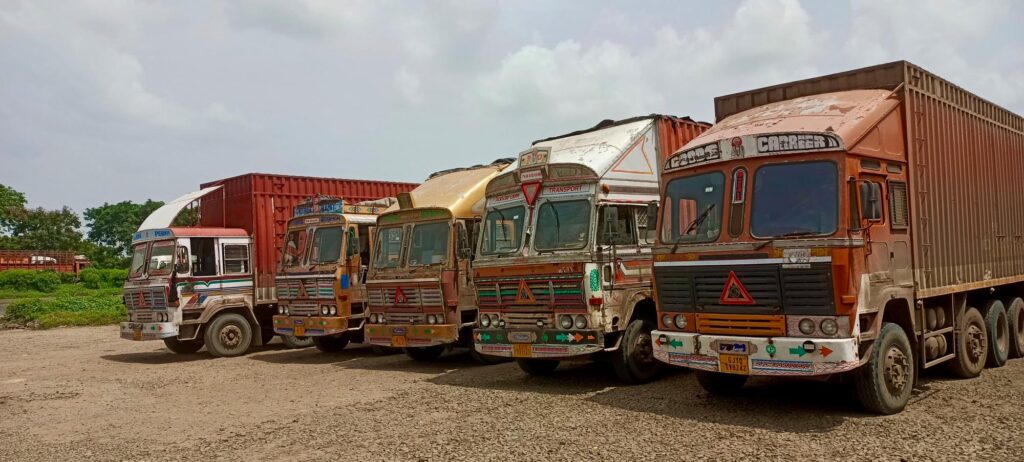
“Clients now want more than delivery; they want visibility,” he explains. “Our live tracking systems offer granular updates, and we’ve integrated dashboards that help both our operations team and the client monitor performance in real time.”
Going Green and Getting Smart
The company’s sustainability strategy is rooted in data-led efficiency. Shree Jalaram has adopted GPS-based telematics to identify operational blind spots, reduce manual intervention, and avoid delays.
“Our sustainability model is simple; avoid wastage before chasing alternatives,” says Meet. “With route optimisation and preventive maintenance, we’re reducing fuel consumption, and yes, we’re evaluating alternate fuels like LNG for the future.”
This shift reflects a growing awareness in India’s logistics sector: that going green is not only environmentally necessary but also commercially viable in the long run.
Customers Want Speed, Not Surprises
If there’s one thing today’s freight clients dislike, it’s uncertainty. Price alone no longer drives the conversation; communication, predictability, and response time now weigh heavier on the scales of client satisfaction.
“Speed and certainty have overtaken price,” observes Meet. “That’s why we’ve enabled API integrations where our live vehicles feed tracking updates directly into the client’s ERP systems. They don’t even have to call us; they already know where their shipment is.”
This approach has reduced follow-up calls, improved trust, and made Shree Jalaram a preferred partner for companies that expect precision logistics.
Looking Ahead: Professionalising India’s Freight Backbone
The road ahead is full of opportunities, but also riddled with challenges. As transport becomes more central to India’s economic ambitions, players like Shree Jalaram are pushing for greater formalisation and professionalism across the sector.
“We see a huge opportunity in transforming how the Indian trucking sector operates,” he says. “But we need to standardise training, invest in systems, and most importantly; build trust with both clients and drivers.”
However, structural bottlenecks remain. Uneven toll governance, unpredictable policies, and aged road infrastructure continue to hinder India’s push towards world-class freight systems.
“The disconnect between boardroom ambitions and ground realities is our biggest hurdle,” he says. “If India wants to be globally competitive, we must bridge that gap with consistency in policy and investment in infrastructure,” concludes Meet.