The company is strengthening India as a global hub for manufacturing, R&D and exports — not just for farm equipment, but also for parts and systems sourced from Indian suppliers.
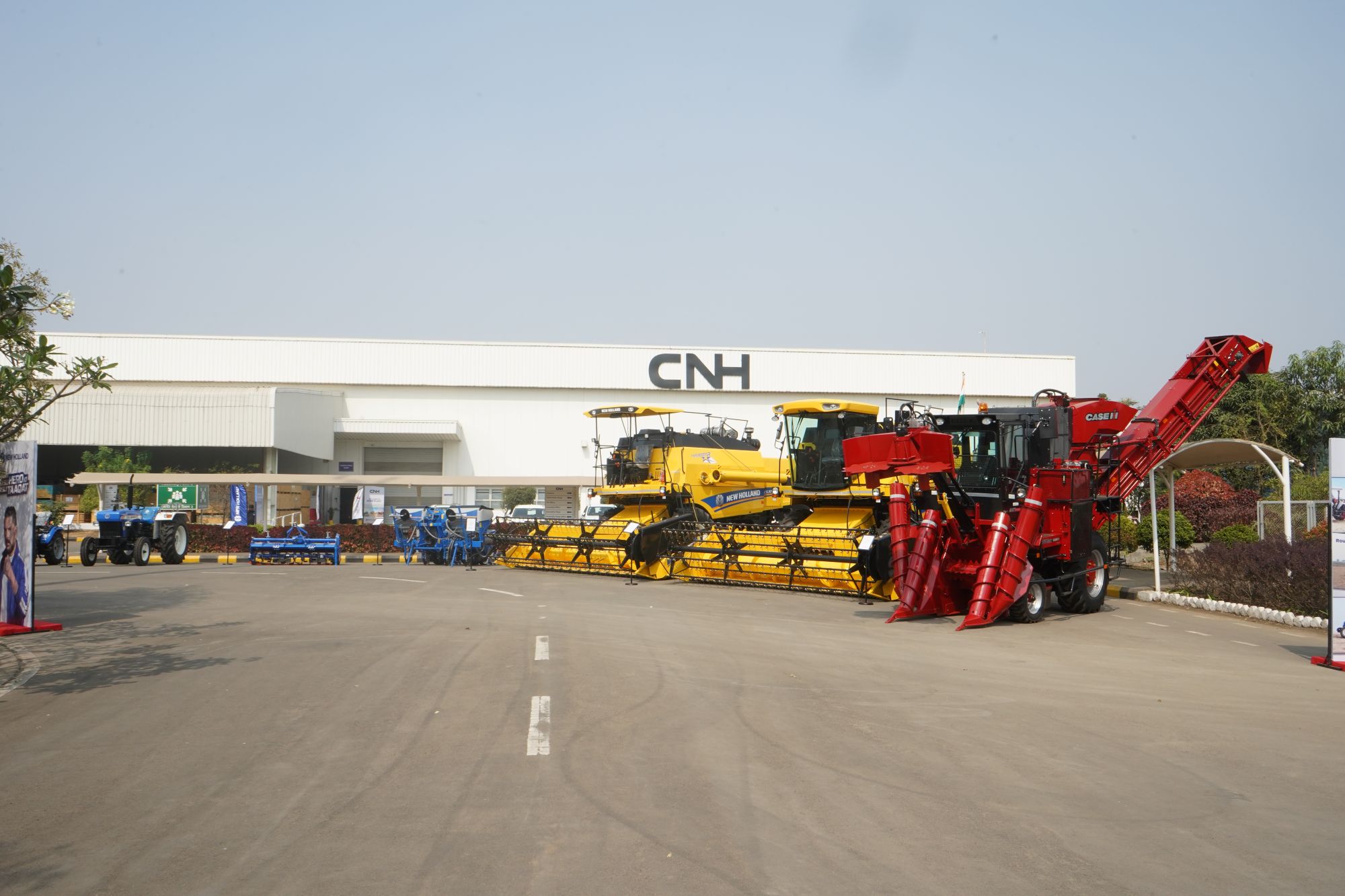
CNH India, part of CNH Industrial, a global leader in agriculture and construction equipment, showcased a range of its advanced ‘Made-in-Pune’ farm mechanisation products at its state-of-the-art manufacturing facility in Maharashtra. The launch highlighted company’s R&D, engineering and manufacturing capabilities, which design and produce world-class harvesting and crop-solution equipment for both Indian and international markets.
Spread across 280,000 square metres, the Pune facility manufactures combine harvesters, sugarcane harvesters, small square balers, tractors, headers, cabs and a range of implements. With advanced fabrication systems, automated paint lines, structured assembly processes and stringent testing protocols, the plant supports mechanisation across multiple crop types while also exporting machines to global markets.
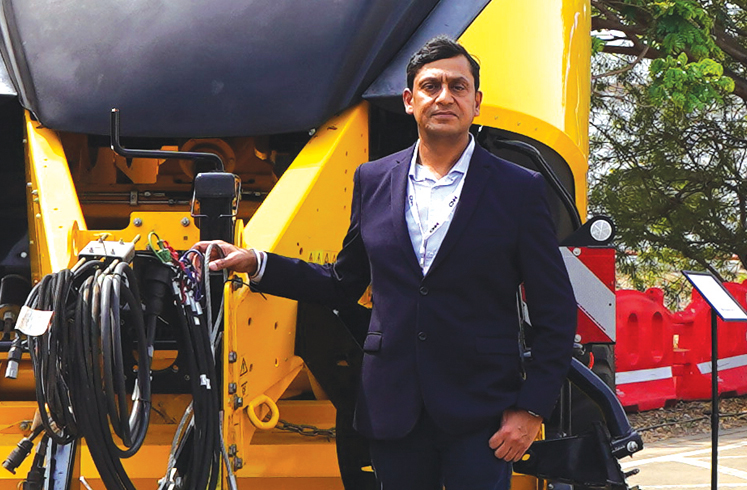
Mr. Narinder Mittal, President & Managing Director, CNH India Region, said the Pune plant is central to the company’s India strategy. He emphasised that as India progresses towards becoming a developed economy, agricultural mechanisation will be critical in improving productivity, efficiency and sustainability. He added that CNH’s leadership in sugarcane harvesters, combine harvesters and balers is backed by machines engineered specifically for Indian soil and farming needs—fuel-efficient, reliable and technologically advanced.
In 2023, the Pune plant produced India’s first TREM-V compliant sugarcane harvester, even before the regulation was in place. The company currently holds more than 50% market share in both, he added. Like many companies, it also faced setbacks in its exports due to increased tariffs by the US, he said, adding that the situation is now improving. “The next 20 years will be golden period for the company,” and the company is planning to leverage the emerging opportunities.
Rising Strategic Importance
It may be recalled that last year, the global company has carved out India as its fifth standalone global region, underlining the country’s growing importance. This strategy rests on four pillars:
- India for India – building scale in the domestic market
- India for Global – exporting made-in-India products to the world
- Global Capability Center – supporting worldwide R&D and functional needs
- Strategic Sourcing – exporting India-made components to CNH plants globally
Last year the Indian company exported components worth about $ 70 million and this calendar it hopes to export $200 million. Export revenues will exceed $500 million in the next 3–4 years, positioning India as a global component factory for the organisation.
Ambitious Market Goals
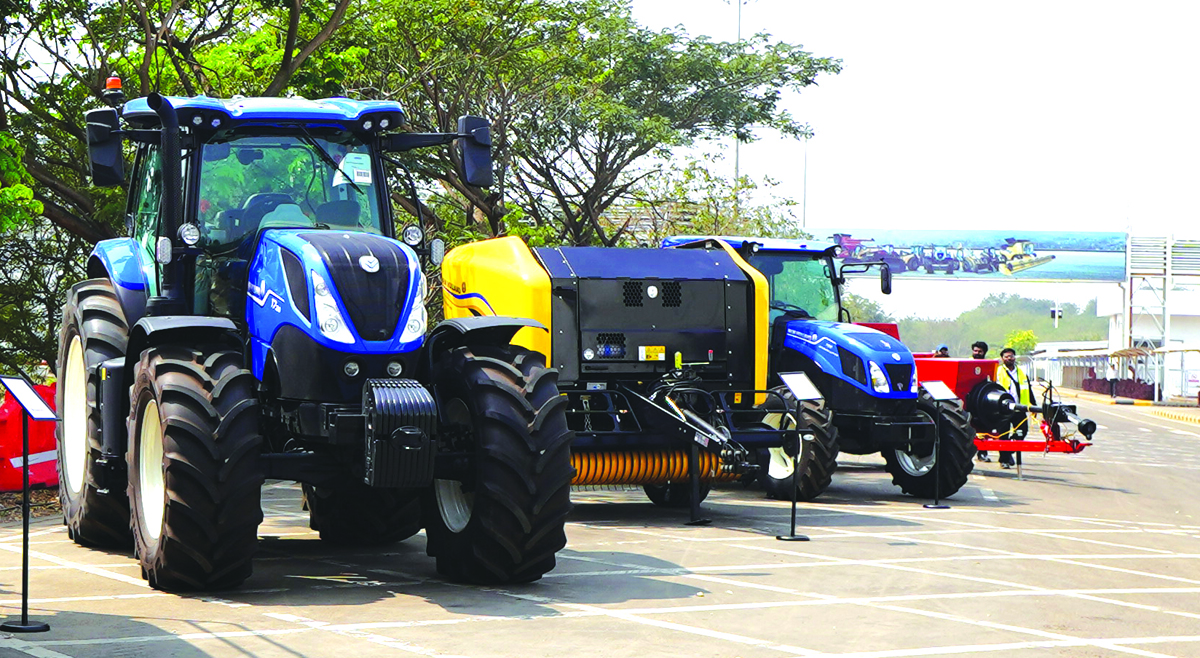
CNH aims to scale its tractor market share from the current 4.3% and sell one lakh tractors annually in India by 2030, against selling about 60,000 units last calendar. It already holds over 50% market share in sugarcane harvesters and small square balers. Its tractors range from 17 HP to 105 HP for the domestic market and go up to 120 HP for exports. The company also offers high-end models like the T7 for specialised applications. It imports certain specialised equipment such as big balers, precision planters and forage harvesters, depending on market needs.
Driving Mechanisation Movement
Despite being one of the world’s largest agricultural economies, India’s mechanisation levels remain low: less than 50% overall, and as low as 2–5% in key areas like crop residue management and sugarcane harvesting. CNH believes this gap presents a major opportunity for growth.
Mechanisation not only addresses labour shortages but also improves yields—for example, sugarcane harvesters can boost farm productivity by 6–7%.
The harvester cuts the cane right at ground level, unlike manual cutting where the last node — the part with the highest sugar content — is often left behind. Each left-over node carries about 70 grams of sugar, which adds up to nearly 2.8 tonne of sugar lost per acre. These exposed nodes also attract bacteria and damage the new shoots that emerge. In contrast, when the harvester cuts at ground level, it buries the stem, preserves the nutrients and helps the new crop (that grows from the stubble or roots left behind after the main crop is harvested) grow stronger, resulting in a significantly better secondary harvest. Rising food demand, new policies around clean energy from crop residue, and investments in CBG (compressed biogas) plants by companies like Adani and Reliance are creating new demand for balers and harvesters, Mr. Mittal observed.
Smart Mechanisation for a Changing Farm Economy
India’s agricultural landscape is evolving rapidly, driven by labour shortages, rising input costs and the need for higher productivity. Case IH and New Holland are positioning themselves at the centre of this shift with a technology-led portfolio spanning harvesting, post harvesting, planting and soil preparation — each engineered for measurable efficiency gains.
Sweetening Sugar Belt
In key sugarcane States such as Maharashtra, Karnataka and Tamil Nadu, the CNH 4010 Max sugarcane harvester has established leadership. Powered by a 176 HP Stage V FPT engine, it combines fuel efficiency with output quality, delivering less than 5% extraneous matter — a critical benchmark for mills. Its performance consistency has made it a pioneer and market leader in mechanised cane harvesting.
Multi-Crop Productivity with the TC5.30
For grains, the 130 HP TC5.30 combine harvester stands out as a professional multi-crop combine. Designed to harvest wheat, paddy, soybean, pulses and maize, it features threshers and a separation system consisting rotary separator which provides active separation mechanism of grain from chaff, sieves and fans. The overall threshing mechanism is meant for gentle crop handling — essential for delicate pulses. In maize, it can deliver nearly double the output of comparable machines and typically covers 1,000 to 1,500 acres annually in maize crop dominated regions. The integrated air-conditioned cabin enhances operator efficiency by up to 30% while reducing dust exposure, reducing fatigue and reinforcing productivity during long harvest cycles.
Precision Planting for productivity & Cost Control
The company’s pneumatic precision planter integrates seeding and fertilising into a single operation. Using a blower-driven vacuum effect on the seed disc, it achieves 98% seed placement accuracy—delivering 30,000 to 32,000 maize seeds per acre with minimal variation. It ensures optimal planting depth and maintains precise spacing between the seed and fertilizer, improving nutrient uptake. This precision translates into 15 to 20% seed savings, which is particularly significant for ‘high-seed cost crops’ such as cotton and hybrid maize.
Deeper, Smarter Soil Preparation
The newly introduced rotavator range addresses varied Indian soil types, from sandy alluvial to heavy black cotton soils. Available in eight models from five to eight feet, the machines feature a unique swing diameter design that enables nearly double the tilling depth of conventional units. A typical 7-foot HD model, equipped with 60 blades, ensures uniform soil mixing and improved aeration.
From Stubble to Biomass Power
In regions like Punjab, Haryana and even Uttar Pradesh crop residue management remains a critical challenge. With narrow sowing windows, stubble burning has often been the default solution. A high-capacity baling system is now offering a viable alternative — converting residue into industrial raw material for Power/ CBG/Ethanol production at scale apart from traditional practices of livestock feeding, mulching and packaging industry usage etc.
High Density Small square Baler
The New Holland Agriculture Small Square Baler (SSB), produced at the Pune plant is a market leader in crop residue collection in the country. A typical NH SSB bales an average of 1,500–2,500 tonnes in the plains of North India within a short operational window of just 40 days.
High-Capacity Fixed Chamber Baler
The fixed chamber round baler, imported from Poland, is soon to be fully localised. It produces uniform bales measuring 120 cm in width and 125 cm in diameter, weighing between 225 and 300 kgs depending on crop type and moisture. It delivers approximately 60-80 tonnes per day, translating to about 2,400-3000 tonnes over a typical 40-day harvest window in North India.
Variable chamber Round Baler
This setup consisting of a variable chamber baler where the farmer has liberty of producing bales of his choice ranging from 90-150 cm diameter with width of 120 cm. For optimum production the variable chamber baler is driven by Work Master 105 tractor delivering 106 Hp engine power. This variable chamber round baler can bale 3,500-4,500 tonnes in a 40 day operating window during rice harvesting season in north. Big balers bale up to 250 tonnes per day using 400–500 kg rectangular bales. Interestingly, the technology can collectively clear biomass from 4,000–5,000 acres per season — equivalent to 8–10 villages — without burning.
Strategic Sourcing
From manufacturing and R&D to exports and strategic sourcing, CNH Industrial is deepening its roots in India while contributing to the country’s journey towards modern, mechanised and sustainable agriculture. With new plants planned, product localisation underway and a strong export pipeline, India is fast becoming one of CNH’s most important growth engines globally.
Talking on the strategic sourcing and optimising resources, Mr. Mittal said, alongside its growing manufacturing footprint, the company is building the systems that keep a modern machinery business running—smart sourcing, greener operations, digital technology and sharp market forecasting. For exporting parts to CNH’s global operations, he said many components are now assembled and tested in-house (gearbox is a classic example), while others are sourced directly from suppliers based on CNH’s designs. The company is also nudging its supplier base towards more sustainable practices, supported by solar power adoption across its plants.
Technology is becoming the backbone of CNH’s equipment. Its newer tractors and balers come fitted with telematics that track performance, fuel levels, location and overall health. Alerts from the field flow into command centres in Noida and Pithampur, where teams can guide dealers and customers before issues turn into breakdowns.
Operating in India, however, means dealing with a market that moves with the seasons. Unlike the West, demand here swings with rainfall, festivals and crop cycles. To stay ahead, CNH uses a forecasting system that tracks everything from reservoir levels to commodity prices—helping it plan production with reasonable accuracy, even in an unpredictable market, Mr. Mittal added.