Whether it’s simple add-on accessories or cutting-edge adaptive beam systems, the company is building a lighting portfolio that mirrors the speed and diversity of India’s changing automotive market.
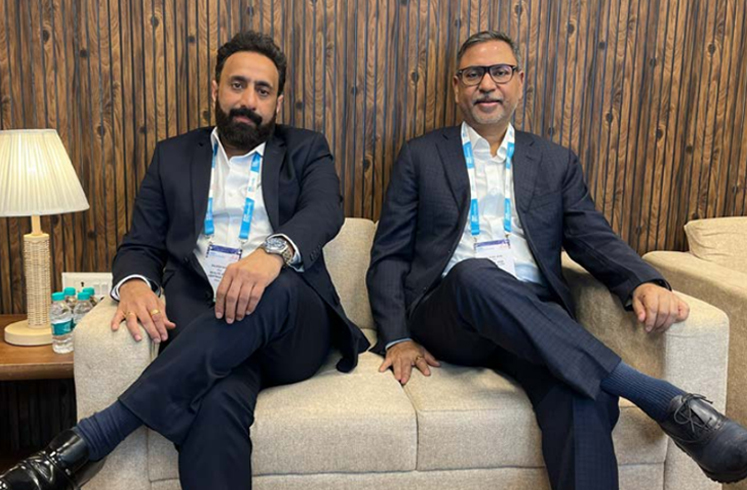
Every industry reaches a defining moment—when customer expectations evolve, technologies mature and yesterday’s products no longer suffice. For the Gurugram-headquartered Neolite ZKW Lightings, that moment is now.
What began as a predominantly export-driven lighting manufacturer is undergoing a decisive transformation. The company is expanding deeper into passenger vehicles, investing aggressively in manufacturing capacity and strengthening its electronics capabilities in line with India’s fast-changing mobility landscape.
“India is a market where customers demand global features at Indian prices. The real strategic challenge is balancing innovation with cost discipline,” Mr. Rajesh Jain, Managing Director, Neolite ZKW Lightings, told this publication.
A Strategic Pivot Toward Passenger Vehicles
“Over the next 10 years, we see even deeper collaboration with ZKW for high-end lighting solutions catering to passenger vehicle customers. Flexibility in collaboration is critical for a price-sensitive market like India. We work with ZKW in a way that allows us to access global technology while protecting cost competitiveness,” Mr. Jain said.
Technology Takes Centre Stage
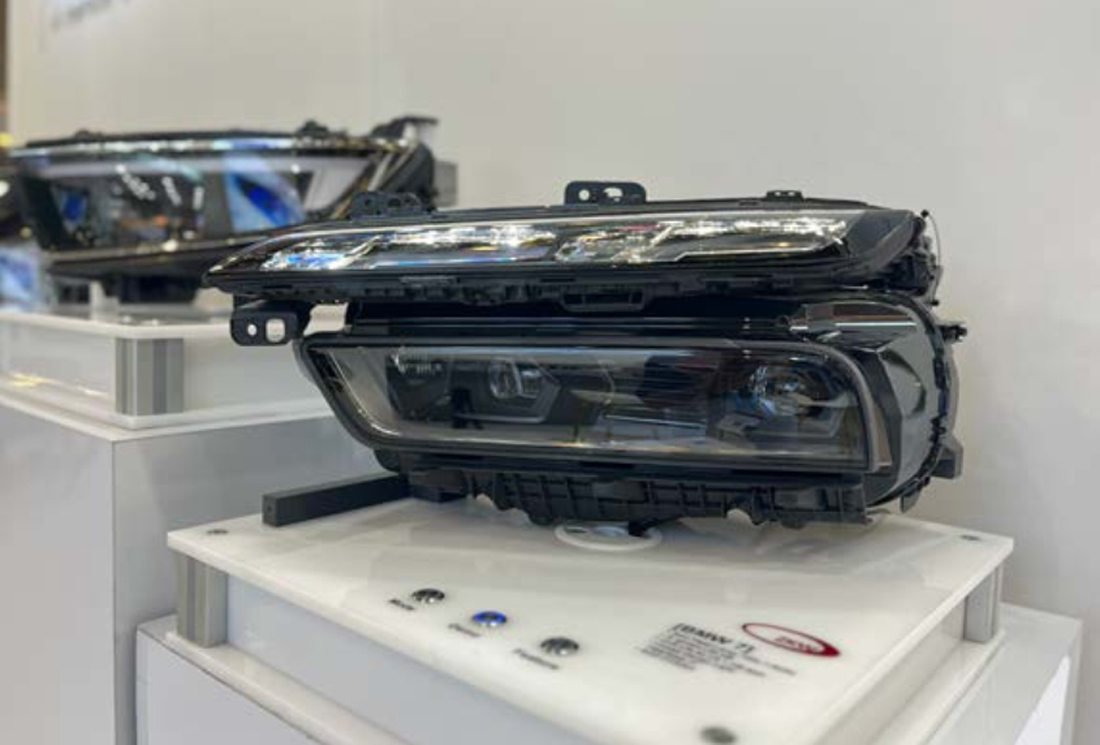
Automotive lighting has moved far beyond bulbs and reflectors. Today it is a compact electronic system requiring hardware-software integration, thermal optimisation and precise optics, Mr. Rajesh Soni, CEO, Neolite ZKW Lightings Ltd, indicated.
“Our electronics team designs both hardware and software, develops LED drivers and works with advanced photometric tools. Building strong in-house electronics capability gives us control over cost, weight and system performance,” Mr. Soni explained adding that EV architecture demands lighter systems and tighter packaging. Weight reduction is engineered into the design from day one.
RFQs now come with strict weight targets, while glare control and photometric standards continue to become more stringent. Adaptive lighting and cornering systems are technologically mature globally, but affordability remains the key barrier for large-scale adoption in India,” he added.
Manufacturing Expansion to Match Ambition
The company operates two plants in Bahadurgarh (NCR), while its Pune facility—commissioned with an investment of ₹70 crore—can double current capacity. “These investments are not just about scale. They are about preparing for next-generation lighting systems,” Mr. Jain said.
“With an envisaged investment of about ₹180 crore, the Chennai facility will be a future-ready manufacturing ecosystem—robotics-enabled, controlled temperature environments and dust-free zones designed for advanced electronics production,” Mr. Jain explained.
According to Mr. Soni, localisation is one of the company’s strongest levers to manage volatility and protect competitiveness, especially for high-volume programmes.
Advanced Front Lighting
Adaptive Driving Beam creates controlled dark zones to prevent glare for oncoming drivers while maintaining clear forward visibility. With real-time ECU communication, lighting becomes an active part of the vehicle’s safety ecosystem. This is where lighting moves from illumination to interaction, he highlighted, regarding micro-LED projection technology. Instead of multiple electronic boards managing separate beam functions, “we engineered a single compact integrated unit. It reduces weight, simplifies OEM assembly and lowers overall system cost,” Mr. Soni explained.
Taken together, Neolite’s trajectory reflects strategic clarity backed by technological depth—positioning the company strongly within India’s evolving automotive landscape.
Referring to sustainability as a structural commitment of the company, Mr. Jain said, “Half of our power already comes from solar energy, and we have a clear roadmap to reach 100%. Sustainability for us is structural, not symbolic.” Mr. Jain said.
A Closer Look at Neolite’s Latest Ideas and Breakthroughs
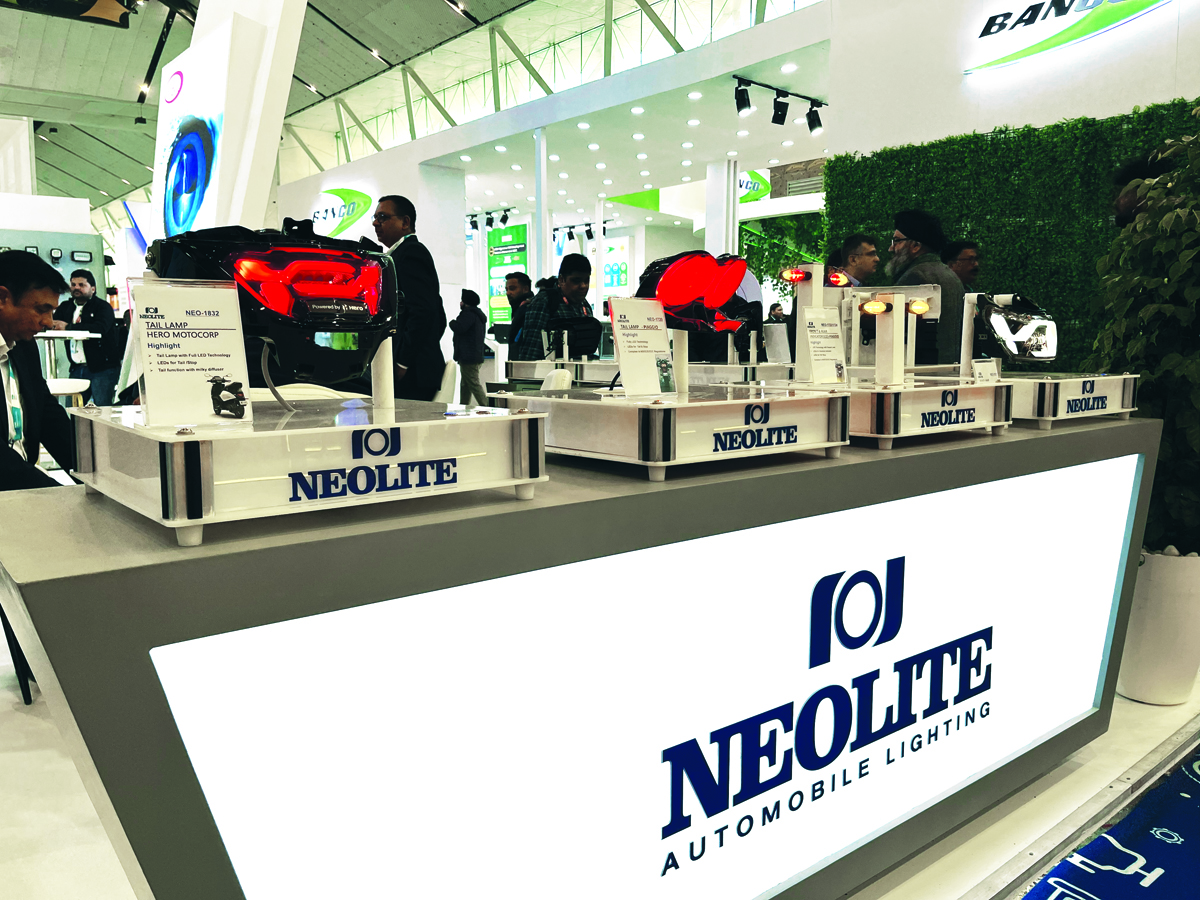
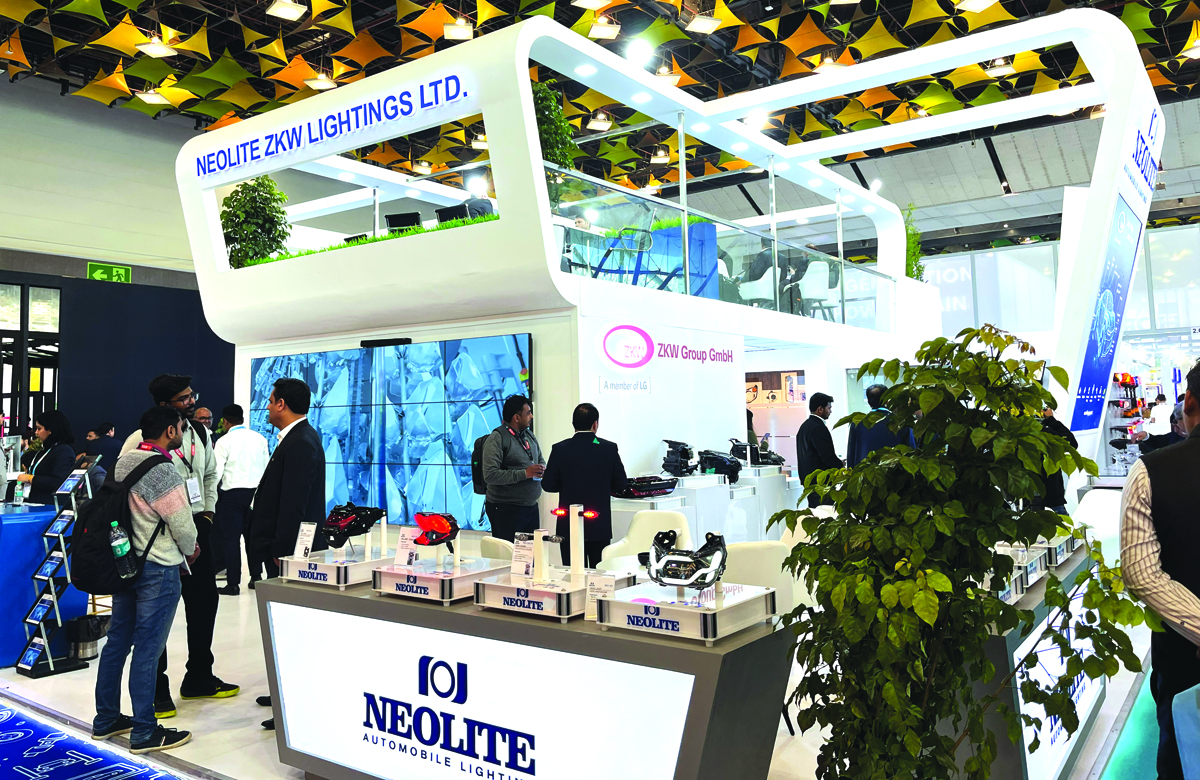
Walking through the company’s exhibit at the recently concluded ACMA Automechanika show, it became clear how dramatically the role of vehicle lighting has evolved. It was no longer just about illuminating the road; it was about how a vehicle welcomes its owner, how it communicates its status, how it shapes the atmosphere inside the cabin, and how it quietly enhances safety in unpredictable driving environments.
The display began with a subtle yet clever idea: the branding lamp. By day it looked like a simple chrome badge, but at night it transforms into a soft white glow, almost like a signature greeting. Beside it, the reverse silk guard offered smooth RGB transitions, adding a sense of personality to the rear of the vehicle.
A small but thoughtful innovation that drew attention was a battery-operated door sill guard. Designed for effortless installation, it required no wiring—just tape it on and it lit up whenever the door opened. With a 15-second auto-off function and replaceable button-cell batteries, it catered directly to India’s growing demand for easy, do-it-yourself upgrades.
Nearby, a charging port indicator demonstrated how EVs are inspiring new forms of visual communication. It shifted colours based on charge level and displayed rotating effects during active charging, turning a routine function into a more intuitive experience.
The interior lighting section added another layer of sophistication. Cup-holder lamps, multi-colour mood lighting, puddle lamps and animated ambient lighting were showcased as ways to bring warmth and identity into the cabin. Some of these could display patterns or brand graphics, blending functionality with emotional appeal.
The most advanced engineering, however, was evident in the front-lighting technologies. Neolite’s Adaptive Driving Beam system, currently exported and being prepared for India, stood out as a significant safety feature. By creating controlled dark zones, the headlamp prevented glare for oncoming drivers while maintaining clear visibility for the vehicle itself. Its real-time communication with the vehicle’s ECU revealed how lighting is becoming an active part of the driving safety ecosystem. Equally futuristic was a micro-LED headlamp developed for Europe by ZKW, capable of projecting arrows or symbols onto the road using DLP – digital light processing – technology.
On the commercial-vehicle side, the company showcased a practical upgrade for the Tata Prima platform: a conversion of the existing halogen reflector setup into a full LED system without altering the original housing. This approach delivered stronger lighting performance while keeping costs realistic.
Two-wheeler solutions added to the diversity. A newly developed tail lamp for a 2W major, marked Neolite’s entry into that major segment, but the highlight was a compact integrated tail/stop/indicator lamp now supplied globally. By combining three functions into a single unit, it offered better packaging, cleaner styling and lower overall cost.
Among all these innovations, one stood out for its integrated driver modules. Instead of using multiple electronic boards for different beam functions, the company engineered a single compact unit that handled them all. This reduced weight, simplified assembly for OEMs and lowered costs—precisely the kind of behind-the-scenes efficiency that strengthens long-term partnerships.