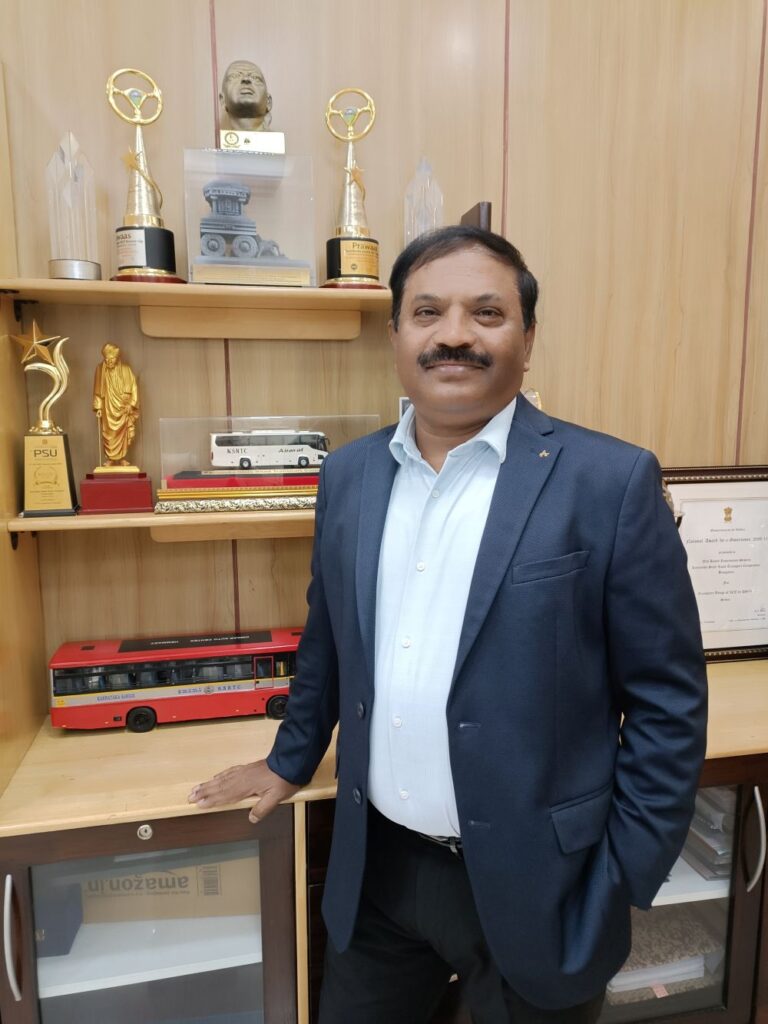
The Karnataka State Road Transport Corporation (KSRTC), under the dynamic leadership of its recently appointed Managing Director, Mr. Akram Pasha, has embarked on a comprehensive transformation journey. With a mission to deliver inclusive, sustainable, and technology-driven public transportation, KSRTC is redefining how millions in Karnataka travel every day. In this exclusive interaction with N. Balasubramanian, Mr. Pasha outlines the corporation’s operational achievements, innovative digital interventions, green mobility push, and forward-looking strategies to strengthen public value delivery.
Strong Operational Backbone and Social Commitment
KSRTC continues to serve as a lifeline for Karnataka’s diverse population. Operating a fleet of 8,904 buses across the state, the corporation covers a staggering 29 lakh kilometres daily, transporting an average of 33.5 lakh passengers. For many, KSRTC is not just a mode of transport but an enabler of livelihood and social inclusion.
“Our bus services are more than just vehicles on the road; they represent a social mission. By providing free and concessional passes to various sections, including the highly impactful Shakti scheme for women, we are directly uplifting lives across Karnataka,” said Mr. Pasha.
In FY 2024-25, KSRTC recorded traffic revenue of ₹4,547.99 crore, reflecting a robust 13.8% growth over the previous year. Gross revenue saw an even sharper increase of 18.4%, reaching ₹5,379.85 crore compared to ₹4,544.41 crore in 2023-24. Operational efficiency also improved, with Earning per Kilometre (EPKM) rising by 12.3% to ₹51.17.
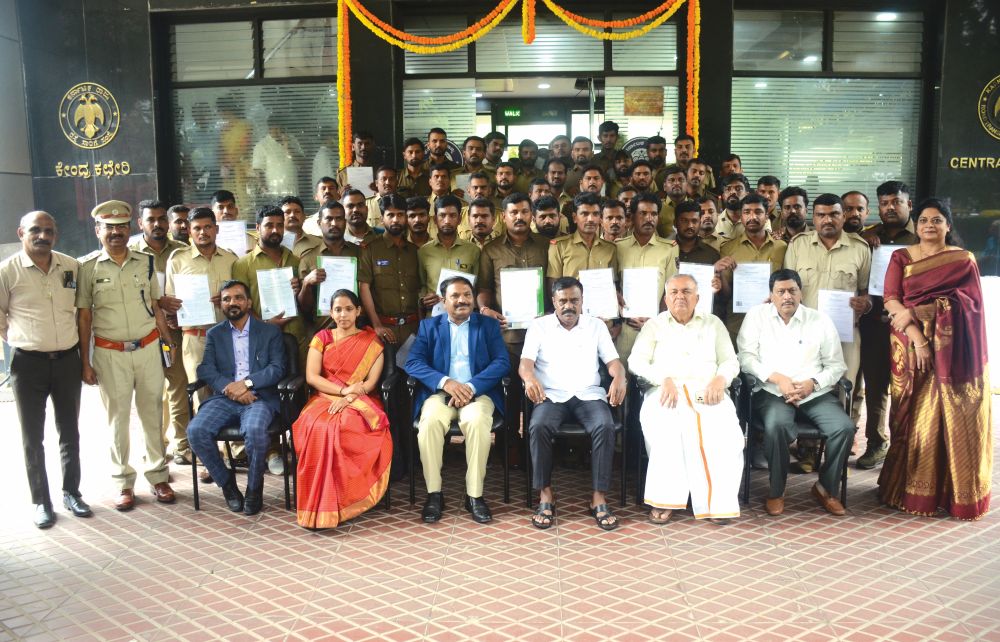
Additionally, KSRTC has invested in modernising infrastructure by constructing 178 well-equipped bus stations, ensuring enhanced commuter convenience.
Accelerating Digital Transformation
At the core of KSRTC’s operational excellence lies a robust digital transformation strategy aimed at modernising systems, improving passenger experience, and strengthening internal governance.
“We see technology as a bridge to connect the aspirations of our people with reliable and modern mobility solutions,” Mr. Pasha emphasised.
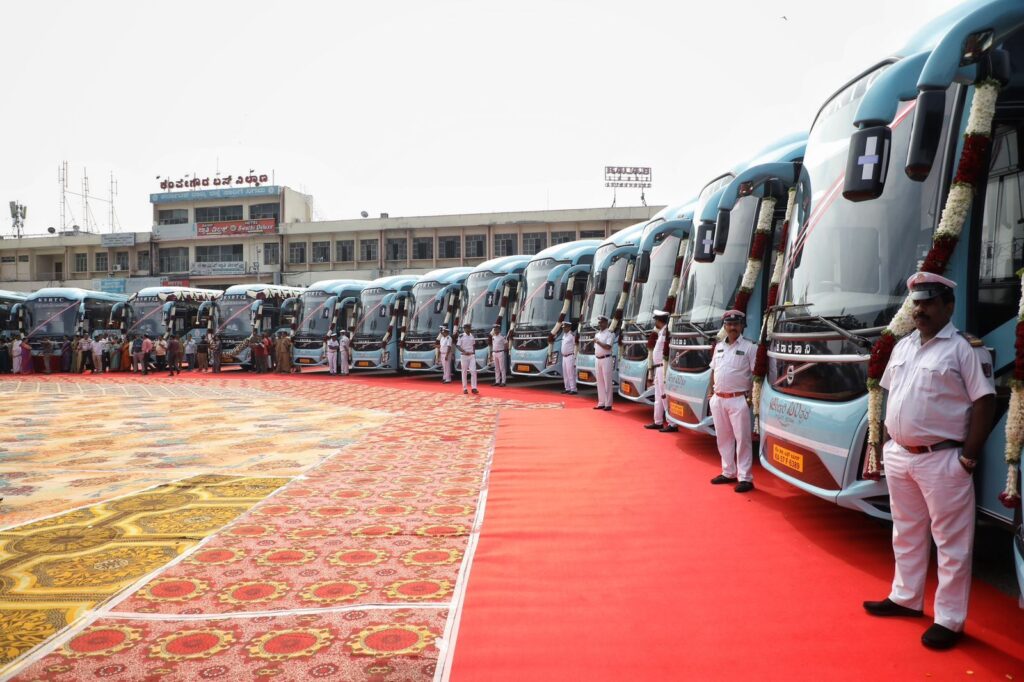
KSRTC has deployed smart ETM machines supporting UPI, QR codes, and auto-refunds, while card payments are currently in advanced testing phases. The AWATAR 4.0 online reservation system, complemented by a mobile app, offers seamless ticketing, cancellations, and even WhatsApp and SMS notifications.
On the workforce front, a digitised HRMS portal manages over 35,000 employees’ attendance, payroll, and service records. Complementing this, initiatives like Sarige Mithra geo-fenced attendance and an e-service register promote operational transparency.
The corporation’s focus on data-driven decision-making is evident through BI and MIS dashboards, allowing real-time insights into revenue, fuel usage, vehicle status, and other KPIs.
“Whether it’s through mobile-based grievance redressal, real-time tracking of buses, or automated recruitment processes, our aim is to create a digital-first, commuter-centric experience,” Mr. Pasha added.
Building the Green Mobility Future
KSRTC is taking decisive strides towards green mobility. It currently operates 50 electric buses, primarily through a Gross Cost Contract (GCC) model with private operators like Olectra, allowing the corporation to avoid high capital expenditure while ensuring service reliability.
“Our adoption of electric buses is not just a technological shift but a commitment to cleaner, greener Karnataka. We believe in sustainable growth, and the GCC model perfectly aligns with that vision,” Mr. Pasha asserted.
Under the PM-eBus Sewa scheme, KSRTC has proposed 350 AC electric buses for cities like Mysuru, Mangaluru, Tumakuru, Davanagere, and Shivamogga. Additionally, under the PM-eDrive scheme, proposals have been submitted to induct 1,000 e-buses.
Currently, the EV fleet serves major routes such as Bengaluru to Davanagere (267 km), Virajpete (250 km), Madikeri (264 km), and Chikkamagaluru (251 km), each bus averaging a range of 300 km. A supporting network of 19 chargers at seven strategic locations facilitates seamless operations.
“Transitioning to electric mobility is not just about reducing emissions; it’s about pioneering a new era of public transport that is efficient, future-ready, and environmentally responsible,” noted Mr. Pasha.
Strategic Partnerships and Infrastructure Upgrades
KSRTC is actively leveraging public-private partnerships (PPP) for fleet and infrastructure modernization. Notable examples include the ETM services rental model and the AWATAR online reservation system, both structured on performance-based payment frameworks.
“We have learnt that robust PPP frameworks can accelerate innovation while mitigating financial risks. They enable us to deploy advanced technologies quickly and efficiently,” Mr. Pasha explained.
Plans are also underway to redevelop the iconic Bengaluru Majestic Bus Stand under Project Majestic, transforming it into a state-of-the-art transport hub spread across 32 acres, in collaboration with BMTC. An internal PPP cell has been formed to steer this initiative, with the appointment of a transaction advisor in progress.
Challenges, Opportunities, and a Bold Vision Ahead
KSRTC faces several challenges, including rising operational costs, premium service competition, and the complexities of implementing large-scale social schemes like Shakti. However, these challenges are met with strategic resolve.
Further strengthening its human capital, KSRTC recently appointed 300 new mechanics (including 200 on compassionate grounds) and 2,000 driver-cum-conductors to enhance service quality and operational readiness.
“We are promoting team spirit, leveraging expert insights, and adopting well-planned operational approaches to overcome these hurdles. At the heart of it all lies our unwavering commitment to serve every citizen,” stated Mr. Pasha.
Looking forward, KSRTC aims to emerge as the best bus operator across rural, city, inter-district, and inter-state services. The corporation’s future blueprint includes expanding electric bus operations, introducing zero-emission zones, enhancing driver training through simulators, and embedding advanced safety systems like ADAS.
“Our vision is crystal clear — to make KSRTC a national model in sustainable, tech-driven, and inclusive public transport. We aspire to deliver unparalleled commuter comfort, operational transparency, and environmental stewardship,” Mr. Pasha concluded.
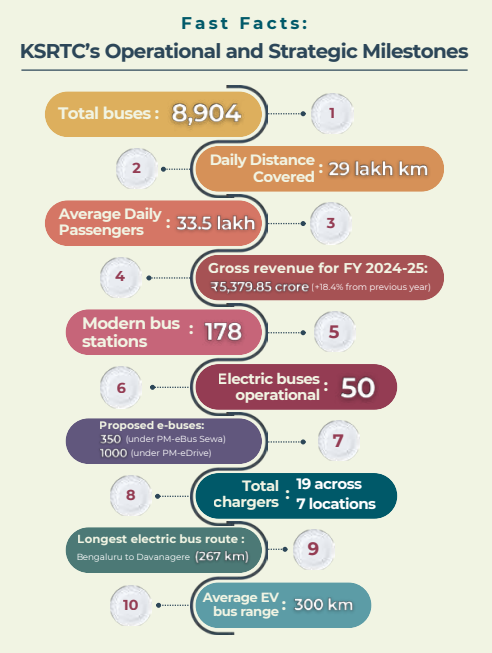
Fast Facts: KSRTC’s Operational and Strategic Milestones
- Total buses: 8,904
- Daily Distance Covered: 29 lakh km
- Average Daily Passengers: 33.5 lakh
- Gross revenue for FY 2024-25: ₹5,379.85 crore (+18.4% from previous year)
- Modern bus stations: 178
- Electric buses operating: 50
- Proposed e-buses: 350 (under PM-eBus Sewa); 1,000 (under PM-eDrive)
- Total chargers: 19 across 7 locations
- Longest electric bus route: Bengaluru to Davanagere (267 km)
- Average EV bus range: 300 km