
By N. Shanmugasundaram, Head of Digital Solutions Business (SCALAR) – Commercial Vehicle Solutions India, ZF
Road safety continues to be a critical priority in India, and commercial vehicles remain central to this conversation. As regulatory frameworks evolve to address emerging road safety challenges, technology is proving to be a powerful enabler.
One area showing significant promise is the adoption of digital safety solutions. ZF Group, a global leader in mobility technologies across multiple segments, is committed to enhancing road safety and offers robust, road-tested systems – such as its Video Management Solution (VMS), designed specifically for in-cabin applications in commercial vehicles.
The Case for Intelligent Fleet Safety in India
India’s commercial vehicle (CV) market is expanding alongside economic growth and the rising demand for freight transportation. As this trend accelerates, fleet safety becomes a critical pillar of the country’s broader road safety strategy. Traditional methods – such as manual checks, training, and basic mechanical safeguards – are no longer sufficient. The need for real-time insights into driver behavior and vehicle conditions is more pressing than ever.
To build safer roads, commercial fleets are increasingly incorporating advanced technologies alongside conventional systems. These include video telematics, Anti-lock Braking Systems (ABS), Automatic Traction Control, Electronic Stability Control (ESC), Advanced Emergency Braking Systems (AEBS), and Driver Behavior Monitoring Systems.
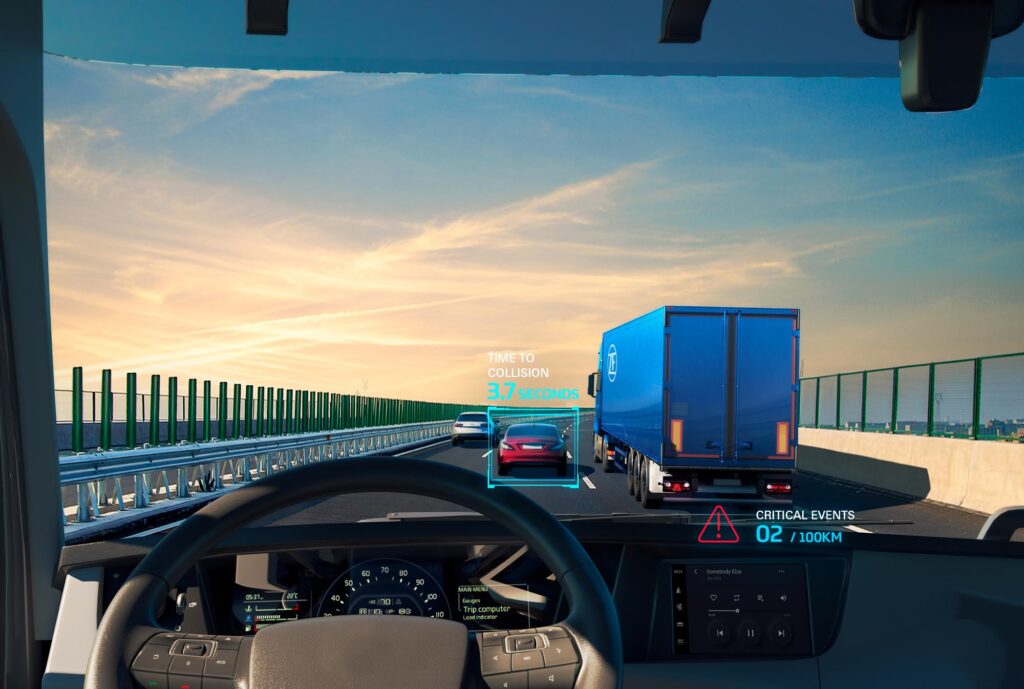
Among these, video telematics is emerging as a key enabler of proactive fleet safety. Equipped with road-facing and driver-facing cameras, and powered by AI-driven analytics, these systems monitor real-time driving behavior and surrounding conditions. They can detect signs of fatigue, distraction, and unsafe driving patterns, while also issuing alerts for potential collisions, sudden lane departures, and other high-risk scenarios.
Beyond real-time alerts, these systems also support long-term safety improvements. In-cabin feedback and post-trip analysis help instill better driving habits, reducing the likelihood of repeated errors through active coaching.
From Reaction to Prevention
The effectiveness of intelligent safety systems is increasingly evident. Case studies have demonstrated measurable reductions in road incidents and notable improvements in driver behavior over time. More importantly, such systems help shift fleet safety from a reactive approach – responding to accidents after they occur – to a preventive model, where real-time data is used to identify and mitigate risks proactively.

Key features of intelligent video telematics systems include:
- Real-time driver monitoring with fatigue and distraction detection
- Instant alerts for critical safety violations
- AI-based analytics to identify behavioral trends
- Secure video logs to support incident investigations and ensure accountability
Preparing for the Road Ahead
As India moves toward formal CV safety regulations, the industry is already equipped with advanced, cost-effective, and scalable technologies to support this transition. Whether driven by regulatory mandates or voluntary adoption, systems such as video telematics and driver monitoring are ready to meet the evolving safety needs of the sector. The goal is clear: enabling safer, smarter roads through the timely adoption of intelligent mobility solutions.