India’s ambition to achieve net-zero supply chains took center stage at the 12th Global Supply Chain Summit in Mumbai, where over 250 industry leaders and policymakers discussed how sustainability, advanced technology, and green finance are transforming logistics from an economic driver into a catalyst for environmental stewardship. With clear calls for digitalization, robust ESG reporting, cross-border innovation, and inclusive workforce transformation, the summit underscored that integrated leadership and collaboration across sectors are vital for India’s green leap forward, reports Rajesh Rajgor.
Over 250 senior executives and policy shapers converged at the St. Regis, Mumbai for the 12th Global Supply Chain Summit, hosted by the CII Institute of Logistics. The event, built around the theme “India’s Green Leap Towards Net-Zero Supply Chains”, reflected the sector’s sweeping transformation from a backbone industry to a dynamic player in both economic and environmental progress.

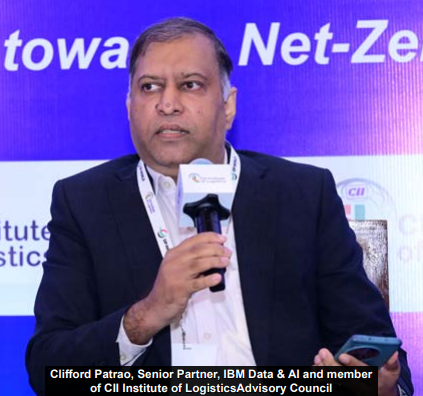
The summit opened with Clifford Patrao, Senior Partner at IBM Data & AI and member of the CII Institute of Logistics Advisory Council, urging industry to embrace digitalization and analytics as catalysts for transparent, resilient, and sustainable logistics. He stressed that agility and data-driven decision-making are now non-negotiable in the race for competitive advantage and carbon reduction. Dr. K Ganesh, Partner at McKinsey & Company and CII National Committee on Logistics member, contextualized this urgency, reminding delegates that India’s $7 trillion growth aspiration by 2030 hinges not just on scale, but on sustainability. Supply chains, he argued, are at the crossroads of economic expansion and environmental stewardship, making the alignment of ESG priorities with operational strategy a must for global competitiveness.
Echoing this view, Satish Shukla, Co-Founder of Addverb, underlined the centrality of automation, robotics, and workforce upskilling in cutting costs, errors, and carbon impact. These speakers, together with government representative Mr. R K Mishra, Addl. Director General, Directorate General of Foreign Trade, placed government policy under the microscope; highlighting not only India’s net-zero by 2070 targets, but specific regulatory steps: from advanced authorizations for trade to the rolling out of multimodal logistics parks and the Authorized Economic Operator scheme. Mishra’s address clarified that efficient packaging and the minimization of empty truck movements are not just environmental imperatives, but drivers of GDP growth and national competitiveness.
The morning’s insights found practical grounding in a white paper launch on resilience in Indian supply chains, followed by recognition of Mr. Ramanan R, Chief Innovation Officer at TVS Supply Chain Solutions, whose organization’s award-winning strategies showcased the blend of innovation and operational discipline now required. Ramanan’s message was clear: regular carbon measurement, engagement of all levels of the workforce, and integrated digital and physical infrastructure have moved from aspiration to expectation.
Green Finance Drives Sustainability
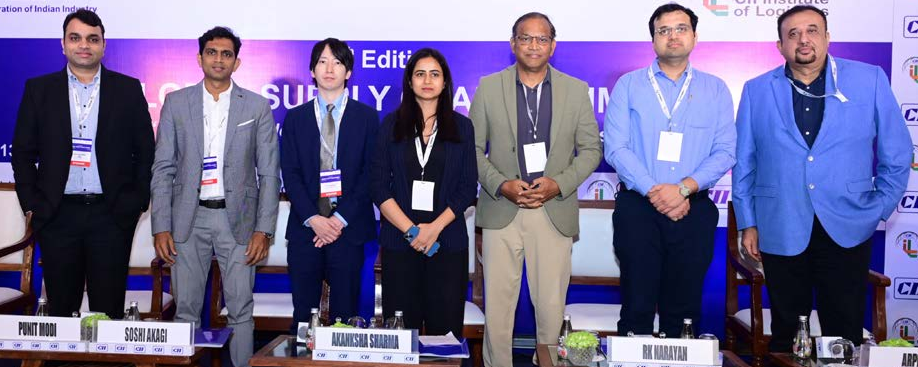
As the summit progressed, attention turned to the rapidly evolving intersection of green finance and logistics. Ajay Jhalani, Managing Director at Winner Technoplast, chaired a high-powered panel; including Soshi Akagi (McKinsey & Company), Punit Modi (Mondelēz International), Ankur Sharma (Roquette), Arpit Raj (Godrej Consumer Products), R.K. Narayan (Horizon Industrial Parks), and Akanksha Sharma (DP World); which examined how new financial mechanisms are enabling the sustainability transition. Jhalani and his panelists highlighted how prioritizing green loans and sustainability-linked refinancing not only broadens access to capital but also deepens operational rigor. Narayan detailed Horizon’s policy of platinum certification for all logistics parks, with green standards embedded into every lease. These moves, panelists noted, are increasingly prerequisites for attracting global investors; and for ensuring that Indian logistics assets form part of a truly climate-aligned portfolio.
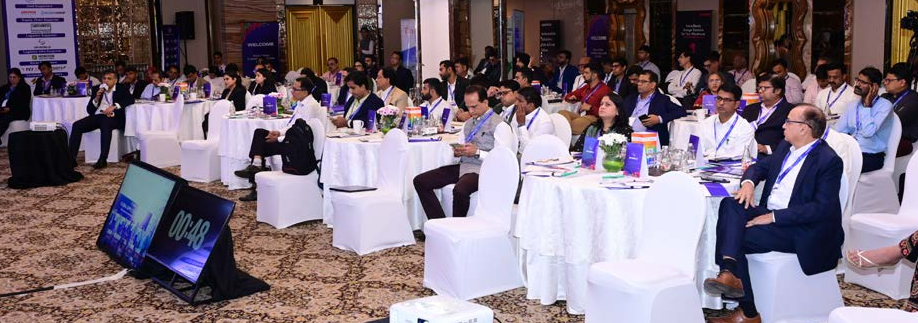
Deepening the discussion, panelists identified the specific pain points confronting Indian supply chains: product shelf-life pressures and rising rejections generate avoidable waste, while the rise of ultra-rapid delivery models has amplified emissions from secondary and tertiary transport legs. As Punit Modi explained, the shift from quarterly to weekly demand forecasts and wider uptake of digital freight exchanges are already helping to sharply reduce both spoilage and empty truck miles. Meanwhile, the panel saw the reporting of environmental footprints, particularly Scope 3 emissions, as moving from a best practice to a baseline requirement. As Akanksha Sharma of DP World observed, only robust, standardized ESG reporting; and collaboration across the value chain; will equip Indian firms to compete globally and meet new regulatory and investor expectations.
Scaling Digital Decarbonization Efforts
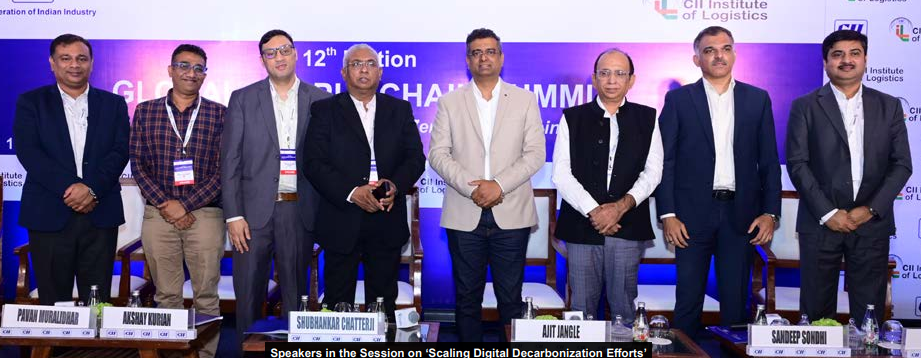
The afternoon sessions pivoted to cross-border collaboration, technological innovation, and workforce transformation. BEUMER Group CEO Abhishek Prakash moderated an expert panel including leaders from FM Logistics, Cummins India, Alkem Laboratories, Ashok Leyland, Freight Tiger, TCI Supply Chain Solutions, and Treeni Inc. Here, the emphasis shifted to actionable solutions for decarbonizing freight and scaling digital transformation. Several participants shared emerging case studies on AI-powered route planning, next-generation EV infrastructure, and blockchain-based transparency platforms. If there was a consensus, it was that technology, regulation, and international cooperation must advance in lockstep for India to become a hub of sustainable global logistics.
The day closed with a forward-looking discussion chaired by Clifford Patrao, now guiding a high-level panel exploring how Indian firms can accelerate their adoption of global best practices and new green technologies. Insights from Boeing India, Henkel, Shree Cement, Colgate Palmolive, and IKEA converged around the need to break down barriers to technology access, invest in R&D partnerships, and upskill the domestic workforce. Overcoming challenges related to IP rights and ensuring that small and medium enterprises can participate in the green transition emerged as major themes; emphasizing that supply chain decarbonization is not just about infrastructure, but also about people and knowledge-sharing.
If one message resonated throughout the summit, it was that India’s net-zero journey now demands a leadership ethos as multi-faceted as its supply chain networks: digitally empowered, financially agile, globally attuned, and locally grounded. Business leaders left armed not just with new contacts or insights, but with a clear, common call to action; embedding sustainability as the operational norm, not the exception, and making India’s green leap both viable and inevitable.