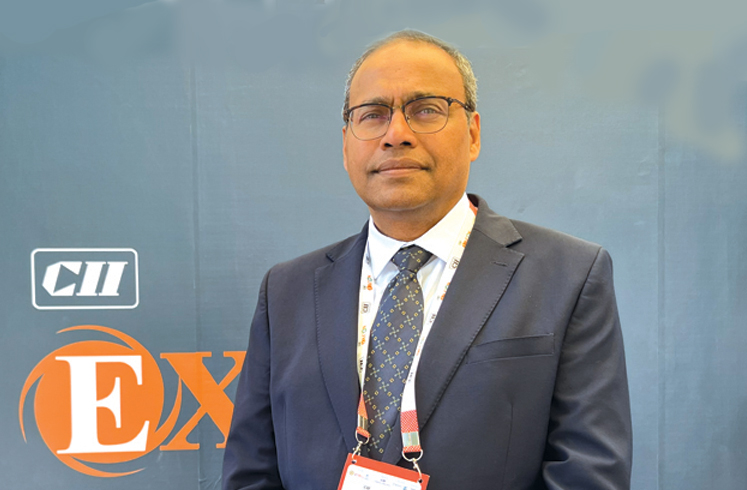
– R. Mukundan, CII President-Designate
According to him, infrastructure spending delivers results only when supported by better last-mile access and urban connectivity, areas where State and municipal action will be crucial.
India today stands out in a world marked by uncertainty. It is calm yet vibrant, stable yet growing, and firmly on track as the fastest-growing major economy. For the construction equipment industry, this balance of confidence and momentum is more than encouraging—it is the foundation of a long growth story.
Speaking on the sidelines of EXCON, India’s largest construction equipment exhibition, R. Mukundan, President-Designate of the Confederation of Indian Industry (CII), shared a clear and optimistic view of where the sector is headed. At the heart of it all lies infrastructure.
Infrastructure Fuels the Momentum
Roads, airports, railways and metros continue to reshape India’s physical landscape. The government’s sustained focus on infrastructure development has been the single biggest driver for construction equipment demand. While growth in recent months may have been moderate, he believes this is temporary. With public and private investments gathering pace, activity across construction sites is set to rise sharply.
India’s infrastructure, he notes, has already reached world-class standards in terms of quality. New airports and highways compare with the best globally. But for a country of India’s size and population, quality alone is not enough. What India needs now is quantity—many more roads, metro lines, flyovers and support systems to match rising urbanisation and vehicle density.
The Missing Links Matter
Infrastructure success does not stop at large projects. Mr. Mukundan stresses the importance of peripheral planning—last-mile connectivity to metros, better urban links, and seamless integration between projects. These areas, often handled by State and Municipal authorities, will play a critical role in unlocking the full value of India’s infrastructure investments.
As these gaps are addressed, demand for construction equipment will naturally expand, creating opportunities across machines, services and technologies.
Technology as the Next Accelerator
India is not short of capability. The country has strong engineering talent and access to advanced technologies. The next step, according to him, is faster adoption. Artificial Intelligence, digital tools and sensor-based systems can dramatically improve how equipment is used and maintained.
Remote monitoring, real-time activity tracking and data-driven insights can help operators improve productivity, reduce downtime and manage fleets better. These technologies already exist—the opportunity lies in deploying them at scale.
Strong Policy, Shared Vision
The construction equipment industry also benefits from consistent government backing. Mr. Mukundan credits the continued push from the Central government, particularly the leadership of Mr. Nitin Gadkari, Minister of Road Transport and Highways, for keeping infrastructure at the centre of national development. State governments, too, are rolling out ambitious plans aligned with this vision.
Together, these efforts echo the Prime Minister Mr. Narendra Modi’s vision of a “Viksit Bharat”—a developed India built on strong foundations.
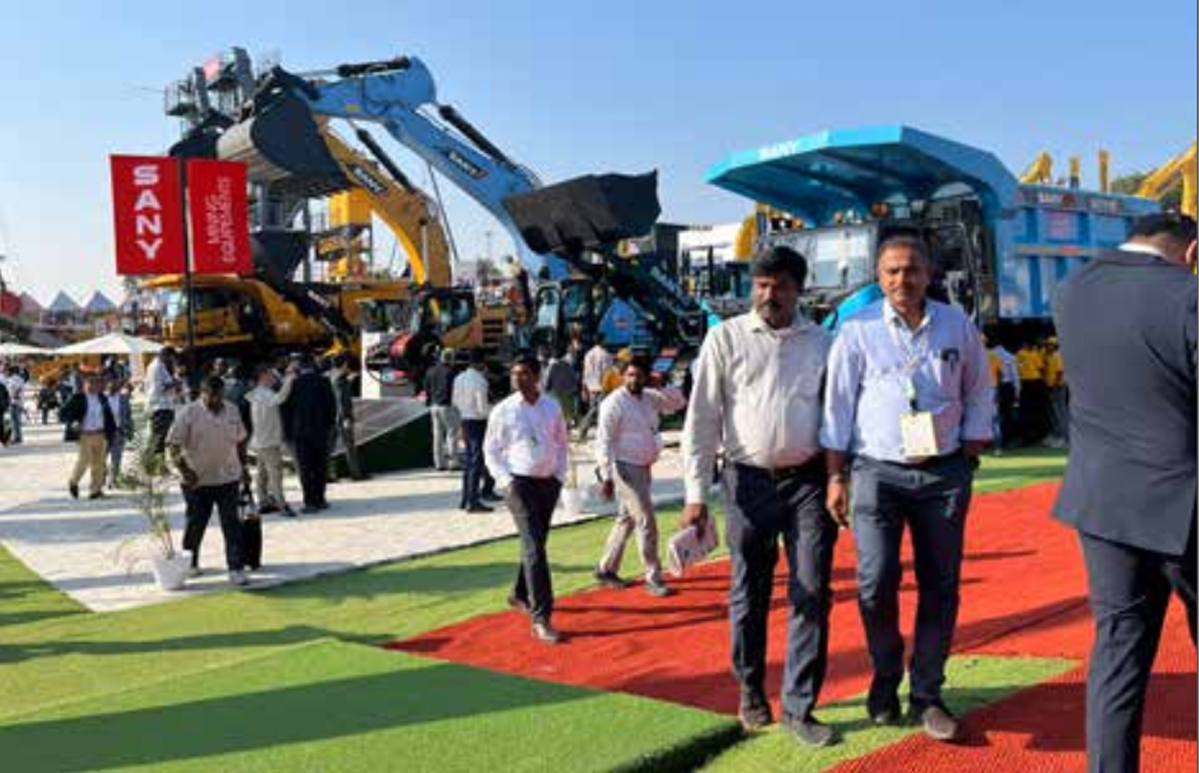
EXCON Mirrors India’s Confidence
EXCON itself tells this story. The exhibition has grown into the largest partnership-led event in the sector, with record foreign participation. International companies are not just visiting—they are investing space, technology and long-term interest. For Mr. Mukundan, this global presence is a clear vote of confidence in India’s capabilities and future.
As machines roll out, projects multiply and technology deepens its role, India’s construction equipment industry stands at an important moment. The tools to build the nation are ready. What lies ahead is a journey of scale, speed and smart execution, he concluded.