Ask any veteran in the automobile business about inventory, and the answer rarely changes – you can’t sell without stock, but too much of it can drain profitability. The same holds true across segments, but in commercial vehicles (CVs), the stakes are even higher. For truck and bus operators, a vehicle isn’t just a mode of transport – it’s a source of livelihood. A breakdown can bring an entire business to a halt, unlike in the passenger car or two-wheeler segments, where customers can easily find alternatives. That’s why selling and servicing CVs carries a weight far beyond the showroom.
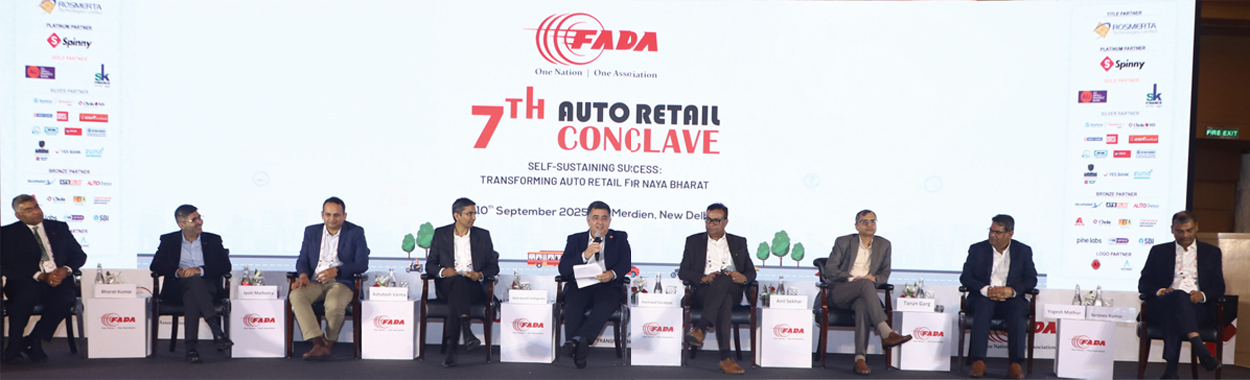
This delicate balance between availability and profitability – and the broader challenges shaping automotive retail – took centre stage at the 7th Auto Retail Conclave, held in New Delhi on 10 September 2025, where industry leaders gathered to discuss the road ahead for India’s automotive retail ecosystem.
The panel comprised some of influential leaders shaping India’s mobility landscape, including Mr. Anil Sekhar, Head of Salesforce Excellence, Commercial Vehicles, Tata Motors Ltd; Mr. Ashutosh Varma, Chief Business Officer – IBU, Hero MotoCorp; Mr. Jyoti Malhotra, Managing Director, Volvo Car India; Mr. Nalinikanth Gollagunta, CEO, Automotive Division, Mahindra & Mahindra Ltd; Mr. Sanjeev Kumar, President and Head of Medium & Heavy Commercial Vehicles (MHCV), Ashok Leyland; Mr. Tarun Garg, Whole-time Director and Chief Operating Officer – Sales, Marketing, Service & Product Strategy, Hyundai Motor India Ltd; Mr. Yogesh Mathur, Director – Sales & Marketing, Honda Motorcycle & Scooter India (HMSI); and Mr. Bharat Kumar Chordia, Executive Committee Member & Director, Khivraj Automobiles Pvt Ltd. The session was moderated by Mr. Hormazd Sorabjee, Editor, Autocar India.
The discussions revolved around the following points: from 2020 to 2023, demand was hot and dealers begged for more vehicles. Around mid-2024, the market cooled. Now, with festivals, GST relief, and better use of VAHAN registration data, most expect the pressure to ease–if everyone does the basics better.
Smarter forecasting
The biggest “basic” is forecasting. Senior leaders say dealer principals must personally own it–model by model, variant by variant, even colour by colour–because it’s real money on the line. Many OEMs and dealers now plan together in digital tools. Dealers submit month-ahead needs; OEMs share past sell-out by variant; production follows real demand instead of guesswork. Some brands have shifted dealer incentives from wholesale push to VAHAN retail market share, which keeps everyone focused on actual customer sales, not just shipments. Aging stock is handled through monthly clearance schemes for both vehicles and parts.
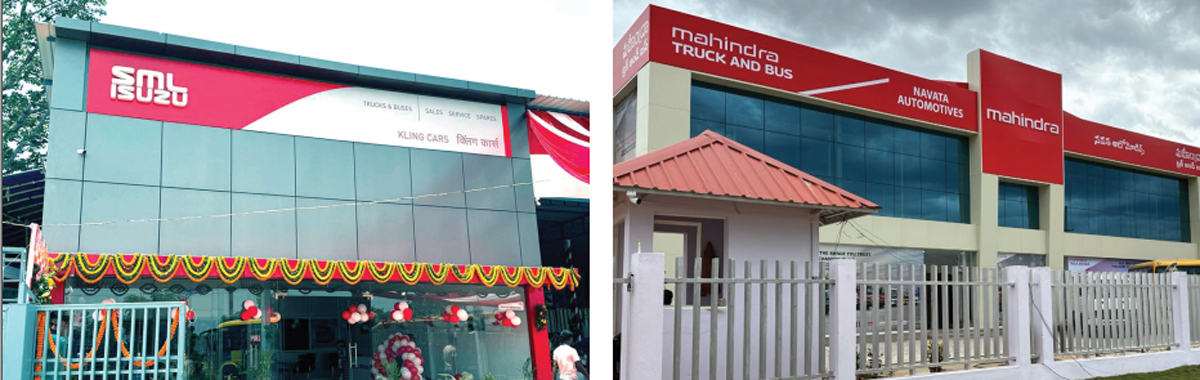
Premium brands of CVs and even off-road vehicles face a different twist: long global lead times and too many combinations. Their fix is to reduce complexity–fewer variants so that dealers can carry the right units and turn them faster. Parts, often ignored, can be a bigger headache than cars. Here, data helps. Vendor-managed inventory systems now auto-order parts for dealers based on consumption, seasonality, and minimum levels, with safety nets like “no-sale in a year” buybacks. The lesson is the same: treat forecasting as a partnership, but let dealers own the local pulse.
CVs also add another layer: huge SKU counts and tough operating cycles. Some OEMs forecast tens of thousands of part numbers and replenish based on sell-through. That only works when dealer data is clean. So, the shift is clear–manage to retail, clean up data, and keep the pipeline light and fast.
People
People form the other half of the story. As electronics and software content in vehicles continues to rise, the demand for skilled talent has surged – and with it, the challenge of talent retention and rampant poaching across the industry. The answer many are using: build talent pipelines with ITIs and apprenticeships; train final-semester students; place them in plants and then dealerships. Workshops are also opening doors to more women, since EV and software work is less physically demanding and more diagnostic.
Training never stops–cluster trainers, 20-plus days of annual upskilling, and even GenAI tools to guide technicians in real time. Still, the challenge is retention. Pay matters, but culture, growth paths, and recognition decide who stays. As one leader put it, the difference between good and great dealerships is people who stick around.
Social media
Social media has changed how customer issues play out. Complaints can go viral in minutes. Brands now treat it as both a risk and a trust platform. Good practice looks simple: acknowledge quickly (some aim for 15 minutes), update often, and close within a set window (say, three days). Many workshops open a WhatsApp group as soon as a car enters service, so the customer sees progress and can flag concerns instantly. Most complaints aren’t about a faulty part; they’re about poor communication. Fix the tone and the timeliness, and you fix the mood. And instead of arguing whether a customer is “reasonable,” teams now assume a few others stayed silent when the brand slipped. That mindset keeps responses humble and fast.
Multi-brand outlets, especially in 3W CVs, remain touchy. They expand reach but can dilute brand experience. History shows only firm OEM policy solves this: set clear delivery and installation standards, stop rewarding the behaviour you don’t want, and use e-commerce and home-delivery models to widen reach without weakening the brand.
Meanwhile, digital demand keeps rising. Five years ago, it was a tenth of inquiries; now it’s close to half–and it won’t shrink. Dealers doing best run always-on hyperlocal campaigns rather than on-off bursts. But the real unlock is lead filtering. Dumping raw leads on sales reps burns time and morale. Many OEMs now use Agentic AI to pre-qualify leads, sort hot/warm/cold, and hand people better prospects. Early results are promising: digital conversion rates have climbed from about 4–5% to about 8–9%. Speed still matters. If you don’t respond within 20–30 minutes, that lead is probably gone to the next tab on the customer’s screen.
Put it all together and a simple picture appears. Inventory will always be a “necessary evil.” The way through is shared discipline: dealer-owned forecasting, OEM tooling and incentives aligned to retail, fewer variants where it helps, parts managed by data, and honest, fast communication with customers. Train people, then keep them. Treat social media as a live service desk. Keep digital spend steady, qualify leads with AI, and call back fast.
Do these things every day and the stock feels lighter, the month-end scramble gets smaller, and the brand feels closer to the customer. In a market as dynamic as India’s, that’s not just a good process–it’s the only real advantage that lasts, experts concluded.