Stepping into a legacy logistics business at a young age gave Krishna Solanki firsthand exposure to the operational gaps, manual dependencies, and visibility challenges that traditional logistics companies face every day. What began as an initiative to streamline internal processes soon evolved into a larger vision – building a unified digital ecosystem that empowers transporters, warehouse teams, and shippers with real-time visibility, automation, and data-driven decision-making. Today, iFreightBox stands as a platform created not to replace traditional logistics, but to strengthen it with modern technology, operational intelligence, and simplicity.
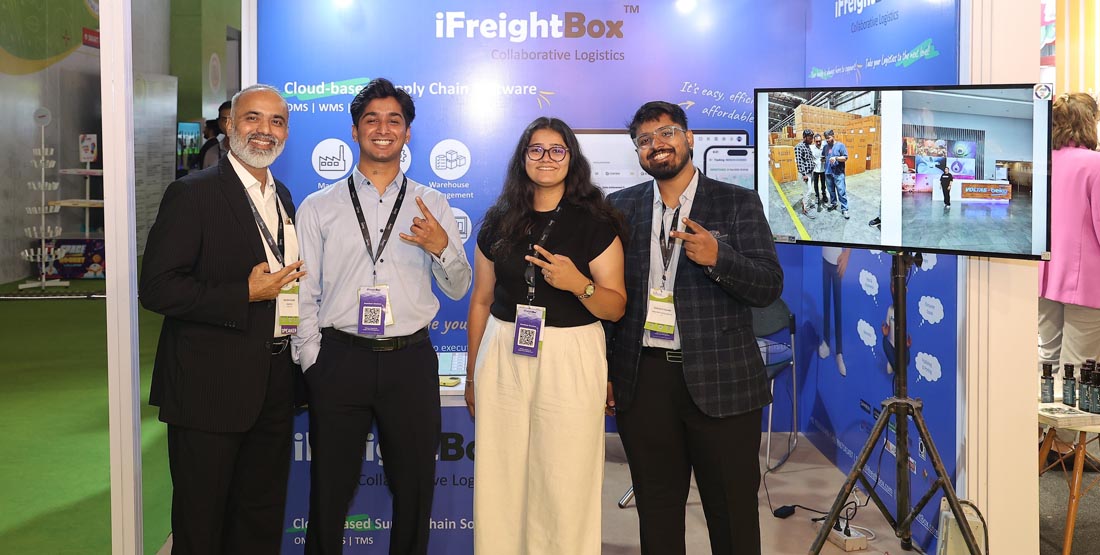
Krishna recalls how early exposure to ground operations highlighted deep-rooted inefficiencies. “Most workflows were running on WhatsApp, spreadsheets, and phone calls – the delays, errors, and lack of visibility were overwhelming,” he explains. This realisation became the spark behind iFreightBox, a unified platform designed to replace manual bottlenecks with structured, intelligent automation.
Bringing Structure to Fragmented Operations
Many legacy logistics set-ups struggle with siloed teams and disconnected tools. Krishna notes that fragmentation was the most significant barrier to scale. “Supply chains were reactive because everyone was working in silos. We wanted a platform that removes manual chaos and creates a single source of truth for everyone involved,” he explains.
With integrated OMS, WMS, and TMS capabilities, iFreightBox offers real-time visibility, automated workflows, and barcode-enabled accuracy. This results in fewer errors, faster turnaround, and a more predictable supply chain. The platform effectively shifts operators from manual coordination to data-backed decision-making.
Warehouses: The New Centre of Gravity
Krishna emphasises that warehouses have become mission-critical to supply chain performance, yet many still rely on paper and spreadsheets. Pain points such as inefficient space utilisation, frequent picking errors, and no traceability are common across the industry.
iFreightBox’s WMS addresses these challenges by digitising GRN, enabling location-level tracking, optimising picking strategies, and providing real-time dashboards and KPIs. “Location-level tracking eliminates misplaced inventory, and digital GRN removes recording errors,” Krishna says. Shelf-life and expiry tracking features also cater to sectors like FMCG, F&B, and pharma.

Riding the Next Wave of Logistics Technology
India’s logistics landscape is evolving rapidly, driven by automation, IoT, analytics, and compliance-linked digitalisation. Krishna sees a fundamental shift underway–from “paper + people” to “automation + intelligence”.
He highlights trends such as IoT-enabled monitoring, predictive analytics for routing and demand, workflow automation, and ONDC-driven standardisation. “We’re building for a future where logistics becomes proactive, not reactive,” Krishna notes.
iFreightBox is integrating IoT sensors for cold chain monitoring, fleet health, and warehouse environmental control, while AI-driven insights support manpower planning, routing optimisation, and forecasting.
Driving User Adoption in a Traditional Industry
Digital transformation is as much about people as it is about technology. Krishna is candid about the resistance they have encountered. “Operators often trust their notebook more than a system,” he says, citing fear of complexity and job insecurity as common hurdles.
iFreightBox tackles this through intuitive UI design, simple role-based apps, and strong on-ground training. Their phased onboarding ensures users adapt gradually. Krishna adds, “Once they see fewer errors and less workload, adoption becomes organic.”
A Roadmap Designed for Scale and Industry Leadership
Krishna outlines a forward-looking roadmap guided by three strategic pillars – technology depth, market expansion, and ecosystem-wide connectivity.
- Strengthening the Technology Core
iFreightBox is investing in:
- AI-led decision engines for routing, picking, and inventory planning
- Automation-driven workflows for GRN, invoicing, dock scheduling
- IoT integrations for fleet and cold-chain monitoring
- Robotics-friendly WMS architecture
- Advanced forecasting and analytics models
2. Market and Industry Expansion
The company is growing across 3PLs, D2C, FMCG, F&B, pharma, cold chain, and GCC markets. A strong partner ecosystem will accelerate adoption and implementation at scale.
- Building a Sustainable Ecosystem
The long-term vision is to enable seamless interoperability across ERPs, marketplaces, transporters, and e-commerce platforms. “We want iFreightBox to become the operating system for logistics – helping companies reduce costs, scale faster, and deliver superior customer experiences,” Krishna summarises.