With clear intent, Musashi India, the wholly owned Indian arm of Japan’s Musashi Seimitsu Industry Co., Ltd., is shaping its next chapter around electric mobility. The journey has already begun with the development of e-axles — an important step as India’s EV transition gathers pace.
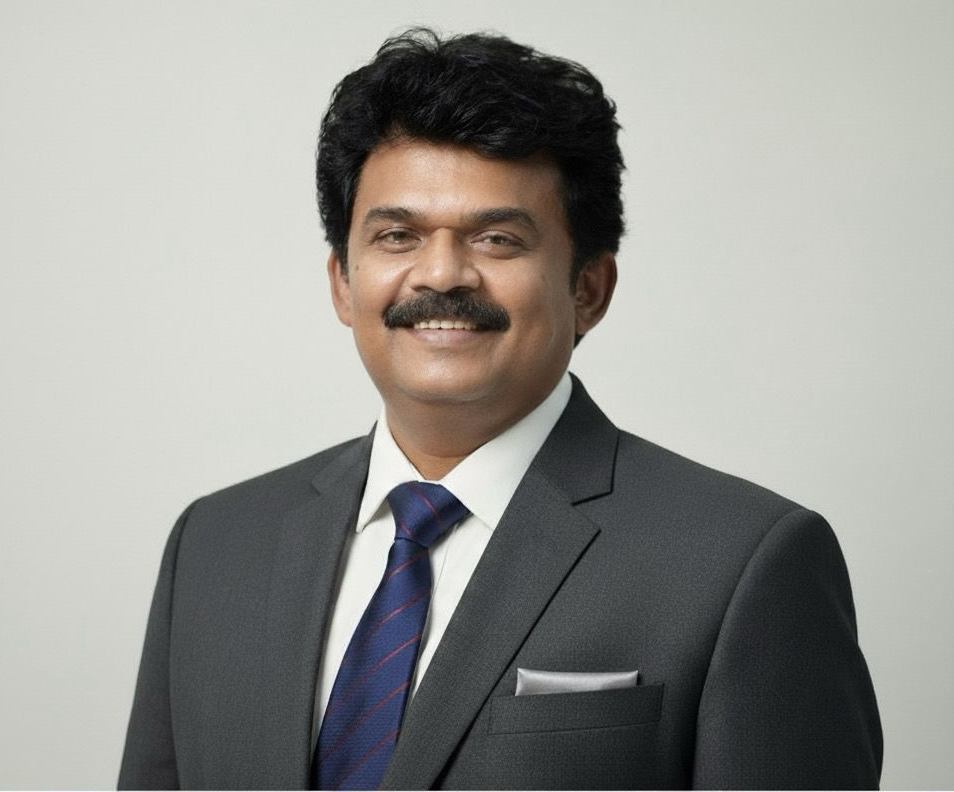

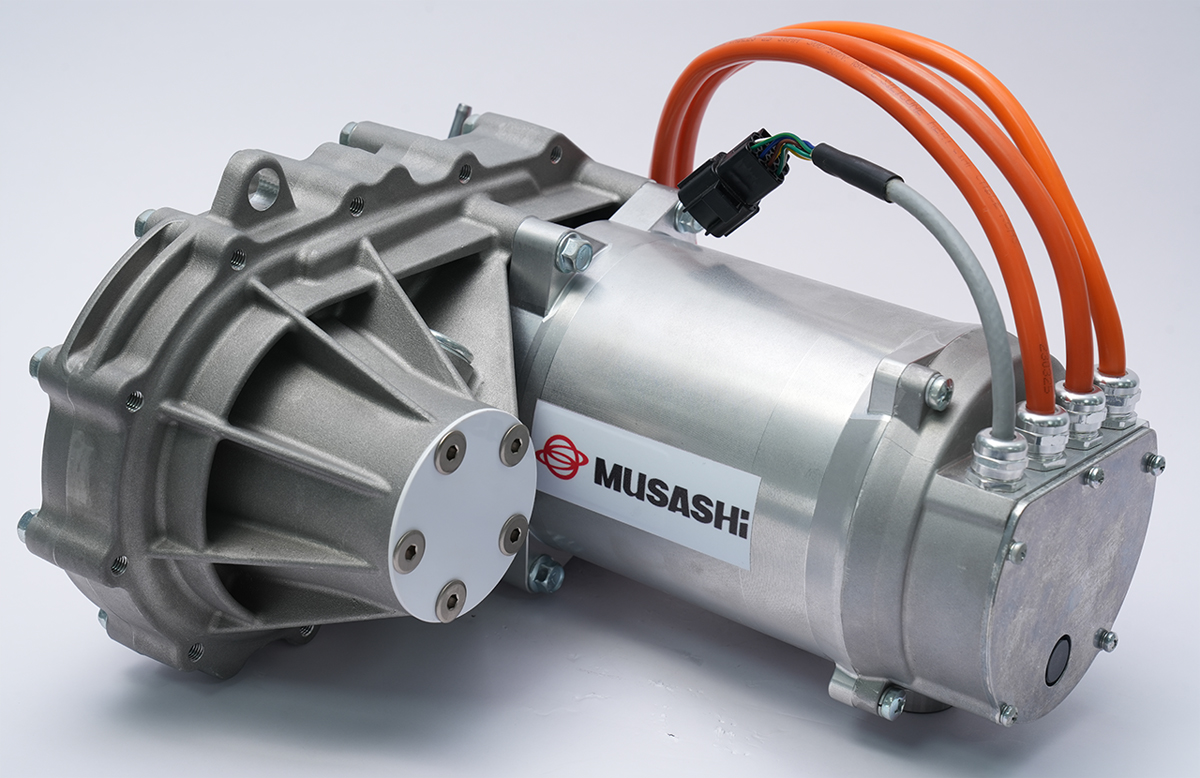
Speaking to this publication, Mr. S. Saravana Kumar, Managing Director of Musashi Delta E-Axle India and Director & CXO, Musashi India, said that the company’s two-wheeler e-axle, launched in 2024 and initially supplied to EV startups, is now undergoing proof-of-concept with select OEMs as the side-motor architectures gain preference over hub motors. He added that the three-wheeler e-axle is planned for launch in 2027. “But this is only the beginning,” he said, adding that the company’s larger ambition is to steadily increase its “content per vehicle.”
The company now aims to supply complete EV systems by integrating the battery, motor and controller into one ready-to-use package. This lets OEMs focus on design and customer experience, while Musashi handles the core engineering.
Globally, the company is strengthening this vision. Musashi has acquired a Japanese supercapacitor firm, now operating as Musashi Energy Solutions, with an annual capacity of up to 1.5 million cells. Expansion is currently underway to add an additional five million supercapacitor cells. These supercapacitors, which deliver rapid bursts of energy, are already used in applications such as data centres alongside conventional batteries.
With nearly 85% similarity between battery and supercapacitor production processes, the company believes it is well prepared for this transition. In India, discussions with OEMs on EV battery solutions are gaining pace. Supporting this push is the newly set up Musashi Technology Excellence Centre (MTEC) at the Atria University campus in Bengaluru, which is now focused on R&D for lithium-ion cells and future battery technologies—quietly building the electric foundation for vehicles of tomorrow.
Getting EV-Ready, One Step at a Time
As vehicles become more software-driven, Musashi is preparing carefully for what lies ahead. OEMs are often cautious about sharing sensitive data from systems like vehicle control units and battery management systems. To stay independent and future-ready, Musashi develops its own systems for internal use and works closely with startups that do not yet have strong software teams, Mr. Kumar said.
Standardisation plays a quiet but powerful role in this journey. Many components used in two- and three-wheeler EV gearboxes are based on the same core technology, with size being the main difference. This allows the company to build multiple EV products on the same production lines, keep inventories simple, and make aftermarket support easier and faster.
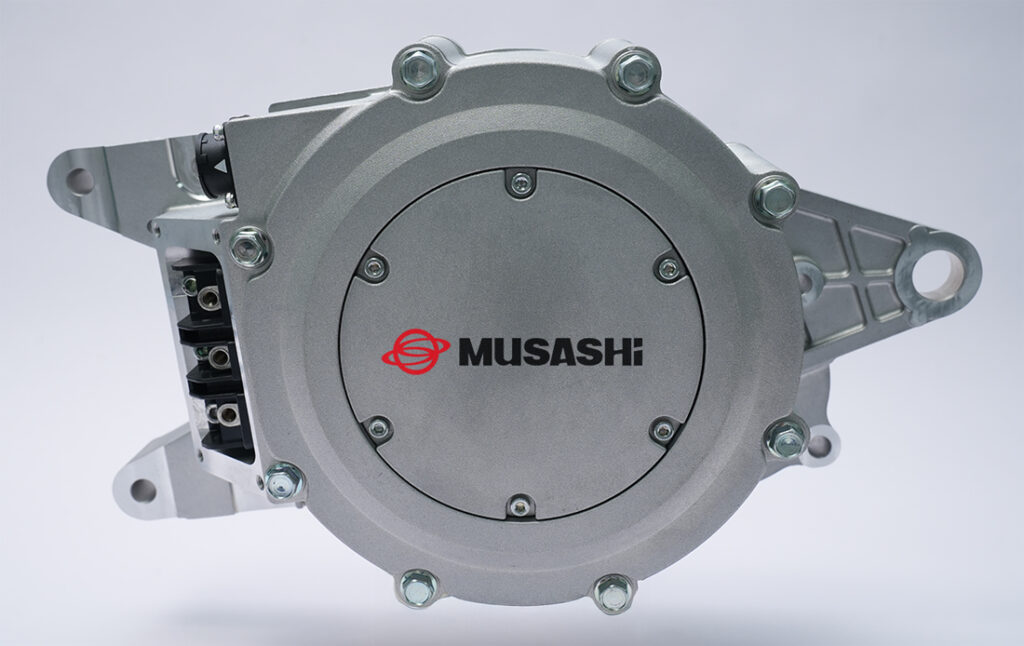
At the same time, the company is steadily reshaping itself for the EV era. It has already started building e-axles for e2Ws, combining motors and power control units from its partner Delta Taiwan with Musashi’s own high-precision gearbox expertise. The company is placing a strong bet on side-motor systems, which offer better top speed, stronger performance on slopes, longer continuous operation, easier maintenance, and quicker acceleration compared to hub motors.
Today, Musashi supplies these e-axles to startups such as BNC, BuyMyEV and Emobi, while also running trials with leading OEMs. The next step is already taking shape, with e-axles for 3Ws under development.
Engineering the Present, Anticipating the Future
Mr. Shinji Ieki, COO for Musashi’s India and Africa region said, in India, the company’s footprint spans both ICE and EV technologies. On the conventional side, it supplies key components to two-wheeler leaders such as HMSI, TVS Motor and Royal Enfield, passenger vehicle majors including Maruti Suzuki and Honda, and even select commercial vehicles manufacturers. As such, Musashi Seimitsu Industry offers integrated processing from forging to finishing/assembly for various sizes and types of components.
At the same time, India is becoming Musashi’s launchpad for its electric future. In partnership with Delta, the company is assembling stator-rotors, motors and gear systems into complete E-axles for electric scooters and three-wheelers, marking a major shift in its role from component supplier to system integrator.
This transition is driven by Musashi’s long-term “Go Far Beyond” vision—to evolve from a traditional auto parts maker into a technology company that supports society in deeper ways. Six core pillars guide this journey: product development, integrated manufacturing, in-house support technologies, strong prototyping capabilities, global operations, and a firm push toward digital and green transformation. These pillars shape how Musashi’s plants operate and how new products are conceived.
A key strength lies in how Musashi learns from itself. Plants across Japan, India and other regions continuously benchmark each other, sharing best practices in manufacturing processes, machine use, material optimisation and efficiency metrics such as Overall Equipment Effectiveness. India plays a unique role in this exchange. By using cost-effective local machines and enhancing them with Musashi’s own technology, Indian teams have developed hybrid production models that cut costs without compromising quality. This solution is planned to be expanded across Musashi Seimitsu Industry’s entire network, Mr. Ieki added.
He also highlighted a common challenge in India’s EV market—heating issues, especially with hub motors, which often lead to warranty claims. Musashi believes side motors are better suited for Indian conditions. With improved airflow, cooler operation and stronger durability on rough roads, they offer both higher initial torque and sustained performance. For B2B fleets such as food delivery and bike taxis, this reliability makes side motors a far more practical choice.
At the heart of this success is Musashi’s fully integrated manufacturing system. From raw materials to forging, machining, heat treatment and final assembly, everything happens in-house. This ensures tight control and consistent quality. In India alone, over 95% localisation reflects its deep commitment to the local ecosystem.
Culture matters just as much. Musashi follows seven core values—from Customer First and Integrity to Creativity and even “Smile & Thanks.” Each day starts with ‘Radio Taiso’ exercises and an oath, building discipline and unity rooted in Japanese tradition.
Yet Musashi knows the world is changing. As EVs and digitalisation reshape mobility, the company is moving beyond its ICE roots through its “Go For Beyond” vision—diversifying into mobility, automation, energy and wellness. It is already working with Israeli partners on camera-guided autonomous robots and deploying AI-based visual inspection systems, proving that reinvention remains part of its DNA.
From Precision Parts to Silent Power
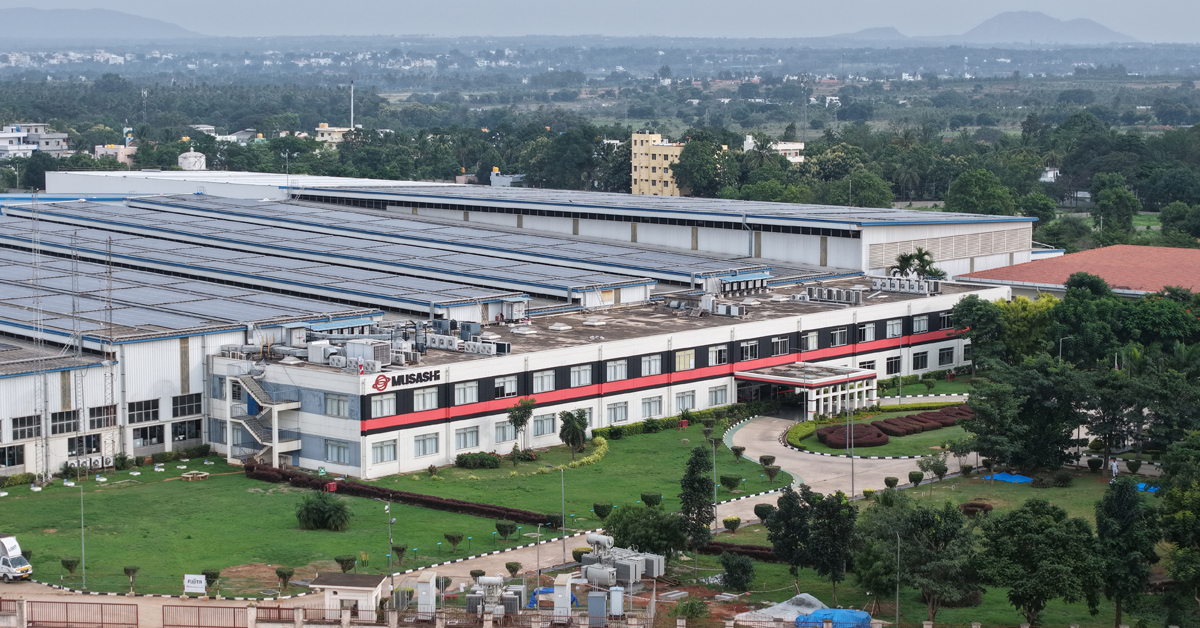
Inside Musashi’s plant, electric drive units and traditional mechanical parts come together under one disciplined system. For electric motors, around 80% of parts are outsourced and now largely localised, except for magnets that still come from China. Critical precision parts, such as shafts, are made in-house to retain tight control over quality.
A few steps away, Musashi’s legacy parts manufacturing follow its own disciplined journey. Camshafts arrive as casted blanks, move through precise machining, and head straight to assembly and dispatch. Shafts begin with cold forging, pass through machining, heat treatment, grinding, and a strict Quality Gate before assembly. Gears start with hot forging, followed by turning, hobbing, heat treatment, honing, and final inspection.
Different paths, one philosophy. Whether it is a silent electric drive or a hardened steel gear, every component leaves the plant carrying Musashi’s core values—precision, consistency, and a quiet confidence built over decades of engineering evolution.