In India, the path to autonomy begins with trust. And trust begins with systems that understand Indian roads — not as they are imagined, but as they truly are.
On an Indian highway, the unexpected is normal. A two-wheeler suddenly cuts across lanes. A tractor overloaded with sugarcane sways ahead. A cow wanders onto the road. Lane markings fade into patchy tar. The afternoon sun blinds the camera. By evening, dense fog reduces visibility to a few metres.
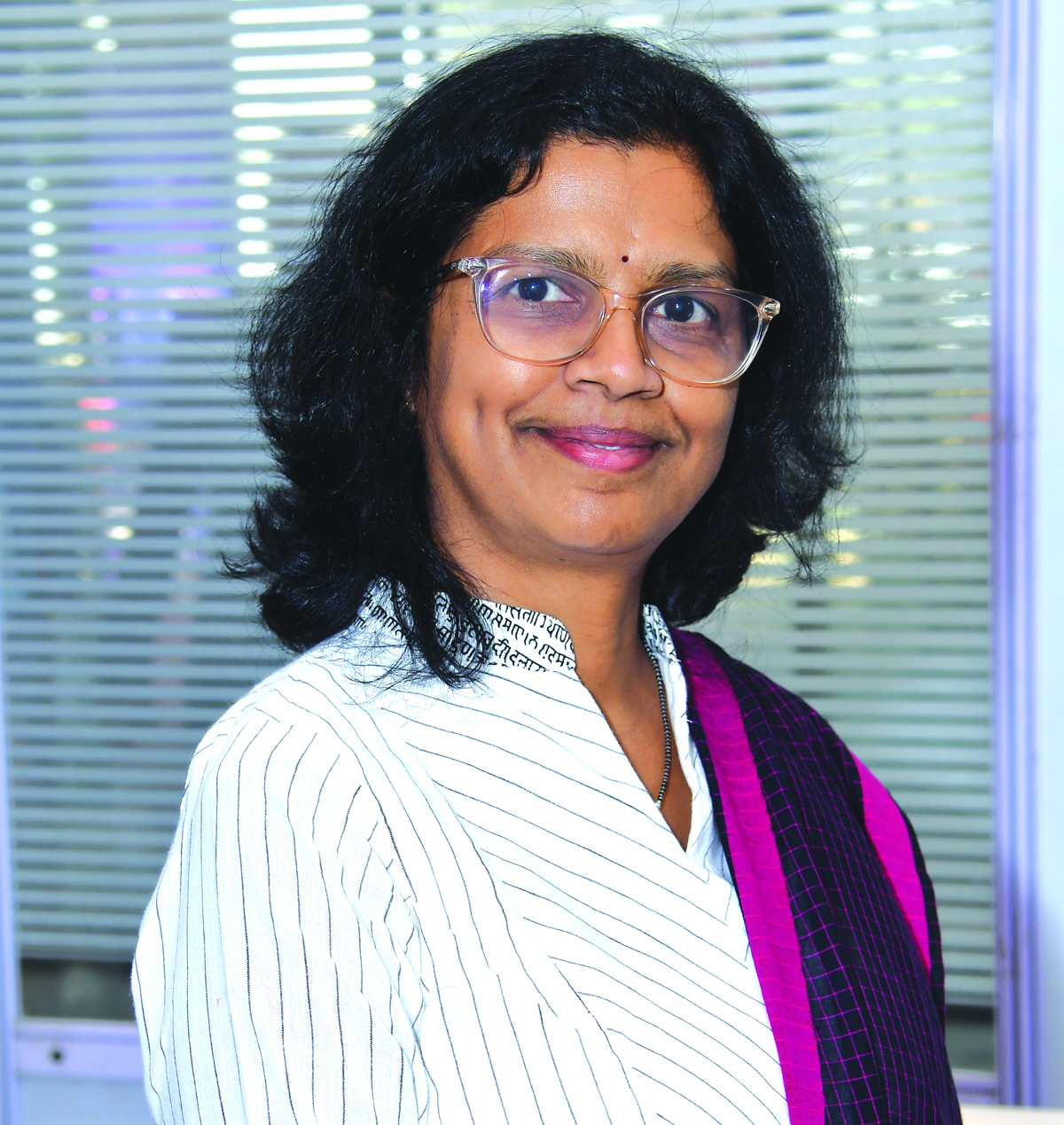
Now imagine an Advanced Driver-Assistance System (ADAS) trying to make sense of all this. This is the challenge the Automotive Research Association of India (ARAI) has taken on — not to build a driverless future overnight, but to engineer an intelligent “co-driver” suited to Indian realities, Ms. Ujjwala Karle, Sr. Deputy Director – Technology Group, Digital Twin Lab, ARAI- Pune, has said.
Speaking to this publication, Ms. Karle said, while global headlines often focus on Level 4 and Level 5 autonomy, ARAI’s priority is different. The goal is to deepen Level 2 and 2.5 systems — making them affordable, reliable and widely accessible. Improved park assist, blind-spot detection for large vehicles, better cross-traffic alerts and reduced false alarms can deliver immediate safety impact for millions of drivers.
“In India, the path to autonomy begins with trust. And trust begins with systems that understand Indian roads — not as they are imagined, but as they truly are,” she said. Through data, simulation, validation and ecosystem collaboration, ARAI is quietly building that foundation — engineering not just smarter vehicles, but safer journeys for India.
ADAS as a Co-Driver, Not a Replacement
ARAI’s approach is clear. In India’s socio-economic context, where driving is a major source of employment, the focus is not on higher level autonomy. Instead, the priority is strengthening existing ADAS features — systems that assist drivers, enhance safety and reduce fatigue. Features such as Automatic Emergency Braking (AEB), Lane Keep Assist, Blind Spot Detection and Cross-Traffic Alert can significantly reduce accidents — if they are calibrated for Indian conditions. But that “calibration is far from simple,” she observed.
Why Global ADAS Cannot Simply Be Imported
Most global ADAS systems are trained and validated on structured traffic environments. However, India presents a different landscape. Traffic diversity is the first hurdle. The system must detect two-wheelers, three-wheelers, slow-moving handcarts, overloaded trucks, informal modifications and uniquely shaped vehicles. Then comes signage. India’s traffic signs vary in language, design and placement. Recognition systems must interpret visual differences across States. Animals are another factor. Cows, dogs and even stray livestock are common road users, yet rarely appear in global test datasets, she pointed out.
“Driving behaviour is equally complex. Close following, sudden lane changes, vehicles cutting into small gaps and pedestrians crossing unpredictably create dynamic scenarios that demand fast and intelligent decision-making. Environmental extremes add another layer,” Ms. Karle stated. ARAI realised that to validate ADAS for India, it first had to understand India.
The SANGARH Project: Capturing India in Data
ARAI began by collecting real-world driving data under its “Sangrah: Synchronously ANnotated Ground- tRuth Acquired & Harvested India Data for ADAS” initiative. Instrumented vehicles equipped with 360-degree cameras, LiDAR, radars, GNSS (Global Navigation Satellite System) and inertial measurement units travel across highways and major cities. They capture traffic patterns, object types, road conditions and environmental variations throughout the day and across seasons.
This data is anonymised in compliance with India’s data protection norms and stored as a growing database. The idea is to create a shared ecosystem resource — a foundation on which manufacturers and developers can build India-specific ADAS algorithms. But data alone is not enough.
From Raw Data to Real Test Cases
Engineers annotate the collected data to identify uniquely Indian scenarios — such as cross-traffic emerging from unexpected angles or overloaded vehicles with extended loads.
These annotated cases are then converted into structured test scenarios. For example, how should an AEB system react if a two-wheeler abruptly cuts in at low speed? How should Lane Keep Assist behave when lane markings are faded or partially visible? This knowledge feeds into ARAI’s most advanced capability — the Validation Pyramid.
The XiL Farm: Simulating India Digitally
ARAI uses a layered “X-in-Loop” (XiL) validation methodology. At the Software-in-Loop (SiL) stage, ADAS algorithms are tested in virtual environments. Thousands of scenarios can be simulated rapidly.
In Hardware-in-Loop (HiL), real electronic control units (ECUs) are tested against digital scenarios. Lighting conditions, weather, traffic density and speeds can be digitally modified to create virtually infinite use cases.
Driver-in-Loop (DiL) testing adds another dimension. Here, human drivers sit in immersive simulators while ADAS interventions are triggered. Engineers study how drivers react to sudden braking, lane corrections or warnings. This helps reduce “false positives” — situations where the system reacts unnecessarily and erodes driver trust, she explained.
Vehicle-in-Loop (ViL) testing integrates real vehicle systems with virtual environments, enabling further validation without needing empty roads. Physical road testing is reserved for select critical scenarios, as reproducing identical conditions repeatedly on Indian roads is impractical. Together, these facilities form ARAI’s “XiL Farm” — a digital validation ecosystem capable of accelerating ADAS development, she mentioned.
Intelligent Mobility Test City at Takwe
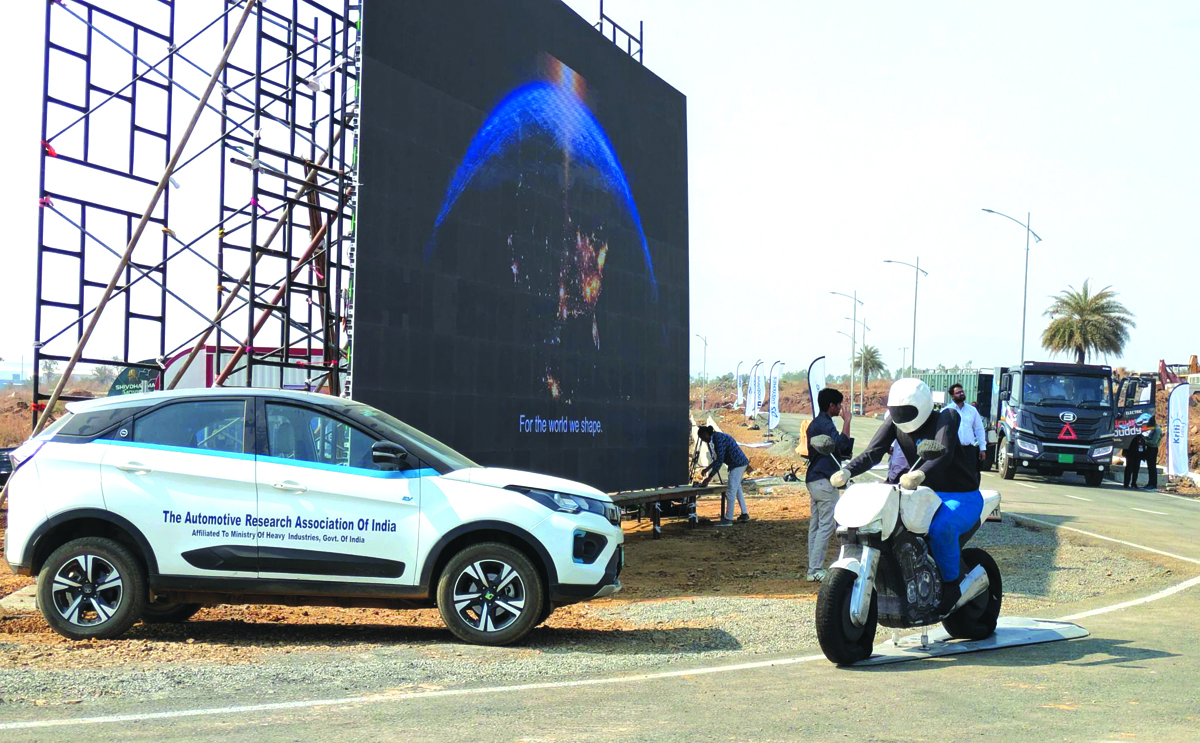
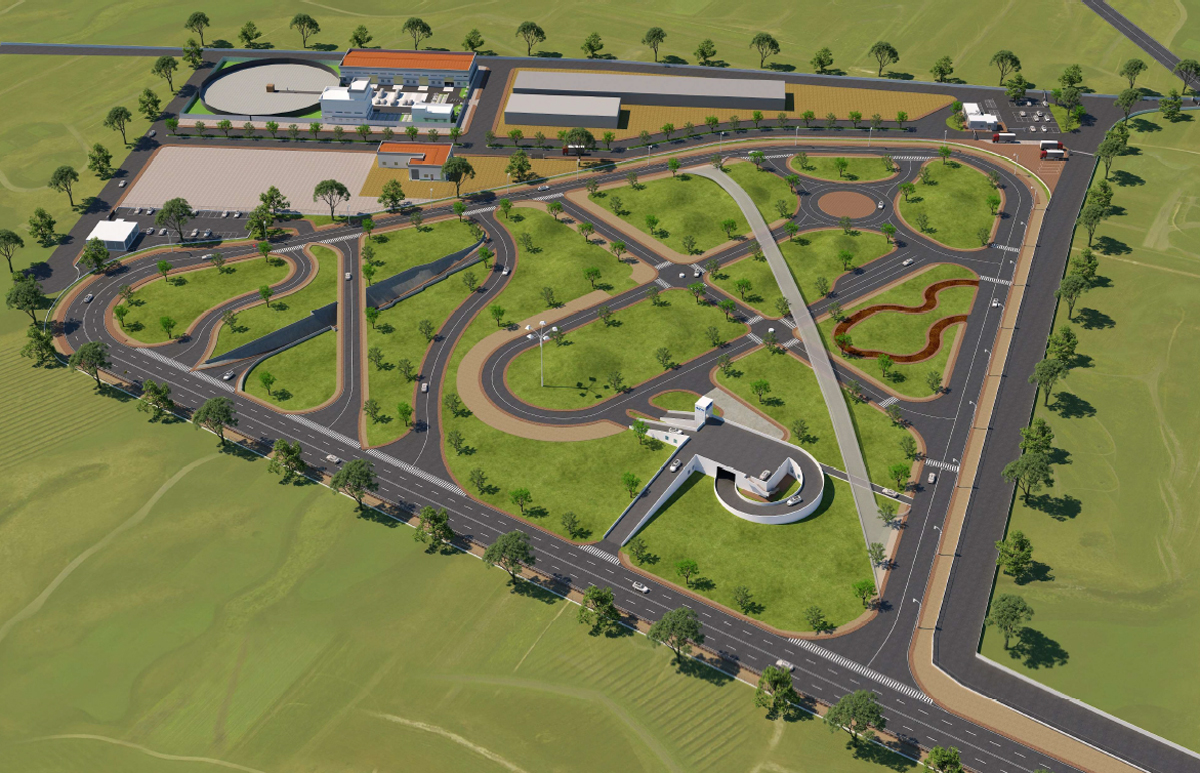
Digital simulation is powerful, but some challenges require physical validation. ARAI has built the Intelligent Mobility Test City at Takwe — a configurable test environment designed to mimic Indian traffic conditions. Roads can feature faded or dotted lane markings. Traffic lights and signs can be adjusted in position and angle. Parking scenarios include parallel, cross and even GPS-denied mall-style parking. Night testing with adjustable illumination is already possible. Rain and fog simulation capabilities are planned for the future. The aim is to safely recreate real-world complexity within a controlled environment, she illustrated.
Beyond ADAS: The Digital Future
ARAI’s work extends into Software-Defined Vehicles (SDVs) and connected mobility. Digital twins — virtual replicas of vehicles — are being used to support continuous development, validation and refinement. Instead of a linear development model, the process becomes continuous, where field data feeds back into updates and improvements.
Cybersecurity is another focus area. With Over-the-Air (OTA) updates becoming standard, vehicles must remain secure throughout their lifecycle. ARAI is developing methodologies and protocols for lifetime cybersecurity validation, she said.
The automotive R&D and testing organisation is also encouraging ecosystem collaboration. Drive-by-wire platforms are made available to software companies, IITs and startups to test algorithms on real hardware, bridging the gap between coding and vehicle integration.
ARAI is committed to empower and enable BHARAT led Safe & Secured vehicles -ensuring that the future systems are scalable and globally relevant, Ms. Karle concluded.