Shafna Logistics has recently crossed an important operational milestone by strengthening its pan-India presence in temperature-controlled and diversified cargo movement, backed by a fleet of over 150 vehicles and a steadily expanding client base across FMCG and perishables. This achievement reflects not just scale, but a carefully built capability to adapt to changing market needs while maintaining reliability in one of the most demanding segments of road transport.

At the centre of this journey is Mr. Hanoz Viraf Jungalwala, Director, Shafna Logistics, who represents the second generation of leadership in the company. Along with his brother Homi Viraf Jungalwala, he continues the legacy started by their father, Mr. Viraf T Jungalwala, who laid the foundation of the business nearly five decades ago.
Shafna Logistics was established in 1977 in Surat, Gujarat, at a time when organised logistics was still evolving in India. The company began modestly, with Mr. Viraf T Jungalwala driving his own truck and handling assignments himself. Over the years, that single-vehicle operation grew steadily through discipline, customer trust, and a deep understanding of transport realities on Indian roads.
Roots Built on Experience and Regional Strength
The early years of Shafna Logistics were closely tied to Gujarat’s thriving dairy sector. Until around 2010, the company’s operations were largely confined within the state, serving dairy cooperatives and allied businesses. This focus made sense; dairy was booming, routes were familiar, and fleet size was limited but well-utilised.
“Those years taught us the importance of consistency and relationships,” says Hanoz. “When you are moving milk and dairy products, even a small delay or temperature variation can lead to losses. That discipline stayed with us.”
Between 2010 and 2015, as the dairy industry in Gujarat reached a peak and market dynamics began to shift, Shafna Logistics took a strategic decision to diversify. Instead of remaining dependent on a single segment, the company expanded both its fleet profile and geographic reach. Operations gradually moved beyond Gujarat into Maharashtra, Madhya Pradesh, Uttar Pradesh, and other key consumption and production belts.
This transition marked a turning point. The company began investing in different vehicle categories and exploring new industries where time-sensitive and quality-critical transportation was essential.
Business Mix Shaped by Market Evolution
Today, Shafna Logistics operates across multiple segments including cold chains, frozen foods, ice cream, milk and dairy products, fruits and vegetables, and raw materials for food processing industries. Beyond perishables, the company also handles LPG cylinders, cement, RMC concrete, and both open and closed container movements on varied routes.
“We realised early that limiting ourselves to one module was risky,” Hanoz explains. “Customer demand changes fast. If you want longevity in this business, your fleet and people must be ready to serve multiple industries.”
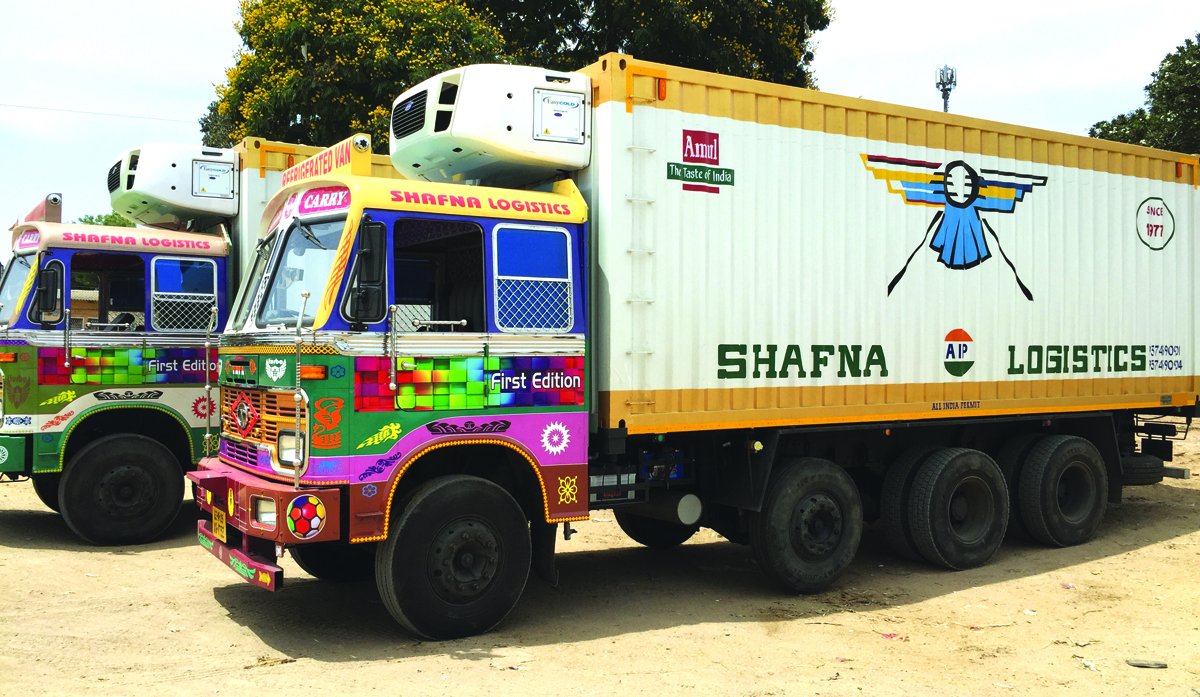
This philosophy has influenced the company’s fleet composition. Shafna Logistics currently operates more than 150 vehicles, ranging from 4-tyre light commercial vehicles to 16-tyre multi-axle trucks. The fleet includes configurations such as 4220 14-tyre trucks, 4923 16-tyre vehicles, 3518 12-tyre models, 10-tyre 3118 trucks, along with Eicher and Tata 6-wheelers and Tata LPT 710 4-tyre vehicles.
Such diversity allows the company to match vehicle type precisely with cargo requirements, route conditions, and delivery timelines. It also helps manage risk during demand fluctuations in any single sector.
Pan-India Operations Anchored in Cold Chain Expertise
With operational hubs in Surat and major activity centres in Ahmedabad, Anand, Mumbai, Pune, and key regions of central and northern India, Shafna Logistics now operates pan-India. The company has aligned its network with the rapid diversification of India’s cold chain market, which is no longer limited to a few metros or production clusters.
FMCG and perishable goods form the backbone of the client portfolio. These customers demand reliability, compliance, and transparency, areas where Shafna Logistics has invested consistently.
“In cold chain logistics, trust is everything,” Hanoz notes. “Our clients need to know where their goods are, what condition they are in, and whether they will reach on time. We have built our systems around that expectation.”
Technology plays a central role in meeting these requirements. The company uses GPS-based telematics across its fleet to monitor vehicle movement, temperature parameters, delivery timelines, and driving behaviour. Legal speed compliance is also tracked closely, helping reduce accident risk and improve overall safety.
People, Processes, and Preventive Maintenance
Behind the vehicles and technology is a supervisory structure designed for round-the-clock support. Shafna Logistics deploys experienced managers who monitor fleet movement 24×7. Many of these managers bring over 25 years of industry experience, enabling quick decision-making during breakdowns, route disruptions, or cargo-related issues.
“Experience matters when things go wrong on the highway,” says Hanoz. “Our managers know how to respond calmly and effectively, whether it is a mechanical issue or a temperature deviation.”
Vehicle upkeep is another area where the company follows a disciplined approach. All vehicles are serviced only at authorised service outlets, ensuring better efficiency, adherence to OEM standards, and reduced chances of unexpected breakdowns. Preventive maintenance schedules are strictly followed, as downtime directly impacts service reliability and customer confidence.
This focus on maintenance also supports longer vehicle life cycles and predictable operating costs, both critical for a fleet of this size operating across varied terrains and climates.
Preparing for the Next Phase of Growth
Looking ahead, Shafna Logistics is closely tracking the rapid rise of e-commerce and quick commerce platforms. The growth of players such as Blinkit, Zepto, Zomato, and large-format retailers has changed consumption patterns across tier 1, tier 2, and tier 3 cities.
“The speed at which e-commerce has grown is remarkable,” Hanoz observes. “These platforms will form the backbone of future logistics demand, especially for perishables and ready-to-consume products.”
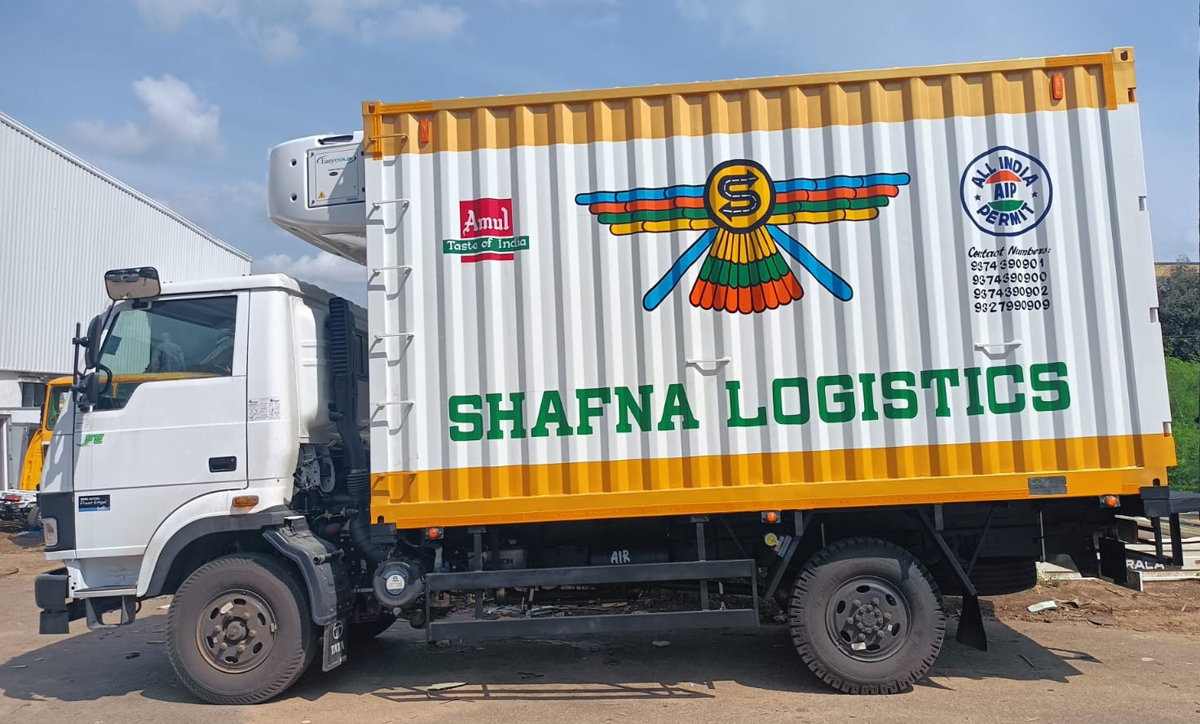
To align with this shift, the company is evaluating the introduction of new vehicles and selective replacement of its existing fleet to meet evolving client requirements. Vehicle size, loading patterns, turnaround time, and city access regulations are all being factored into these decisions.
While expansion remains on the agenda, Shafna Logistics is clear about its priorities. Growth will be measured, service-led, and supported by strong operational control rather than rapid, unstructured scaling.
“Our goal is not just to add more trucks,” Hanoz concludes. “It is to build a logistics operation that customers can depend on, regardless of distance, product type, or complexity.”
From a single truck driven by its founder to a diversified, pan-India logistics provider, Shafna Logistics stands as an example of how adaptability, operational discipline, and customer focus can drive sustained success in India’s competitive transport landscape.