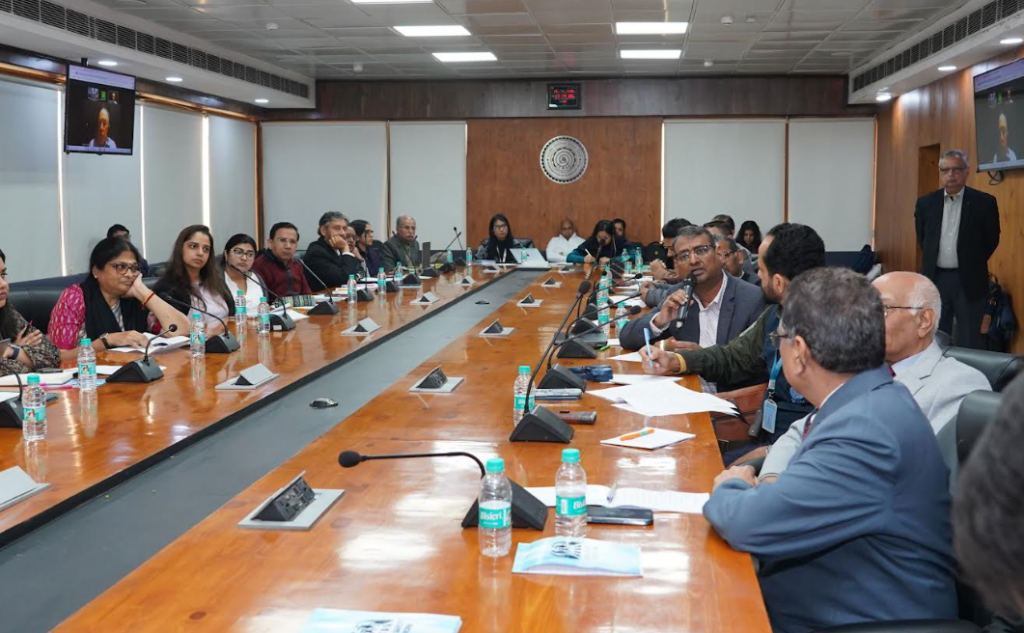
Speed management emerged as the single most effective and immediate way to save lives on Indian roads, according to experts at a national seminar held today at IIT Delhi as part of National Road Safety Month 2026. The seminar, organised by the Road Safety Network (RSN) in collaboration with IIT Delhi and IIT Kharagpur, brought together researchers, policymakers, enforcement agencies, urban planners and civil society groups to discuss safe speed limits on National Highways and urban roads.
India continues to record over 1.7 lakh road deaths every year, with speeding contributing to more than 70% of these fatalities. Speakers stressed that while roads across India have expanded rapidly, speed limits have not been aligned to real-world traffic patterns, human safety thresholds, or the needs of vulnerable road users such as pedestrians and two-wheeler riders.
“National Highways make up only 2% of the total road network but account for over 36% of the country’s road fatalities. Lowering speed limits, backed by strong enforcement and quicker emergency response, is essential to saving thousands of lives,” said Prof. Bhargab Maitra from IIT Kharagpur and RSN.
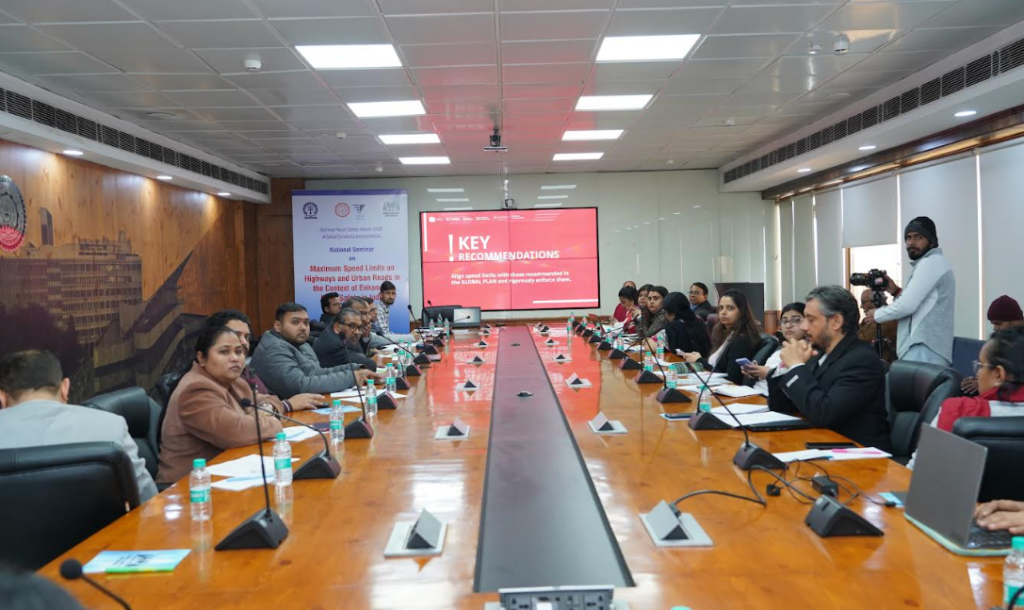
The first session focused on highway safety, highlighting how high operating speeds, mixed traffic, roadside activities and unprotected access points significantly increase crash severity. Mr. David Cliff, CEO of the Global Road Safety Partnership, recommended maximum speed limits of 30 km/h in cities, under 80 km/h on rural roads, and 100 km/h on expressways—standards proven effective worldwide.
Experts warned against viewing highways purely as high-speed corridors, especially where they pass through towns and villages. Speed limits, they said, must be governed by land use and traffic mix—not just vehicle capability.
The second session shifted attention to cities, where speeding accounts for thousands of deaths each year. Contrary to popular belief, most fatal crashes in urban areas occur on wide arterial roads, flyovers and signal-free corridors, particularly during low-traffic hours. According to the 2023 MoRTH report, over 17,000 people were killed and more than 73,000 injured in India’s largest cities alone.
“India urgently needs rational speed limits. There is a clear mismatch between road design, policy implementation and public compliance. Global evidence shows 50 km/h is the maximum safe speed for urban areas,” said Prof. Geetam Tiwari of IIT Delhi/TRIP Centre.
Experts called for 50 km/h limits on city roads, with lower speeds in residential zones, near schools and in pedestrian-heavy areas. They emphasised that lowering speed limits would improve safety, liveability and public health without significantly increasing travel time.
Several speakers noted that enforcement alone will not be enough. Dr. Kayitha Ravinder of CSIR-CRRI pointed out that without speed-calming designs, narrower lanes and safer junctions, police action has limited impact. “Streets must be designed for safe speeds,” he said.
Under-reporting of speeding-related crashes, high motorcycle fatalities and risky driving at intersections—where nearly 60% of serious crashes occur—were flagged as areas requiring urgent attention.
The seminar’s recommendations will be compiled by the Road Safety Network and submitted to the Ministry of Road Transport and Highways, urging the government to adopt evidence-based speed limits as a key pillar of India’s road safety strategy.
The event featured leading voices from MoRTH, Delhi Police, WHO India, WRI India and consumer groups, who collectively stressed the need for a multi-pronged approach combining rational speed limits, better enforcement and safer road design.