
Few weeks ago, Tata Technologies unveiled WATTSync, a digital battery passport designed to transform how batteries are tracked, managed, and recycled across their entire life cycle–from mining to mobility to reuse.
WATTSync gives OEMs, battery makers, and recyclers a shared, real-time view of materials, performance, carbon footprint, and recovery status, while automating compliance with evolving regulations. With the EU set to mandate digital battery passports by 2027 (for every battery above 2 kWh) sold–and India planning its own framework–WATTSync positions global players to move early and confidently. It promises verified sourcing, tamper-evident data, faster compliance, and better circular outcomes, helping the industry design smarter, recycle better, and build trust in the batteries that drive the world forward. The onus will fall on whoever places the battery on the market – sometimes the vehicle maker, sometimes the battery pack manufacturer. Either way, the rule leaves no room for gaps. As regulations tighten, the need for a reliable digital passport system like WATTSync is no longer optional – it’s becoming essential.
The Genesis
Speaking to EV TECH NEWS, Mr. Marc Manns, Vehicle Line Director – EE at Tata Technologies, said, WattSync was born from a simple but pressing need – to help battery makers stay ahead of fast-changing sustainability regulations while delivering real value to their customers. It began as a proof of concept shared with a global battery manufacturer to understand their sustainability challenges. The feedback was clear: manufacturers needed more than just a compliance tool. They needed a system that could track carbon footprints, use AI/ML for predictive insights, and be future-ready.
A cross-functional team then came together to study global regulations, benchmark competitors, and map how sustainability norms would evolve over the next decade. That thinking shaped WattSync into what it is today – a solution designed not just to tick boxes, but to create measurable value. It continues to evolve, with teams closely tracking market shifts to ensure the platform reflects the latest innovations and real-world needs, he said.
Mr. Manns explained that WATTSync works as a cloud-based software-as-a-service platform that plugs directly into automakers’ existing systems through APIs (Application Programming Interface). It gathers everything from production data to real-world performance records, turning scattered information into one secure, unified source of truth. Whether the data comes from a supplier’s spreadsheet or a factory’s live system, WATTSync ties it all together –giving manufacturers full visibility of a battery’s journey and ensuring both regulatory compliance and customer trust in its sustainability.
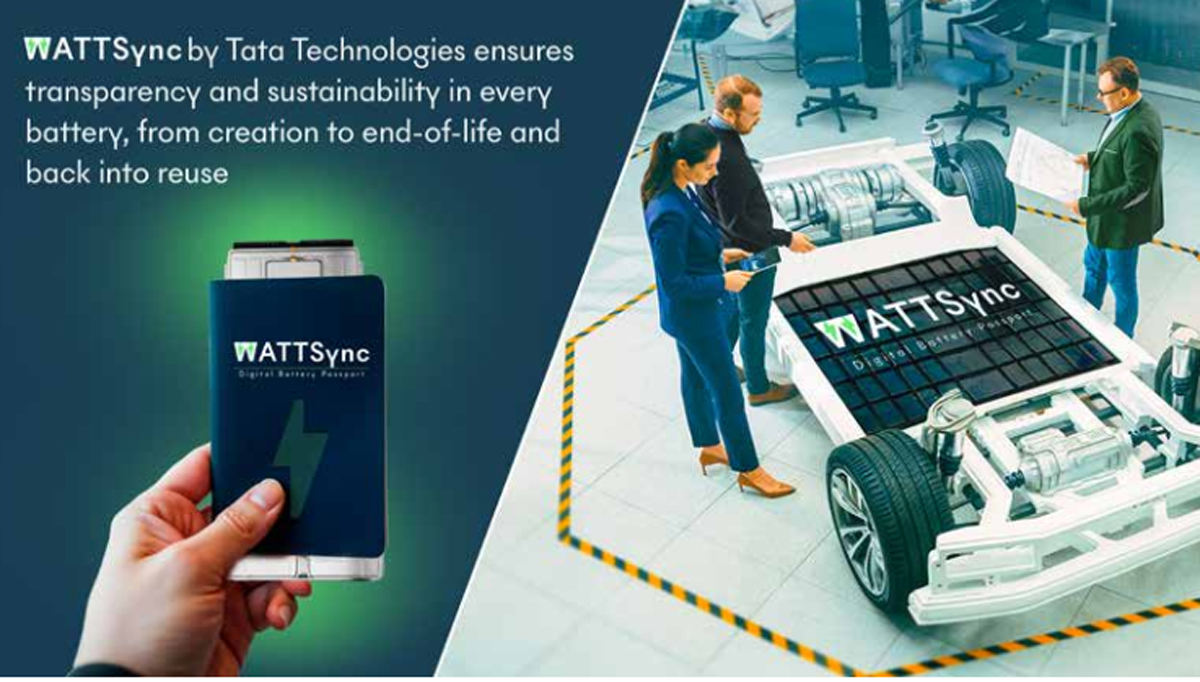
Unlocking Insights, Safety, and New Revenue Streams
WATTSync is not just about meeting regulations – it can also help automakers create new business opportunities. Built as a flexible software-as-a-service platform, it can be used straight out of the box or customised to suit each brand. With AI-driven prognostics, it can even support subscription-based services, giving drivers and fleet operators real-time battery health insights and advanced support options.
Its real strength, though, lies in prevention. By reading live data from a vehicle’s battery management system, WATTSync can detect early warning signs – like rising cell temperatures – before they become serious. When an issue appears, the system instantly alerts the driver and, if needed, the dealer, advising whether to stop driving or head to a service centre. While Tata Technologies can provide added oversight if required, the aim is a self-reliant platform that keeps vehicles safe, informs users in real time, and helps dealers respond quickly – reducing risks and keeping journeys smooth, Mr. Manns said.
Smarter than Compliance
WATTSync goes beyond just tracking a battery’s journey from mining to recycling – it adds intelligence that makes it stand out. One of its biggest strengths, according to him, is AI-powered prognostics. After successful trials with automakers in Asia and the UK, the system can now spot early warning signs in batteries and even e-powertrains, predicting failures before they happen.
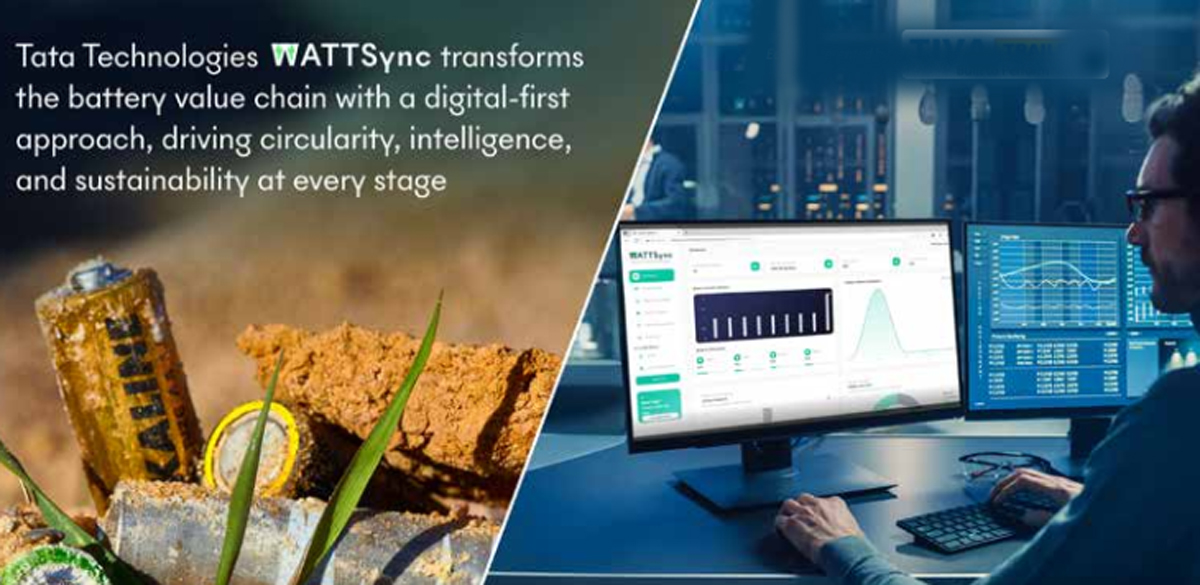
Tata Technologies is also building an AI co-pilot – a chatbot that turns raw data into clear guidance. It could, for example, explain why a vehicle’s range is falling, such as harsh driving habits, so issues can be fixed before they become serious.
This innovation comes from a global team spread across India, China, and the UK, combining expertise in AI, software, powertrains, cybersecurity, and connected vehicles. Backed by Tata Group’s trust and years of work with leading global OEMs, this blend of skills gives WATTSync its sharp edge, he said.
Role of Indian Engineers
Indian engineers of Tata Technologies have played a central role in building WattSync from the very beginning. They weren’t just writing code or running tests – they helped shape the entire architecture, led design and development, and drove verification and validation. What stands out is how collaborative this effort has been. Teams in India worked closely with colleagues across the globe, blending different perspectives into one unified solution. “This diversity of thinking is one of Tata Technologies’ biggest strengths, and WattSync is proof of what can be achieved when global talent works with a shared purpose,” he mentioned.
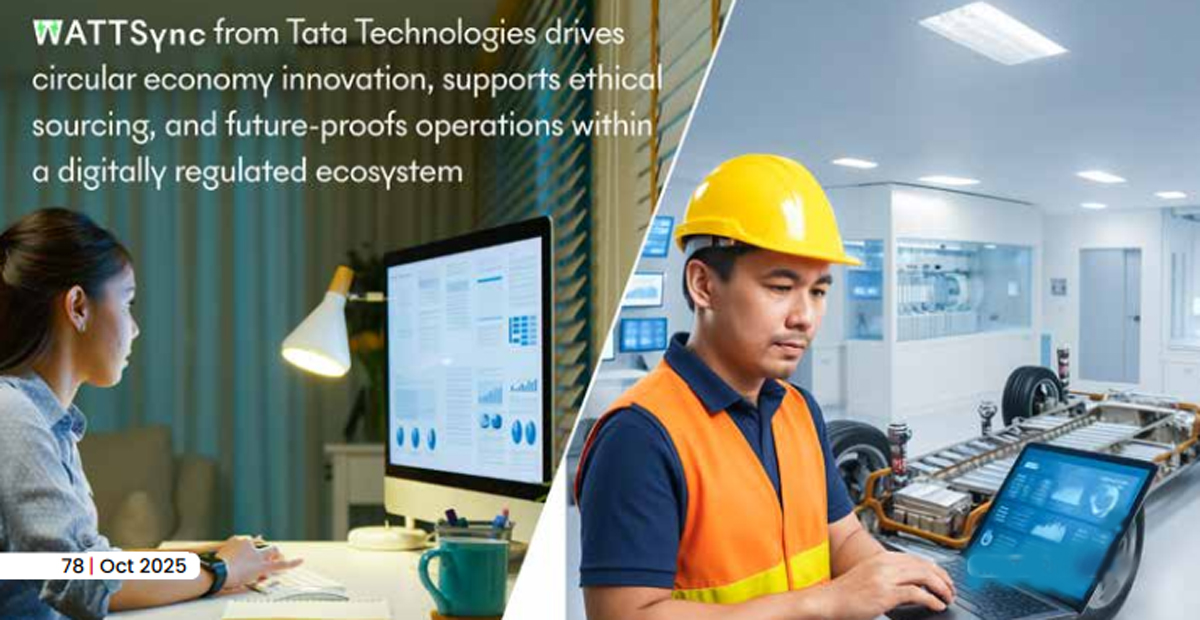
Indian teams have also been key in creating demos, building sales material, promoting WattSync worldwide, and engaging directly with customers. Their work has ensured that WattSync is not only technically strong but also connects well with customers everywhere.
Turning Compliance into Competitive Advantage
Battery passports may be new, but the expectations are already high. The EU now requires 93 data points to be tracked across a battery’s life – from where its cells were made to live readings on charge, voltage, and health. WATTSync is built to capture every step, right up to end-of-life, ensuring nothing is missed.
Managing this much sensitive data also demands airtight security. Tata Technologies brings its global cybersecurity expertise to the task, with teams working across chip, hardware, system, and cloud layers. Dedicated labs in the UK and India run constant penetration tests to make sure the platform stays ahead of evolving threats. The result is a system fully aligned with international cyber regulations, giving OEMs and customers confidence that their data is safe.
And WATTSync goes further; since every automaker must invest in compliance, the company has turned it from a cost into an opportunity. By embedding AI-driven tools like prognostics, the platform can predict failures, prevent costly breakdowns, and boost uptime. In short, WATTSync isn’t just about meeting rules – it creates real value while delivering peace of mind, he said.
From Battery Passport to Full Vehicle Identity
Tata Technologies believes the battery passport is just the beginning. As sustainability norms grow stricter worldwide, the company envisions this concept evolving into a complete “Vehicle Passport.” Instead of tracking only the battery, this digital record could cover every vital system – from steering and braking to power electronics and software, he opined.
Linked with AI-driven prognostics, it could alert drivers or dealers the moment a component shows early signs of trouble. Such real-time insights would help prevent breakdowns, improve safety, and build trust, while giving OEMs a powerful tool to stay competitive in a fast-changing market, Mr. Manns concluded.