Ballari Institute of Technology and Management (BITM), part of the Basavarajeshwari Group of Institutions in Karnataka, has steadily built a reputation as one of the region’s leading centres for technical education. Established with a strong focus on engineering and management studies, the institution today hosts around 5,200 students across disciplines such as Artificial Intelligence, Computer Science, Electronics, Mechanical, Civil Engineering and Data Science, along with MBA and MCA programmes. The college is an autonomous institution affiliated with Visvesvaraya Technological University (VTU) and has earned high academic accreditation ratings.
The Basavarajeshwari Group has further expanded its educational footprint in recent years with the launch of Kishkindha University, a 50-acre greenfield campus located about 28 km from Ballari.
A Growing Transport Network
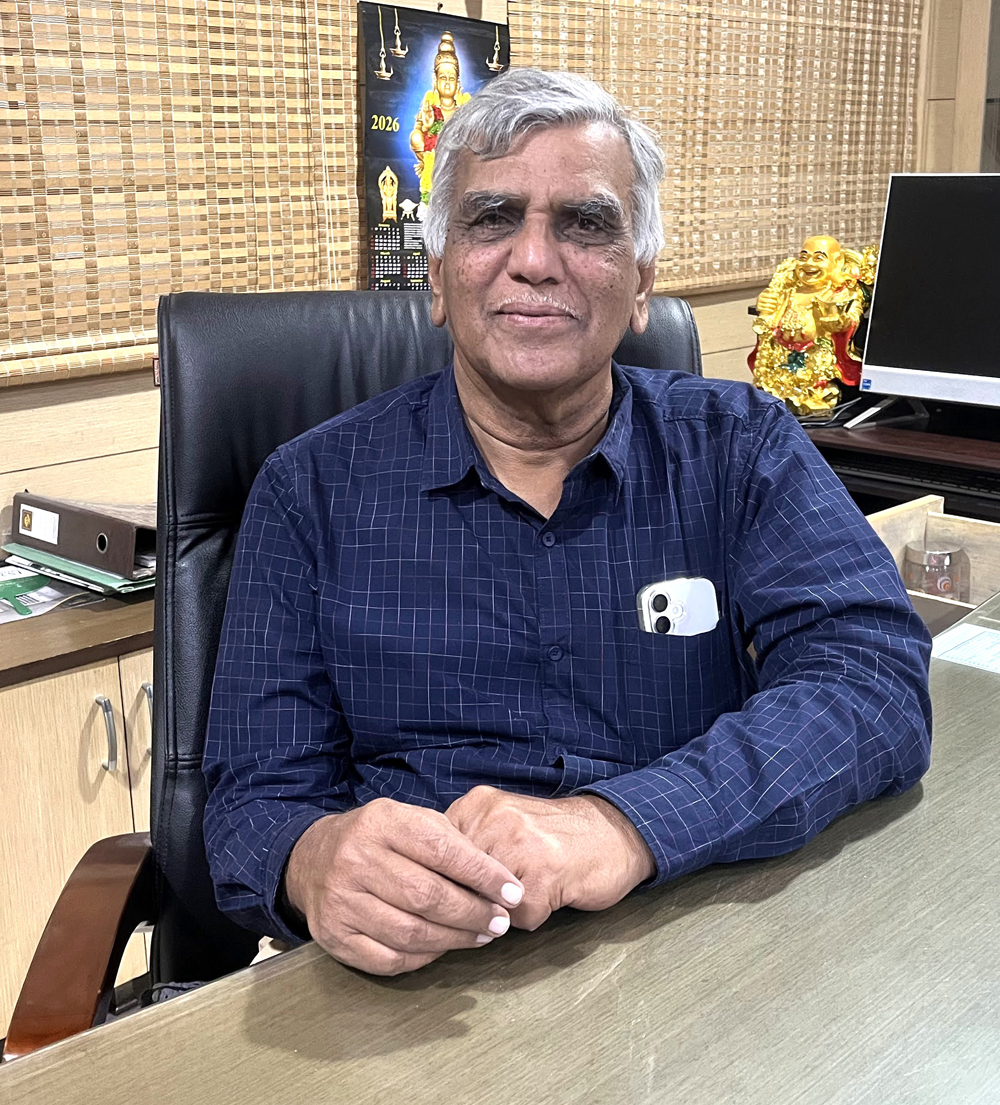
Today, the institution operates a fleet of nearly 50 buses catering to students and staff travelling from Ballari and neighbouring regions. According to Dr. Yashvanth Bhupal, Chancellor of Kishkinda University, and Chairperson of BITM, managing this transport ecosystem requires careful evaluation of operational efficiency, capacity utilisation and long-term cost economics.
“Our institutions serve thousands of day scholars, and dependable transportation is essential to keep the academic ecosystem running smoothly,” he explains. “At present, we operate about 50 buses across the group, and these vehicles cover roughly 70–80 kilometres every day transporting students and faculty.”
For many years, the fleet largely comprised buses from established brands. However, the institution began exploring new options when it sought higher-capacity buses that could improve operational efficiency while keeping ownership costs under control.
Eicher’s Differentiated Approach
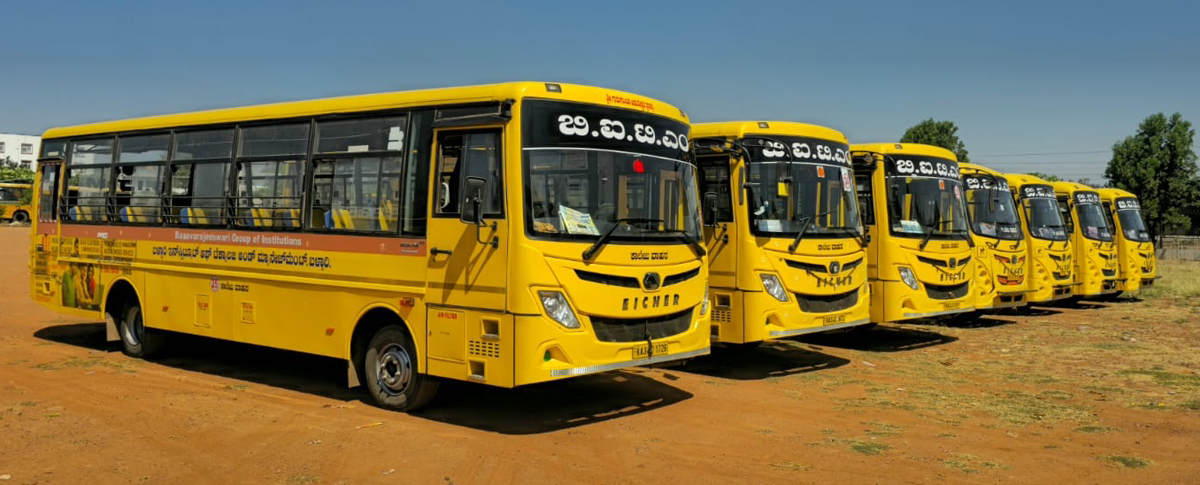
This search eventually led to the induction of Eicher buses into the BITM fleet. Dr. Bhupal recalls that the turning point came when the institution came across Eicher’s 72-seater school and staff bus configuration, which stood out for its wider body design and higher passenger capacity.
“We were looking for buses with larger seating capacity so that we could optimise operating costs while moving more students in a single trip,” he says. “Eicher came forward with a 72-seater configuration with a wider body and a 3+2 seating arrangement. That immediately caught our attention.”
Before making a long-term decision, BITM conducted its own evaluation. The institution initially inducted two buses on trial to assess their performance in daily campus operations.
“We prefer to evaluate vehicles ourselves before committing to a large purchase,” Dr. Bhupal explains. “So we started with two buses and ran them under our regular operating conditions. The pricing was attractive, and we also received positive feedback from other educational institutions in Ballari that were already using the vehicles.”
The trial proved encouraging, and over time the institution gradually added more Eicher buses to its fleet.
While BITM continues to maintain a balanced mix of brands in its transport operations, Eicher has steadily established a significant presence. Today, the fleet is broadly split between Eicher and other established manufacturers, reflecting the institution’s strategy of maintaining diversification while selecting vehicles that deliver strong operational value.
“In our group today, around 50 per cent of the buses are Eicher and the rest are from other brands,” Dr. Bhupal notes. “We never wanted to depend entirely on a single manufacturer. But Eicher has definitely earned a place in our fleet because of the value it offers.”
One of the key factors behind this acceptance has been the practicality of the 72-seater configuration, which allows institutions like BITM to transport more students without increasing the number of vehicles on the road.
“The wider body and higher seating capacity make a real difference for institutions running large fleets,” he says. “If we can move more students in one trip, it directly improves operational efficiency.”
Beyond capacity, Dr. Bhupal emphasises that long-term reliability and service support remain decisive factors for any institutional fleet.
Drawing from decades of personal experience with vehicles and engineering, he believes that product quality alone is not enough; consistent service support ultimately determines a vehicle’s long-term success.
“Sales may attract customers initially, but what really sustains a brand is after-sales support,” he observes. “That is what builds trust over time. When a vehicle performs reliably and service support is responsive, institutions naturally continue with the brand.”
A mechanical engineer by training with a lifelong passion for automobiles, Dr. Bhupal has closely followed developments in the automotive industry throughout his career. His practical understanding of vehicles and maintenance continues to influence procurement decisions within the institution.
“Reliability and endurance are the qualities that define a successful vehicle,” he says. “Whether it is a bus or a car, institutions look for products that deliver consistent performance over years of operation.”
Looking ahead, BITM is evaluating further expansion of its transport fleet as student numbers continue to grow across its campuses.
“We are reviewing our future transport requirements carefully,” Dr. Bhupal shares. “There is a possibility of adding around 25 more vehicles in the coming years as our institutions expand.”