By Akhil Shrimal and Arpit Dixit – Five Lasercut Metal Technology Pvt. Ltd.
India, the world’s fastest-growing major economy, is undergoing a historic transformation in its trucking and logistics sector. No longer just the “backbone” of trade, logistics is evolving into a strategic enabler of economic growth, driven by infrastructure upgrades, rapid technology adoption, sustainability imperatives, and shifting customer expectations. As the country accelerates toward a $5 trillion economy, the movement of goods is being redefined.

Infrastructure Push and Multimodal Growth
Government-led programmes such as PM Gati Shakti, Bharatmala, Sagarmala, and the Dedicated Freight Corridors are delivering unprecedented connectivity between ports, highways, and industrial hubs. Multimodal Logistics Parks (MMLPs) are integrating road, rail, air, and waterways to reduce costs and improve transit times.
“We’re seeing logistics companies increasingly opt for trailers over rigid truck chassis,” notes Akhil Shrimal, Co-founder, Five Lasercut. “Our flagship VIRAT brand offers lightweight yet robust trailer body solutions that enable higher payloads, lower wear, and better fuel efficiency. Since January 2024, we’ve delivered over 500 units across major states, showing how quickly this trend is spreading.”
From Uttar Pradesh to Karnataka, these modern trailer solutions are helping fleet operators meet rising demand with lower operating costs – signalling a long-term structural shift in India’s freight ecosystem.
Technology as the Logistics Engine
From GPS-enabled tracking to AI-based route optimisation, technology is transforming fleet management. Digital freight platforms and logistics tech start-ups are helping unorganised truckers access formal markets, dynamic pricing, and real-time payments.
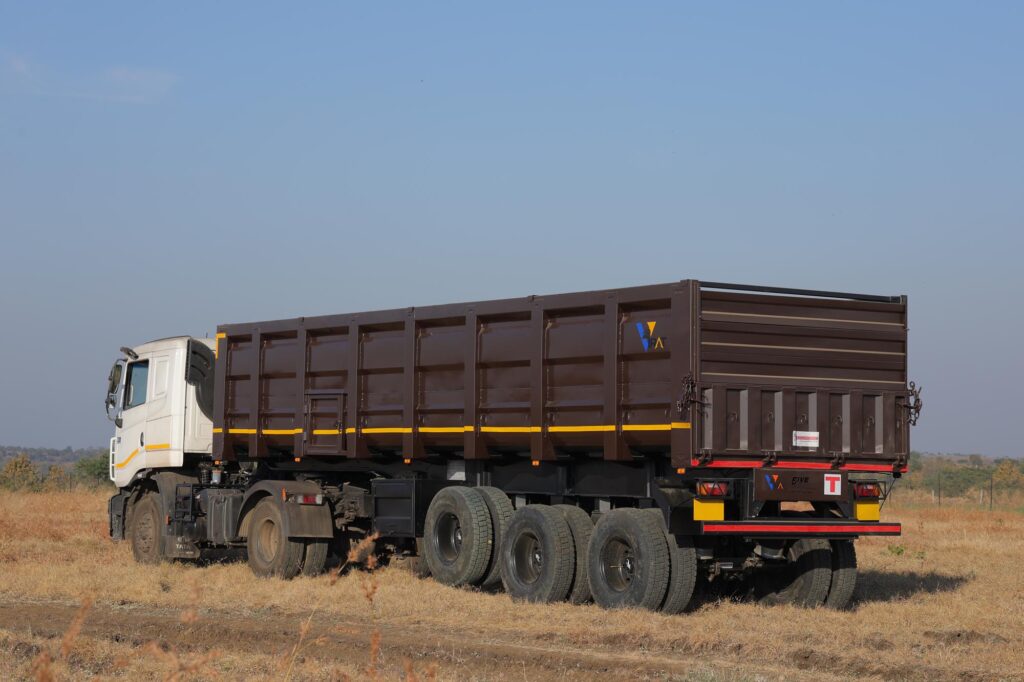
“Trailer manufacturing itself has gone high-tech,” says Arpit Dixit, Co-founder, Five Lasercut. “We’re integrating features such as hydraulic tailgates operable from the driver’s cabin for tippers, 360-degree cameras, automated tarpaulin systems, and TEBS-enabled eight-tyre lift mechanisms for trailers. These tools directly boost safety, efficiency, and driver comfort.”
Such innovations not only raise asset utilisation but also ensure safer, more efficient long-haul journeys.
Sustainability Moves from Vision to Action
With India pledging net-zero emissions by 2070, logistics players are increasingly investing in EV fleets, CNG trucks, and hydrogen-fuel pilots. Green warehouses equipped with solar rooftops and energy-efficient systems are becoming mainstream.
“For EV logistics operators, payload efficiency is critical,” explains Akhil Shrimal. “Our VIRAT trailers offset the additional weight of electric prime movers without compromising payload, making us the first-choice partner for several EV transport companies.”
These solutions are more than compliance measures – they are competitive advantages in a cost-sensitive market.
The E-commerce Acceleration
E-commerce and quick-commerce are driving demand for faster deliveries across metros and Tier-2/3 cities. Hyperlocal warehouses, reverse logistics capabilities, and flexible load configurations have become essential.
“We’ve designed lightweight containerised trailers that can carry bulk cargo, white goods, or e-commerce shipments up to 40 feet,” says Arpit Dixit. “This gives operators the agility to serve multiple commodity types without changing fleet configurations.”
Such adaptability is critical in a market where delivery expectations are measured in hours, not days.
Workforce and Driver-Centric Design
The sector’s growth is tempered by a shortage of skilled drivers. To address this, companies are prioritising ergonomics, safety, and automation to improve retention.
“Our trailer designs prioritise aerodynamics and handling,” notes Akhil Shrimal. “Drivers consistently tell us that operating a VIRAT trailer feels smoother and less tiring on long hauls compared to conventional builds.”
Better design not only improves efficiency but also supports driver wellbeing – a factor increasingly linked to service reliability.
The Road Ahead
India’s logistics sector stands at an inflection point. With infrastructure expansion, technology integration, green initiatives, and evolving market demands converging, every stakeholder – from manufacturers to fleet operators – has a role in shaping its future.
“India is truly on the move,” concludes Arpit Dixit. “How we innovate in moving goods will define the next chapter of our nation’s economic growth story.”