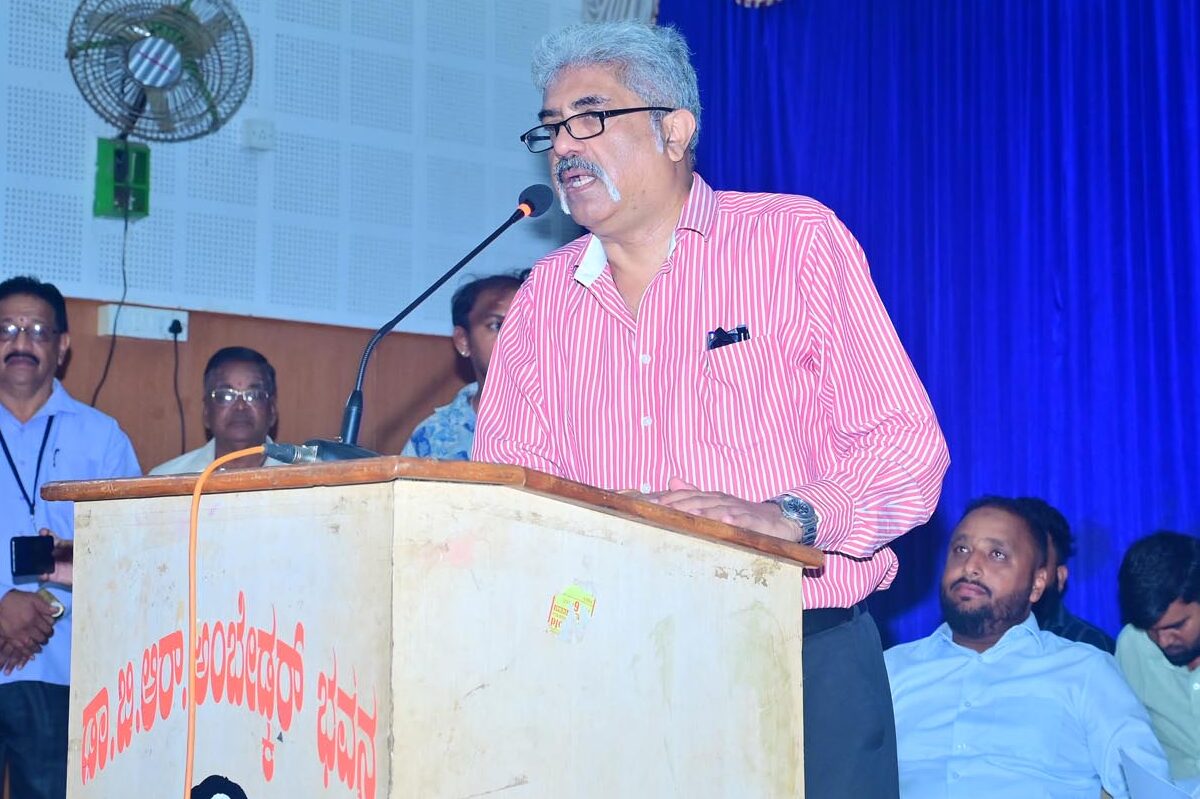
In a country where over 70% of freight moves by road, truckers remain the unsung backbone of the Indian economy. Yet, they continue to face systemic neglect, harassment, and a lack of basic dignity. Speaking to N.Balasubramanian, two veteran industry leaders – B. Channa Reddy, President of the All India Confederation of Goods Vehicles Owners’ Associations, and his son C. Naveen Reddy, President of the Federation of Karnataka Lorry Owner’s Association (FOKLOA) – paint a candid yet constructive picture of the sector. While they don’t shy away from highlighting deep-rooted issues, both stress the urgent need to implement practical solutions for long-term welfare of drivers and small fleet operators.
Challenges Rooted in Systemic Apathy
Both leaders agree that the trucking ecosystem suffers from poor representation, fragmented associations, and top-down policymaking that fails to understand ground realities.
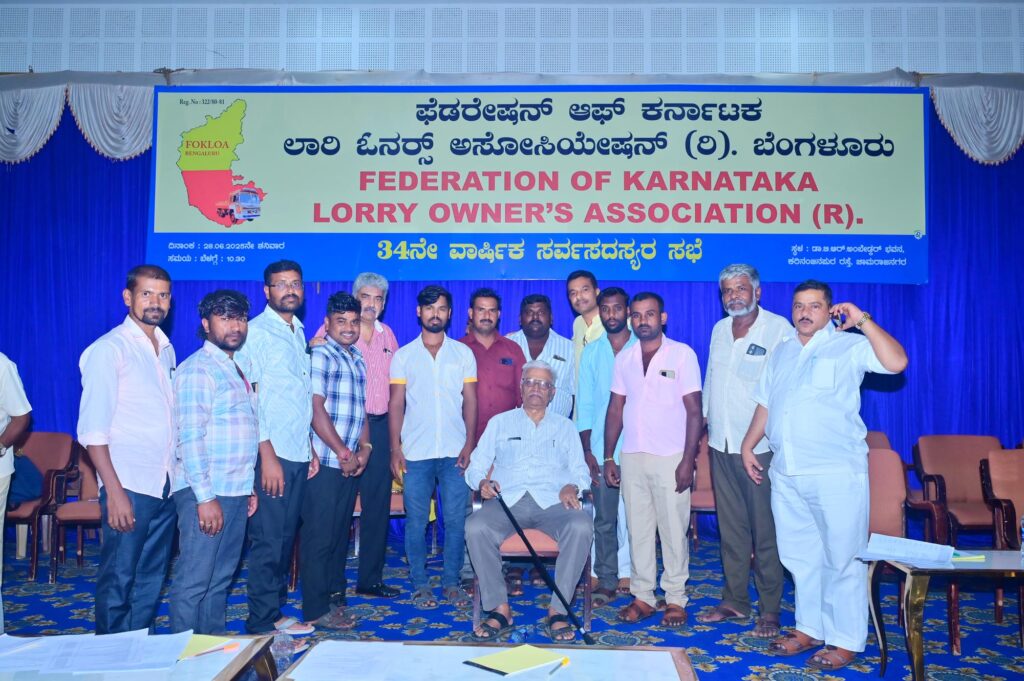
with members of his association and members of FOKLOA
“Government departments, regardless of which party is in power, continue to exploit transporters and drivers,” says Channa Reddy. “Truck terminals are either inadequate or poorly maintained. My driver is an orphan on the road – no rest areas, no shelter, no dignity.”
Naveen echoes the sentiment, adding that drivers are the first to be blamed when accidents occur. “You ask why a truck driver drives in the middle lane? Because he’s scared. Two-wheelers dangerously cut across from the left, and yet only truckers are fined. Where is the enforcement on others?”
He also criticises the absence of basic highway infrastructure. “Every 80–90 kilometres, we should have a proper wayside amenity. We’re paying tolls, road tax, GST – all before we even move – but get no facilities in return,” he laments.
A Crisis of Respect – and Resources
At the heart of the crisis is the erosion of dignity in the driver’s profession. Once a trade passed from father to son, truck driving is now avoided by educated youth and disrespected by society at large.
“We salute airline pilots and train drivers. But when a truck driver steps out, we abuse him,” says Naveen. “We’ve failed to acknowledge that driving is a skill. Illiterates are mistreating illiterates, and that’s where the cycle begins.”
This lack of respect is compounded by issues like low wages, delays due to inspections, and insufficient legal recourse. “I meet truckers every day whose vehicles are held up for two to three days due to GST-related delays,” he adds. “They are treated like criminals even when the fault lies with documentation by the consignor.”
Reform from the Ground Up
Despite these challenges, both leaders are taking proactive steps toward change – focusing particularly on driver welfare and support infrastructure.
Channa Reddy has been instrumental in establishing free facilities at his petrol pumps, including restrooms, drinking water, and tyre air-filling services. “We don’t make money from drivers; we support them. That’s why I’m also setting up a driver training institute with central government support,” he says.
FOKLOA, under Naveen’s leadership, has established over 32 district associations in Karnataka, each equipped with personnel and computers to help truckers file taxes, obtain permits, and manage documentation. “We’ve processed over 500 truck driving licences for free and set up dedicated help desks across the state,” he notes.
To address long-standing issues, FOKLOA has also set up six specialised committees focusing on harassment, tolls, finance, insurance, and technology. “These committees meet every two months to share updates and raise alerts when problems arise in any district,” he explains.
Driver Training and Stipend Model
One of the most impactful initiatives in the pipeline is the launch of the Transporters Foundation and its Driver Training Institute – a vision originally conceived by Channa Reddy and now being executed under FOKLOA’s aegis.
“The idea is simple – we pay a stipend of Rs. 7,000 to a new trainee during the learning phase. This ensures his family survives while he picks up skills,” says Naveen. “Once he’s trained, he enters the workforce with dignity, confidence, and real employability.”
The foundation is being established on a 2.3-acre site in Chamrajnagar, Karnataka, with plans to expand across districts in future.
Bridging Gaps in Finance, Insurance and Technology
Both leaders are vocal about the exploitation by financial institutions and insurers. Channa Reddy points out that “banking policies like penal interest and processing fees are killing small operators,” and runs his own cooperative society on no-penalty terms for genuine defaulters.
Third-party insurance is another grey area. “Today, the court awards Rs. 15 lakh in accident compensation, but the insurance company only pays Rs. 3 lakh – the rest is dumped on the owner. Where is the sense of security?” asks Naveen. “Why can’t the insurer assure me that, come what may, I won’t have to pay anything extra till next year?”
He also raises concerns about fraudulent freight apps that swindle unsuspecting operators. “People are losing lakhs via fake load-matching apps. The government must regulate and act swiftly on this.”
The Need for Institutional Dialogue
A recurring theme is the lack of official engagement with truckers. “Earlier, the Transport Commissioner held monthly meetings. Today, not a single one happens,” notes Naveen. “We’re not even called for policy discussions. That must change.”
Both leaders agree that structured, periodic consultation is critical. “If every district had a legal cell or officer working with the association, officials would be more cautious. We need systems – not just strikes,” says Channa Reddy.
A Collective Way Forward
The call to action from both industry veterans is clear: if India is to reduce logistics costs, boost road safety, and make freight movement more efficient, the welfare of truck drivers must move to the top of the agenda.
“Every time a driver steps on the road, he should feel protected – not punished,” says Naveen.
Adds Channa Reddy, “Unless the driver prospers, the industry cannot. It’s time we put him first.”
Action Points for Advancing Trucker Welfare & Industry Reform
- Establish Driver Training Institutes – Launch structured training with stipends to attract new drivers and formalise the profession.
- Ensure Basic Highway Amenities – Mandate rest areas with toilets, water, and parking every 80–100 km on national highways.
- Provide Free Public Facilities at Petrol Pumps – Encourage implementation of treated water, toilets, and tyre air-filling stations for truckers.
- Create District-Level Support Cells – Set up local association offices with staff to handle tax filings, permits, and emergency support.
- Form Specialised Committees Within Federations – Focused task forces on finance, insurance, harassment, tolls, and tech to meet and escalate issues.
- Reform Third-Party Insurance Frameworks – Ensure clarity, full liability coverage, and faster claims without pushing burden onto truck owners.
- Cap Processing Fees and Penal Interest by Lenders – Implement fair lending practices and cooperative finance models for small transporters.
- Combat App-Based Load Fraud – Create a government-verified freight platform and regulate third-party logistics apps.
- Conduct Regular Dialogue with Policymakers – Reinstate monthly state-level meetings between transport officials and trucker associations.
- Raise Social Respect for Drivers – Launch public campaigns to improve the perception of driving as a dignified, skilled profession.
- Promote Transparent Agent Practices – Educate truckers on consignment processes and reduce unfair middlemen exploitation.
- Encourage Association Unity Across States – Build stronger inter-state federation networks for shared resources and lobbying power.