
Daimler India Commercial Vehicles emerges as a strategic pillar for the group, offering unique advantages in cost, talent, and innovation.
Daimler Truck is steering confidently into the future, undeterred by short-term market fluctuations. Driven by rising global transport demand, it is targeting over 12% return on industrial sales and 3–5% annual growth by 2030. But this vision goes beyond figures. According to President & CEO Karin Radstrom, the company’s strategy blends innovation, efficiency, customer focus, and cultural evolution.
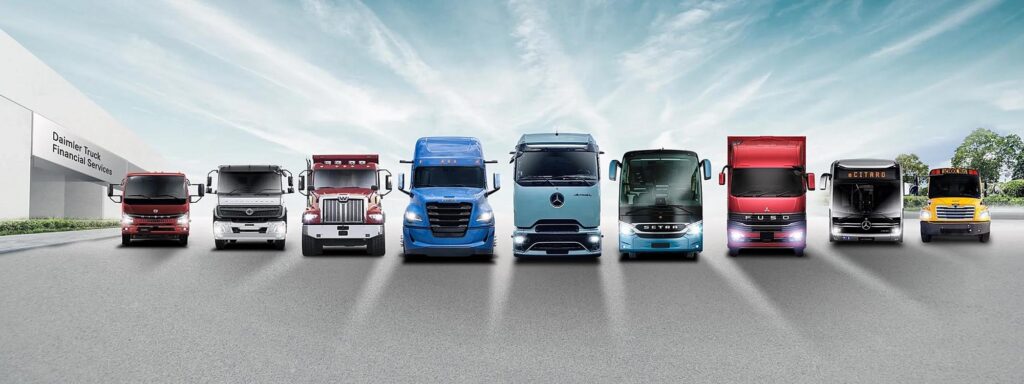
At Capital Market Day 2025, Radstrom highlighted Daimler Truck’s strong global footing, with top-three positions in key markets across continents. Its strength lies not just in reach, but in its diverse brand portfolio—Mercedes-Benz, Freightliner, Western Star, Fuso, Rizon, BharatBenz, and Thomas Built Buses—each built for distinct customer needs. In 2024, the company sold 460,000 vehicles worldwide and maintained over €8 billion in net industrial liquidity, ensuring both resilience and investment agility.

Charting The Course
Daimler Truck’s future strategy rests on five pillars focused on growth, scale, and efficiency. A key move is the merger of Mitsubishi Fuso with Hino, creating a strong Japanese commercial vehicle alliance. Daimler holds a 25% stake and expects €1.5–2 billion in cash inflow and tech synergies.
On the zero-emission front, it aims to deliver over 25,000 battery-electric trucks annually in Europe by 2030. In India, BharatBenz continues to strengthen its domestic base and expand exports. In North America, the company plans to grow vocational truck volumes by 60% by 2030. It’s also targeting a revenue boost from its high-margin defence business, aiming to double earnings from this segment, she said.
Customer-Focused & Future-Ready
The second pillar in Daimler Truck’s strategy is strengthening customer support. With over €8 billion in service revenue in 2024, the company will invest €250 million to expand its European truck retail and aftersales network for faster, more efficient service.
The third pillar, ‘Transforming at the Speed of Right,’ captures Daimler’s measured approach to adopting new technologies.
The fourth pillar focuses on running leaner. The ‘Cost Down Europe’ programme—its largest restructuring push—aims to save over €1 billion by 2030. Steps include linking bonuses in Germany to local performance and increasing workforce flexibility through temporary hires.
The fifth pillar emphasises culture. Daimler is fostering a high-performance mindset built on “Simpler, Faster, Stronger,” with new systems for performance-based pay and clearer career paths to support transformation from within, she added.
India Takes Centre Stage In Daimler Truck’s Global Strategy
India is now central to Daimler Truck’s global operations, said Achim Puchert, Board Member responsible for Mercedes-Benz Trucks and BharatBenz. He called Daimler India Commercial Vehicles (DICV) a strategic pillar for the group, offering unique advantages in cost, talent, and innovation.
Despite the market’s price pressures, India serves as a powerful learning and sourcing hub. Mercedes-Benz Trucks aims to harness these strengths to improve global supply chain efficiency. “We are building a stronger future with two strong brands—Mercedes-Benz Trucks and BharatBenz—by reorganising to better scale, grow, and compete in key markets,” Puchert noted.
One of the early wins is the joint development of a new medium-duty cab, with Indian teams leading what was once a multi-country effort. Production is also being consolidated into fewer plants, streamlining operations. In a major shift, Daimler plans to move 20% of its European production to lower-cost regions like India—part of a broader transformation strategy under the ‘Leverage’ pillar to boost global competitiveness.
Ambitious Transformation
According to Puchert, the company aims at making Mercedes-Benz Trucks enter a decisive phase of transformation to redefine the future of global commercial vehicle manufacturing. He underscored a pivotal shift in Mercedes-Benz Trucks’ global strategy—formally integrating India and China into its core operations. He called this the second strategic lever in the company’s transformation journey. “Just looking at India alone, the potential from this change is huge,” he said, reinforcing India’s expanded role as a centre for cost-effective research and development, modular platform engineering, strategic sourcing, and global exports.
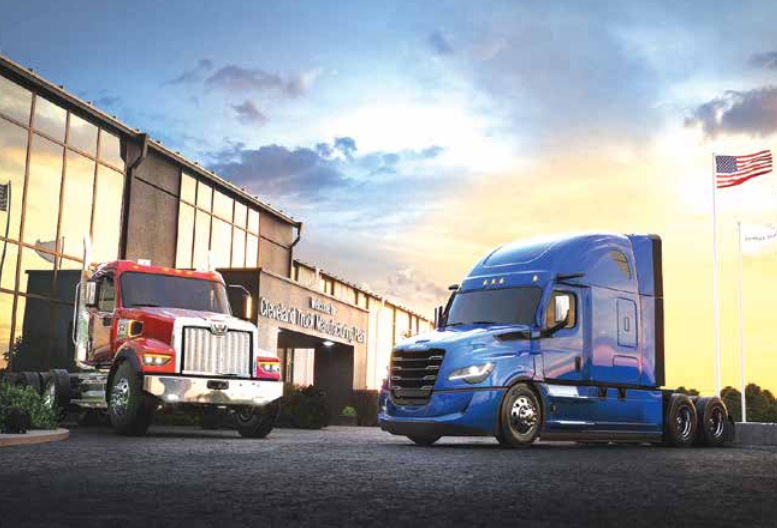
With over 250,000 vehicles manufactured and exports to more than 60 countries, India is now firmly positioned as a critical node in Mercedes-Benz Trucks’ global network. The country’s growing expertise, frugal engineering capabilities, and access to talent offer significant advantages in driving efficiency, scalability, and innovation at a global level.
Decisive Phase
Puchert noted that Mercedes-Benz Trucks is entering a decisive phase of transformation—an era that will define the future of commercial vehicle manufacturing. This transformation is being guided by three interlocking strategic levers: expansion into high-potential markets such as India and China, a deep-rooted focus on customer satisfaction, and disciplined operational restructuring, he mentioned.
Central to this operational overhaul is the ‘Cost on Europe’ initiative, which is aimed at generating over €1 billion in savings by 2030. This includes streamlining operations, consolidating production hubs, and aligning resources with growth priorities across geographies.
Puchert emphasised that this is not just a vision—it is a structured, focused execution plan. “Mercedes-Benz Trucks is not merely planning the future; we are building it—through disciplined restructuring, strategic investments, and the full strength of our global teams,” he said.
Backed by strong brands, streamlined operations, and a sharp focus on growth, Daimler Truck is charting a clear path towards realising its full potential and driving long-term, sustainable profitability.