The commercial vehicle industry entered this festive season with cautious optimism. When the government announced GST 2.0, the policy was projected as a major “bachat yojana” that would ease the financial pressure on households and businesses alike. From two-wheelers to passenger cars to commercial vehicles, the expectation was simple: lower taxes would translate into greater movement and a healthier market sentiment. But as the dust settles, the true picture; especially in the medium and heavy commercial vehicle (M&HCV) segment; is more nuanced. To understand the sentiment on the ground, we spoke with Mr. Hemal Thakkar, Director, Crisil Intelligence. His assessment paints a realistic picture of the structural shifts underway.

A Subdued M&HCV Market: What’s Driving the Hesitation?
Hemal begins by noting that the M&HCV industry has been under visible stress over the past two quarters. While last-mile and light commercial vehicles have gained traction due to e-commerce and redistribution, the heavy truck market is still far from the peaks in terms of utilization levels seen between FY17 and FY19. Part of this is cyclical. Historically, the year following a major election sees freight movement slowing down, a trend that repeated this year as well. Transporters held back on fresh purchases, waiting for freight rates to stabilise and tonnage to improve. But the slowdown is not just domestic. Global uncertainties; ranging from how the US is managing its economic pressures to broader geopolitical disruptions, have influenced India’s import-export cycles. When trade weakens, truck operators become watchful, and the heavy truck market feels the impact first.
There is also a structural shift within the industry that often gets overlooked. Over the last few years, the market has seen strong adoption of higher-tonnage trucks; 49 tonne and 55 tonne GVW configurations; which means that even if the number of trucks hasn’t grown dramatically, the carrying capacity on the road has. In FY18 and FY19, Hemal points out, capacity utilisation touched more than 60 percent. Today, with far more high-tonnage vehicles deployed, the same freight demand is being serviced with fewer trucks, pushing utilisation down and limiting new demand. In simple terms, the industry has created excess capacity without proportionate growth in cargo movement.
GST 2.0: Relief for Some, Disruption for Many
The impact of GST 2.0 adds another layer to this complex environment. For certain segments like multimodal logistics and insurance for goods carriers, the reduction of GST from 12 percent to 5 percent is undeniably beneficial. But for fleet operators; the backbone of India’s logistics network; the transition has not been smooth. Until recently, operators either paid 5 percent GST without claiming input tax credit or opted for the 12 percent slab with credit, which they used to set off the 28 percent GST paid upfront on new vehicles. The system worked reasonably well because a fleet purchase immediately created a pool of credit.
Now, with GST on new vehicles reduced from 28 percent to 18 percent, and GST on logistics (road Transport Agency) services increased from 12 percent to 18 percent, a new mismatch has emerged. Operators have lower input credits available but higher monthly GST liabilities. For organised fleets that operate hundreds or even thousands of trucks, this imbalance tightens their working capital cycles and delays cash recoveries. Hemal believes this adjustment period will last at least six months before the new system balances out.
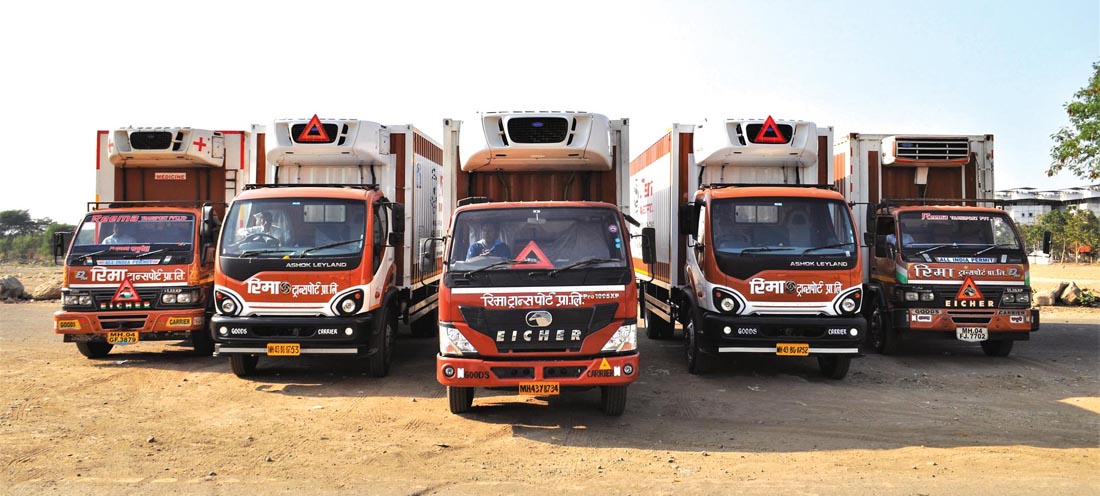
The result is uneven performance across vehicle categories. Light commercial vehicles, driven by e-commerce and urban distribution, have shown strong demand recovery because lower GST directly reduces operational burden and improves fleet turnover. Also, the LCV segment is largely dominated by retail operators/First time Users wherein in the MHCV segment the share of Large & Medium Fleet Operators especially in haulage on National as well as State Highways is reasonably high. On the other hand, the M&HCV segment continues to struggle with low utilisation, relatively poor freight rates (though the share of BSVI fleet in the overall freight supply is going up, the freight rates are seldom contributing for increase in acquisition costs on account of BSVI and safety norms) and financing challenges for first-time buyers. Situation is better than what the industry saw six months ago, Hemal acknowledges, but still not strong enough to declare a revival.
Coping with Input Tax Credit and Compliance Strain
When asked how operators are navigating the tax credit and compliance environment, Hemal is clear that there is no shortcut. The system will stabilise only with time. Dealers may face issues related to cess, and fleet operators may have to deal with delayed credit cycles, but these challenges will eventually settle as the industry adapts to the new norms. The next two quarters will be essential in bringing predictability back.
Another outcome of this regulatory tightening could be a rise in consolidation. Larger fleets; those with 1,500 to 3,000 vehicles; are far better positioned to absorb working capital strain, manage compliance, adopt digital systems and meet evolving expectations from customers who demand transparency and efficiency. Smaller operators with 100 to 200 vehicles will find it harder to keep pace with the administrative and financial demands of the new system. Over the next few years, Hemal believes, India may witness a significant shift toward larger, more organised fleets.
Digitization: From Vehicle Sellers to Solution Providers
Technology, meanwhile, is reshaping the sector in far more fundamental ways than GST ever could. OEMs today are not only selling trucks but building holistic digital ecosystems around them. From connected vehicle platforms offering real-time monitoring to predictive maintenance alerts, digital spare parts marketplaces, enhanced pre-owned truck programs and improved service management solutions, the industry is slowly shifting from product-selling to full-solution delivery. Fleet operators are embracing digital tools not out of enthusiasm but necessity; uptime, efficiency and transparency are becoming non-negotiable.
On the clean mobility front, Hemal’s view is pragmatic. Electrification will remain limited to fixed-route applications like school buses, intracity buses and select fleet operations where charging happens at depots/limited radius movement. Heavy commercial vehicle electrification, despite the attention it receives, will remain marginal for at least the next decade. The economics simply do not work yet, especially when payload loss, range anxiety and charging infrastructure gaps come into play. LNG emerges as the most practical green fuel for heavy trucks in this decade, while hydrogen internal combustion engine and fuel cell technology hold long-term promise if infrastructure is built. Bio-CNG has potential but lacks robust national-scale supply chains at this stage.
Industry Outlook: FY26 and Beyond
Looking ahead to FY26, Hemal sees the market remaining subdued, especially for heavy trucks. But from second half of FY27 onward as replacement cycles are also stretched, he expects a new upcycle that could sustain for 12 to 18 months, though without the extreme highs and lows that defined earlier periods. This is provided that there are no more global headwinds and the domestic macro-economic environment stays conducive. The era of sharp 30 percent swings might be behind us. With higher-tonnage trucks now the norm, he anticipates fluctuations will mostly stay within high single digits at best, creating a more stable demand environment.
In a nutshell, the commercial vehicle industry today stands at a crossroads; assessing policy changes, adjusting to structural shifts, embracing digital transformation and preparing for a greener future. The immediate mood may be cautious, shaped by muted freight movement and GST-related transitions. But the long-term direction, as Mr. Hemal Thakkar emphasises, is one of steady strengthening. The turbulence of the present is simply part of the journey towards a more efficient, digital and resilient logistics ecosystem.