By Venkata Narasimha Rao Jupudi, a CV industry veteran with over 35 years of experience

It is a well-established principle that delivering what is expected results in customer satisfaction, while delivering beyond expectations leads to customer delight. In the automotive industry, these expectations largely span pre-sales engagement, post-sales product performance, and after-sales service support. Customers seldom articulate positive experiences with the same intensity as negative ones, primarily because positive experiences are often perceived as hygiene factors. What customers tend to remember are negative experiences and, at the other extreme, exceptional experiences that result in delight.
Indian customers, by nature, demonstrate a relatively high level of patience. This often results in minor negative experiences being overlooked, particularly when the cost of acquisition is perceived as favourable. However, when a manufacturer positions a product as a niche offering and explicitly promises superior usage experiences, the customer’s tolerance for negative experiences reduces significantly.
A complaint represents a customer’s negative reaction to an event encountered during product usage or service delivery. In many cases, this reaction initially remains mental and manifests physically only when the severity increases, the event recurs, or the failure impacts convenience or comfort. As the frequency of events increases, or when multiple unrelated issues occur concurrently, the response typically becomes verbal. When the impact is financial or safety-related, the reaction is often immediate and escalates into a formal written complaint.
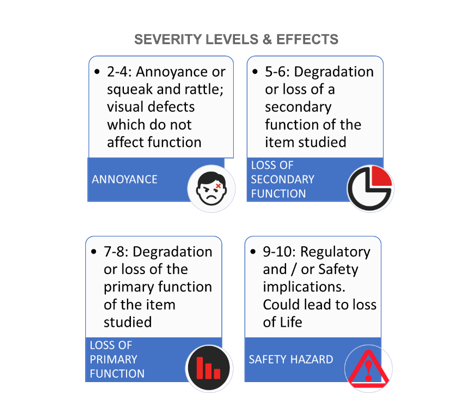
It is important to note that a written complaint does not necessarily imply an expectation of monetary compensation. In cases of low-severity complaints, prompt corrective action itself may constitute effective closure, while compensation, if offered, can translate into customer delight. This approach is particularly relevant in B2B environments. However, one principle remains absolute: no customer accepts habitual failure of a product or the system responsible for handling product failures.
Every resolved complaint must result in corrective action within one or more internal processes. In quality management terminology, this is referred to as Master Data correction. Complaints can be categorised based on the nature of these corrections. A learning organisation systematically records such corrective actions, enabling the tracking of recurrence and facilitating meaningful trend analysis.
A proactive approach to complaint management involves anticipating all possible failures and identifying their root causes in advance. This enables designers to address potential issues at the design stage, thereby preventing failures and eliminating the very triggers for complaints. This activity is commonly referred to as Design Failure Mode and Effects Analysis (DFMEA). The depth and granularity of DFMEA play a critical role in reducing field complaints.
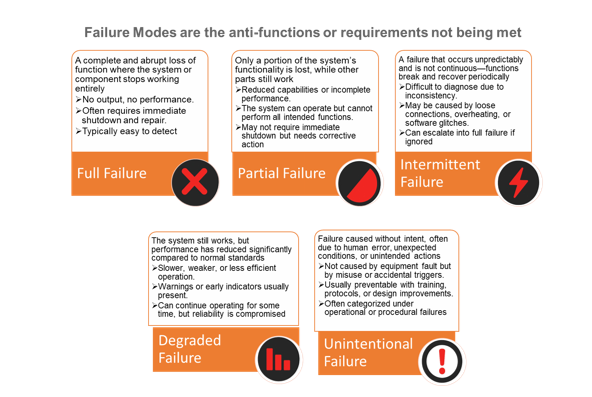
DFMEA is typically applied under the following conditions:
– Introduction of a new design with new content
– Modification of an existing design, including changes arising from past failures
– Deployment of an existing design in a new environment or under a changed duty cycle, even without physical design changes
While DFMEA supports the development of a robust design, the successful translation of design intent into a reliable product depends heavily on manufacturing processes. Manufacturing and process engineers employ Process Failure Mode and Effects Analysis (PFMEA) to identify risks and potential errors in manufacturing that could lead to defects. PFMEA enables the strengthening of processes by addressing vulnerabilities before failures occur.
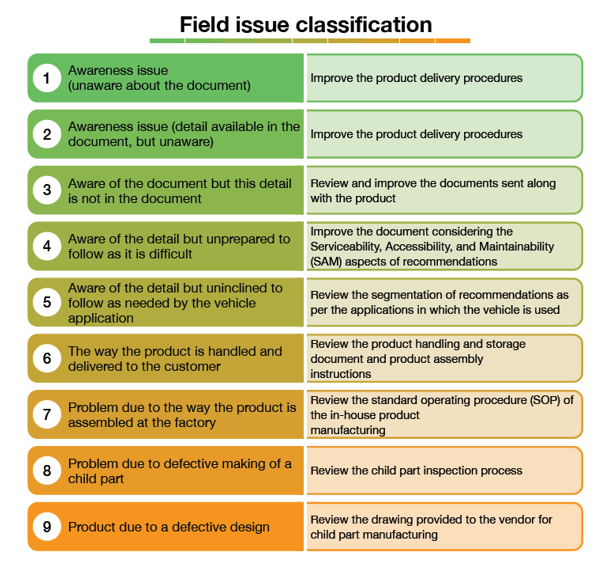
Sources of manufacturing errors are commonly analysed through the 5M framework: Man, Method, Material, Machinery, and Measurement. PFMEA tracks improvement effectiveness through reductions in the Risk Priority Number (RPN).
PFMEA is applied when:
– A new technology or process is introduced
– An existing process undergoes modification due to process updates, continuous improvement initiatives, Kaizen activities, or Cost of Quality (COQ) considerations
– An existing process is deployed in a new environment or location without physical changes
All risks must be identified prior to tooling investment, and mitigation actions must be completed before the Production Part Approval Process (PPAP). PPAP is mandatory for new part submissions and for approvals involving changes to existing parts or processes. Customers may also request PPAP submissions at any point during the product lifecycle.
PPAP submission requirements are generally classified into five levels:
– Level 1: Part Submission Warrant (PSW) only
– Level 2: PSW with product samples and limited supporting data
– Level 3: PSW with product samples and complete supporting data
– Level 4: PSW and other requirements as defined by the customer
– Level 5: PSW with product samples and complete supporting data available for review at the supplier’s manufacturing location
For each identified failure mode, specific causes must be defined. At the component level, causes may relate to material properties, geometry, dimensions, interfaces with adjacent components, or energy interactions that inhibit functionality. These causes are often derived from preliminary analytical tools such as Boundary (Block) Diagrams, Parameter (P) Diagrams, and Interface Analysis.
System-level causes are cascaded into detailed failure modes during deeper analysis. Geometric and dimensional issues are further cascaded into special characteristics, which can then be transferred to PFMEA. Ambiguous terms such as “bad,” “poor,” “defective,” or “failed” should be avoided, as they lack the specificity required for accurate risk evaluation and mitigation planning.
Typical examples of well-defined causes include:
– Material properties (insufficient strength, lubricity, viscosity, etc.)
– Material geometry (inadequate positioning, flatness, parallelism, etc.)
– Tolerance issues or stack-ups
– Interfaces with mating components
– Physical attachment or clearance constraints
– Energy transfers such as heat, vibration, or peak loads
– Material flow or exchange involving gases or liquids
– Data exchanges, including signals, commands, and timing
Once the root cause is identified, the organisation must pursue a two-pronged action plan. First, a rectification plan must be prepared for work-in-progress (WIP) material, including an assessment of rework costs. Based on this evaluation, a decision must be taken on whether the material should be reworked to specification or rejected. Rejected material must undergo irreversible dimensional deformation to ensure it cannot re-enter the supply chain through alternative channels.
Second, corrective actions must be incorporated into standards and procedures to prevent recurrence of the defect.
Periodic analysis of failures, rejections, rework costs, and design or process changes enables organisations to continuously enhance product performance. Over time, this disciplined approach not only improves operational excellence but also strengthens customer trust and loyalty.