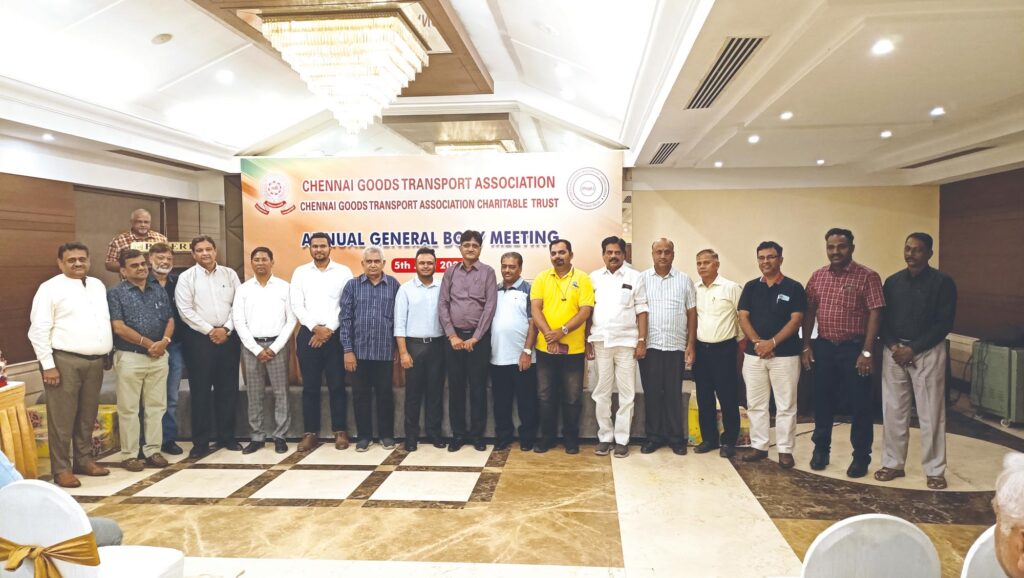
Chennai Goods Transport Association (CGTA) recently held its 53rd Annual General Meeting (AGM) in Chennai, bringing together leading stakeholders from the road transport sector. The event was marked by the presence of Anjani Kumar Agarwal, Executive President of AITWA, and senior CGTA office-bearers, underlining the growing alignment between regional associations and national bodies. While the proceedings covered association matters, the real spotlight was on urgent industry challenges and the collective roadmap for transporters across India.
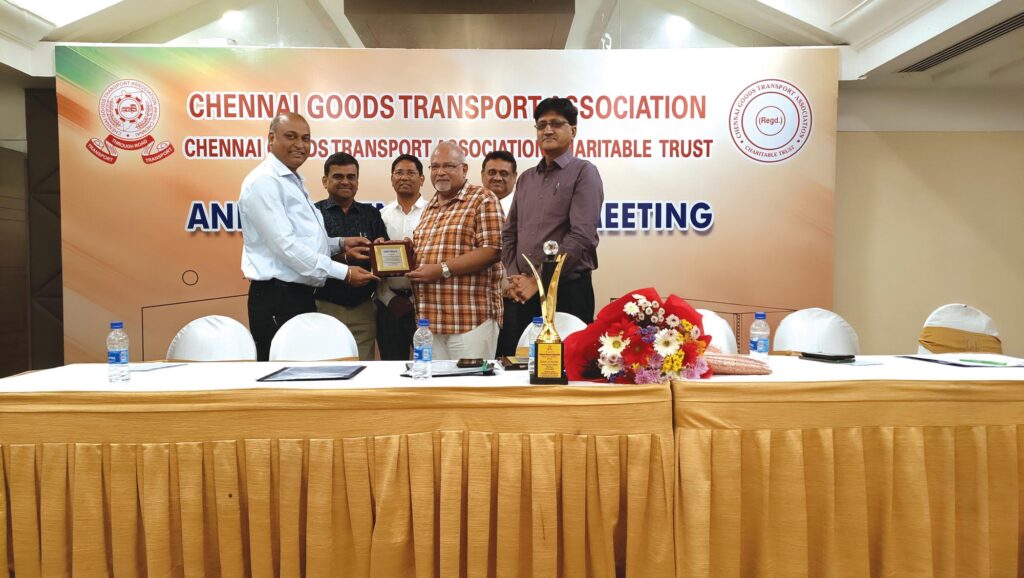
a memento on behalf of AITWA to Ravii Shankar, Secretary, CGTA
Reform Begins at Home – Professionalism Before Protest
Anil Gupta, Incoming President of CGTA, set the tone for the industry’s self-reflection. In his address, he made a compelling case for internal discipline as the first step toward external reform. “Let’s start with our own vehicles, our own drivers. Before we question the government or customers about compliance or solar panels or welfare issues, we must first look at our own house. Only then do we gain the right and credibility to demand better.”
His message underscored a shift in the industry’s posture – from reactive grievance to responsible self-governance. Gupta also advocated for greater engagement with national bodies like AITWA and emphasised the importance of giving the southern region a stronger voice at the national table.
GST – Fixing the Fault Lines
GST-related harassment remains one of the most destabilising issues for goods transporters. Ravii Shankar, Secretary of CGTA, shared that even minor clerical errors – such as mismatched invoice fields or number discrepancies – often result in severe penalties, sometimes running into lakhs of rupees. “This is often not a tax problem, it’s a human one. When the E-Way Bill is prepared, the aim is to comply and pay GST and there is no evasion. A number mismatch on a vehicle or a minor mistake in invoice shouldn’t cost lakhs. We’ve received verbal approvals on relaxations and await written confirmation. CGTA will push until the harassment stops.”
The concern extends beyond mere errors. Ravii Shankar pointed out that State GST (SGST) officials are sometimes incentivised to issue inflated tax demands under pressure to meet collection targets. The CGTA, in collaboration with legal experts, plans to escalate these cases to the Commissioner level and pursue relief through formal channels.
The Toll Trap and No-Entry Labyrinth
Sailesh Jain, Vice President of CGTA, spotlighted operational bottlenecks created by toll management inefficiencies and no-entry restrictions. “From no-entry timing fights to digital penalty confusion, CGTA has engaged tirelessly with authorities. With fuel, tolls, and compliance costs rising, our voice must only grow stronger and louder.”
Transporters continue to face irregularities in toll charges, with refund claims and exemptions often mired in red tape. This adds significant cost burdens to already thin-margin operations. The industry is demanding greater transparency in toll collection, digital reconciliation of fees, and consistent policies across city limits and state borders.
Labour Disruption and Driver Distress
One of the most urgent challenges flagged by multiple speakers was the rise in labour-related extortion and fake unions. Drivers, already under stress due to tight schedules and regulatory pressures, are increasingly being threatened or blocked by rogue elements during loading and unloading.
Anjani Kumar Agarwal, Executive President of AITWA, addressed this issue directly: “The cost of labour must increase, yes, but not through blackmail and threats. Our drivers are being pressured. Fake unions are stalling vehicles. These issues are growing fast. CGTA must act before this becomes the norm.”
The need for clearly defined, enforceable codes of conduct backed by local law enforcement and municipal support is critical to curb such practices.
Documentation – The Industry’s Strongest Shield
Agarwal also emphasised the need for systematic documentation to support industry-wide advocacy. “We had two key GST wins in negotiation: time extensions for compliance and exemption on clerical mismatches. These are verbally approved and will soon be on paper. But friends, documentation is key. Don’t just complain. Show proof. Forward us your circulars, fines, and violations. That’s how we push systemic change.”
This call to action reinforces the industry’s transition from anecdotal grievance-sharing to data-backed policy representation.
Elevating Southern Voices on the National Stage
A persistent challenge has been the underrepresentation of southern states in central policymaking forums. Agarwal urged CGTA and other southern associations to participate more actively in national dialogues and policy panels. “Whenever we meet the central government, I want CGTA leaders with us. You face real issues on the ground, your voice matters. We’ve already created a South Zone Council. Use it.”
Anil Gupta echoed this sentiment in his closing remarks, urging CGTA members to formally align with national bodies such as AITWA to strengthen their voice. “While we are affiliated with multiple national councils, it is AITWA that has consistently stood up for common carriers. I urge all CGTA members to register with them, and to take ownership of policy advocacy.”