For many, the distance between Delhi and Bengaluru is just a number on a map. For Manoj Yadav, it is a living stretch of responsibility that he has travelled for most of his life.
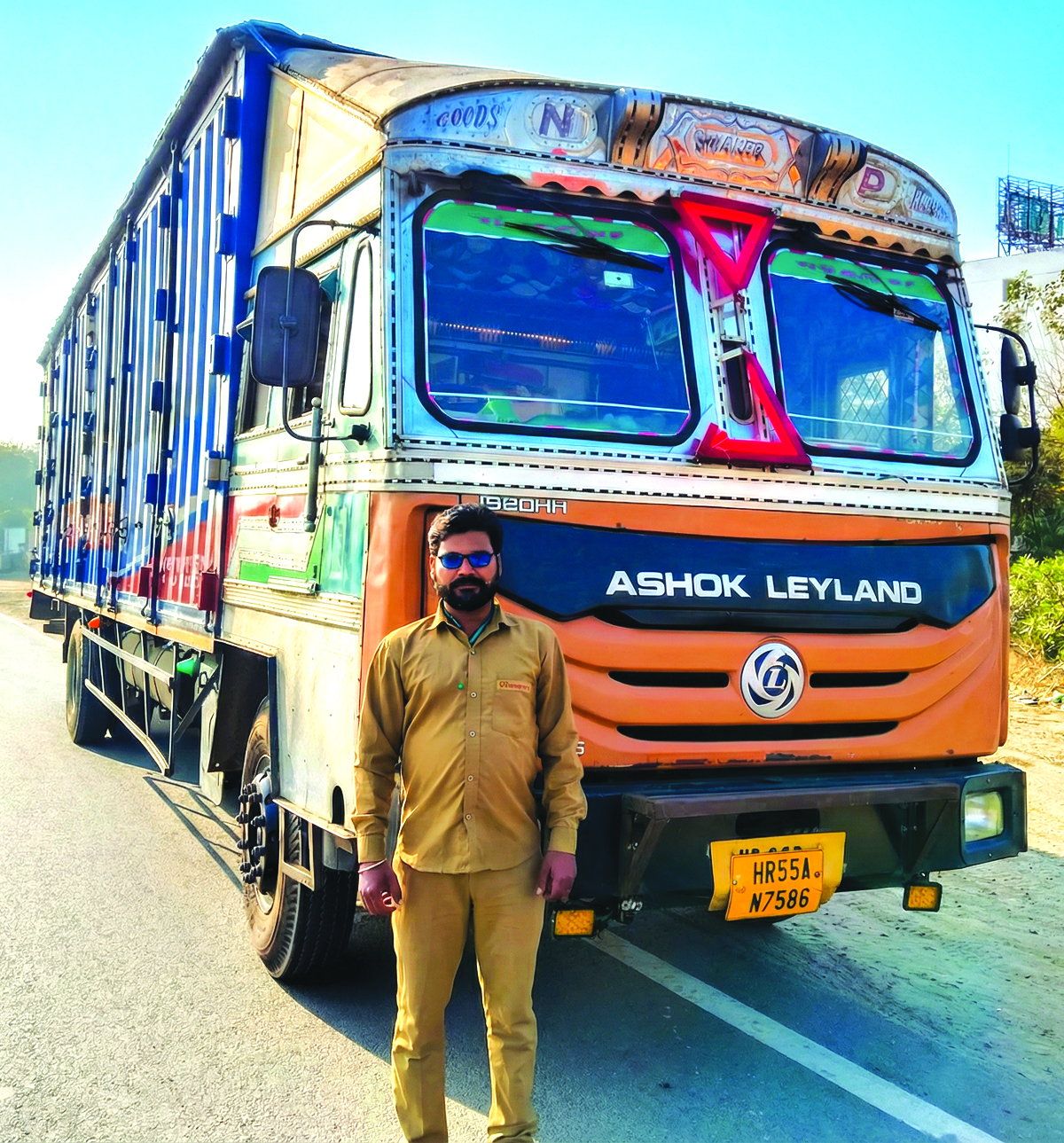
At 41, Manoj has spent nearly 25 years driving commercial vehicles. The profession came early to him, shaped by family tradition and necessity. His father was also a driver, and Manoj learned the realities of the road at a young age. Over time, driving became more than a livelihood. It became a discipline that taught him patience, awareness, and restraint.
For the last ten years, Manoj has been working with Om Logistics, handling long-haul routes from Delhi to southern India. Today, he drives a single-axle Avatar 1920 GVW truck from Ashok Leyland, transporting mixed FMCG cargo to cities like Bengaluru and Chennai and returning with automotive material.
A Delhi to Bengaluru trip takes him about 75 hours. Manoj typically drives around 500 kilometres a day. He is firm about one thing. Safety comes before speed. If the day has been long, he parks the vehicle at night, rests, and resumes early morning. He appreciates that his company allows this flexibility without pressure, something he believes every driver should have.
Among all routes, Manoj prefers driving in the southern states. The roads are better managed, rules are clearer, and enforcement is consistent. Language has never been a serious barrier for him. Years of experience have taught him that respectful driving and calm behaviour prevent most problems on the road.
For Manoj, responsibility does not end with timely delivery. Constant attention to two-wheelers, pedestrians, autos, and sudden lane changes is part of every journey. Vehicle care is equally important. He regularly checks brakes, lights, oil levels, and tyres. With BS6 vehicles, AdBlue management has become routine, and he knows where to refill across company locations. Maintenance, he feels, is a driver’s silent duty.
At loading and unloading points, his role is clear and limited. He submits documents, positions the vehicle, and waits while the customer’s labour handles unloading. This clarity helps him stay focused on what matters most. Safe transport.
Life Beyond the Steering Wheel
The cabin of Manoj’s truck is more than a workplace. It is where he rests, eats, and spends long stretches of time alone. Having driven older vehicles that caused fatigue within a few hundred kilometres, he values the improvement in modern cabins. His current cabin is spacious and comfortable enough for proper rest, an important detail for someone who lives on the road.
Home is in Prayagraj, but visits are rare. Sometimes after three months, sometimes after six. His children are studying, expenses are high, and work takes priority. Occasionally, his company helps route him closer to home so he can spend a short break with family before returning to duty.
Manoj speaks honestly about the emotional cost of this life. Phone calls and online money transfers help, but they cannot replace presence. Technology makes sending money easy, but distance remains unchanged.
A vegetarian by choice since childhood, Manoj cooks simple meals in his truck. He avoids alcohol and distractions. Discipline, he believes, keeps both mind and body steady on long routes.
Despite his dedication, Manoj does not want his children to become drivers. Like most drivers he knows, he wants them to study and choose other professions. The reason is simple. Drivers still do not receive the respect they deserve.
He believes transport is the backbone of the country, but dignity must follow responsibility. Companies that treat drivers with respect prove that change is possible. Until that change becomes widespread, Manoj continues to drive quietly across states, carrying goods, commitment, and the unseen weight of keeping India moving.
Despite his dedication, Manoj does not want his children to become drivers. Like most drivers he knows, he wants them to study and choose other professions. The reason is simple. Drivers still do not receive the respect they deserve.